-

Detailed Explanation of Post-Harvest Management Techniques for Lychee
Post-Harvest Management Techniques for Lychee
-

What are the key technical points for post-harvest management of mangoes?
How to manage mangoes after harvest
-
What are the key technical points for post-harvest management of mango?
How to manage mango after harvest
-

Peach Tree Post-Harvest Management Like This, Heavy Fruit Covering the Branches Next Year
After peaches are harvested, the remaining nutrients produced by their leaves are redirected to supply the branches and trunk, promoting branch thickening, tissue maturation, and the accumulation of nutrients, creating better conditions for flower bud differentiation the following year. If managed properly during this period, it can not only increase tree nutrition and improve the tree's resistance to adverse environments, but also play an important role in flowering and fruiting and tree growth the following year. Therefore, the following technical measures should be effectively implemented: 1. Reasonable fertilization After peaches are harvested, fruit-picking fertilizer should be applied promptly. Fertilization
-
Key Points of Post-Harvest Cultivation and Management Techniques for Citrus Orchards
During the annual growth cycle, mature citrus trees go through flower bud differentiation, flowering, fruit set, physiological fruit drop, fruit expansion, three flushes of new shoots and branch growth, and three root growth peaks, consuming a large amount of energy and nutrients, severely weakening tree vigor. In addition, various pest and disease residues concentrate within them, bringing many adverse effects to the following year's growth and fruiting of citrus trees. Therefore, strengthening post-harvest cultivation and management of citrus orchards to rapidly restore tree vigor is of vital significance to the following year's citrus production. The author believes that post-harvest cultivation and management of citrus orchards should focus on implementing the following techniques
-
What are the key technical points for post-harvest management of jujube trees?
1. Apply fruit-harvest fertilizer well. Apply fruit-harvest fertilizer once 3-4 days before harvest or 5-7 days after harvest. Generally apply 50-60 kg of organic fertilizer per jujube tree, applying it by the trenching method at the base of the main trunk of the jujube tree, and cover with soil immediately after application. 2. Spray quick-acting fertilizer. Immediately after harvest, spray 0.3-0.4% urea solution and 0.4%-0.5% potassium dihydrogen phosphate solution on the leaves to avoid leaf drop, improve photosynthetic efficiency after harvest, accumulate and increase tree nutrients, promote more flower bud differentiation, and reduce
-
Post-harvest management of peach trees must be done promptly, and sooner is better than later
Pruning to promote balance. Peach trees grow multiple times a year, which easily makes the canopy dense, with poor ventilation and light penetration, affecting flower bud formation. Therefore, after harvesting peaches, the crossing branches, overlapping branches, diseased and pest-infested branches within the canopy, and the vigorous water sprouts in crowded areas should be thinned out. For bare and empty areas, ringing (girdling) should be done to promote new shoots to fill the space and increase next year's yield. Thorough orchard cleaning and emphasis on prevention. Combined with shaping and pruning, clean up the peach orchard, remove the pruned branches from the orchard, and at the same time spray once with Jinlishi 6000x solution, 40% Guolong 12000x solution, and amino acid 3
-
Don't relax post-harvest management of apricots; these key points are essential
There is still a fairly long period from apricot harvest to leaf fall. Strengthening management during this period plays an important role in reducing the occurrence of pests and diseases, restoring tree vigor, and increasing the number and quality of flower buds. Appropriate pruning for mature fruiting trees mainly involves adjusting the density of branches and removing diseased and pest-infested branches, crossing branches, overlapping branches, weak slender branches, and water sprouts within the canopy, so as to reduce tree consumption, increase the accumulation of photosynthetic products, and promote flower bud formation. Fertilizer and water management: After apricot harvest, fertilizer should be applied in a timely manner, especially for trees with weak vigor and
-
Key Technical Points for Jujube Fruit Harvesting and Post-Harvest Management
The harvesting period of jujube varies greatly depending on the intended use of the fruit and the cultivar. 1. Fruit used for candied jujubes: the white-ripe stage is the suitable time for harvest. During this stage, the fruit stops increasing in volume; the green color of the peel fades, turning milky white or greenish-white; the peel is thin and soft in texture, and after boiling it does not easily separate from the flesh; the flesh is relatively soft, with little juice and low sugar content, but it is rich in protopectin and highly resistant to boiling. The processed product is yellow-orange and crystalline, appearing amber and semi-transparent, chewy and smooth with no skin residue when eaten, offering a distinctive flavor.
-
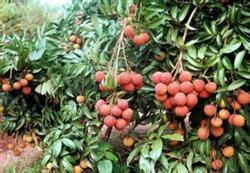
Five key management measures for post-harvest lychee care
In May and June, some early-maturing lychee varieties are soon harvested, and it is time to enter the post-harvest management period. Fruiting consumes a large amount of nutrients in lychee, and picking the fruit damages the branches, giving the tree a kind of "internal injury." Therefore, timely management after harvest is needed so the lychee can be replenished with nutrients early and lay the foundation for a bumper crop next year. Otherwise the tree...
条件筛选