What does microbial composting do? Understanding microbially enhanced composting in one article
Microbial oil cake compost: Organic farming places special emphasis on cultivating the soil so that it can maintain the highest productive capacity, and one of the best ways to improve the soil is to apply organic fertilizers such as microbial oil cake fertilizer and oil cake liquid fertilizer. This not only significantly shortens the production time of organic fertilizer, but the method is also very simple, clean and hygienic, and crop yield and quality are markedly improved.
The effects of microbial oil cake compost
After this compost is spread on the soil, it not only improves the soil microbial flora, transforming the soil from a putrefactive type to a fermentative synthetic type and giving full play to the soil's potential, creating a soil environment favorable for crop growth, but it can also drive out pathogenic bacteria in the soil. The nitrogen, phosphorus, potassium, calcium and other major fertilizer components and trace elements it supplies are absorbed by crops and can also enhance plant growth vigor and resistance to pests and diseases. In addition, it is effective in controlling nematodes, resolving continuous cropping obstacles, improving soil aggregate structure, and increasing crop yield, fruit sweetness, crispness and flavor. When applied to the production of kitchen waste compost and poultry and livestock manure compost, it can promote rapid fermentation, reduce foul odors, and improve compost quality.
How to make microbial oil cake compost
1. Main materials
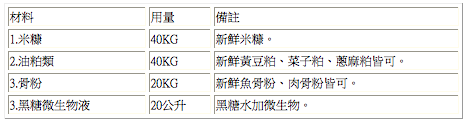
2. Secondary materials
These include rice straw, rice husks, sawdust, okara (tofu dregs), distillers' grains, coal dust, zeolite, crab and shrimp shells, fallen leaves, bark, and so on. Any organic matter that is easy to obtain, inexpensive and fresh can be used.
3. Production procedure
1. Thoroughly stir and mix fresh rice bran, oil cake, bone meal and secondary materials such as rice straw and rice husks.
2. Spray diluted brown sugar microbial solution onto the above mixed materials and stir evenly until the ideal moisture level is reached (overall water content about 30%), that is, when the mixed material is squeezed in the hand and then released, it forms a slight clump and immediately crumbles apart after a gentle shake.
3. Then pile it up to a height of 30 cm and cover it with a breathable cloth bag or old fermenting material, which can also prevent mosquitoes, cockroaches and rats from getting in.
4. After the materials ferment, the temperature will rise. At this time, always make sure the temperature does not exceed 45 degrees C. Be sure to turn the pile to release heat before covering it again and continuing fermentation.
5. The fermentation time is 7 days in summer and 10~15 days in winter to complete. The standard for judging success is to smell it: if it has a sweet-and-sour fermented smell, it is successful; if you smell a putrid stench, it means it has failed.
4. How to use
1. When applying it in the field, be careful to bury it in the soil and avoid exposure to sunlight. The application rate is 3000~6000 kg per hectare. It is best to apply it as a base fertilizer when preparing the land, and the soil should be kept moist for better results.
2. Put the microbial oil cake fertilizer into a fine-mesh net bag, then soak it in diluted brown sugar microbial solution for 24 hours. Take out the net bag, dilute the leachate with water 300~500 times, and apply it as a top dressing. It can control soil and leaf pests and diseases and promote the reproduction of effective microorganisms in the soil. Because the leachate cannot be stored for a long time, be sure to use it up within 1~2 days.
Its fertilizer effect is faster than ordinary poultry and livestock compost, but it also fades quickly, so in long-term crop cultivation, care should be taken to replenish top dressing at any time. Although sugar-vinegar liquid has many effects after years of trial use in various places, it is not omnipotent and still has some shortcomings to be improved. For example, when used on pears and pomelos during the young fruit stage, it easily causes spray marks, so it should be used only after bagging; after spraying on alliums, the leaf tips easily die back, so it should be used with care; for some sensitive crops such as papaya, loofah, melon and watermelon, the dilution factor should be increased to more than 800 times to prevent phytotoxicity. Also, sugar-vinegar liquid is acidic. If used in large amounts over a long period, whether it changes the quality and flavor of crops is worth noting, especially on tea, where it must be applied with particular care. To effectively control various pests and diseases, it is best to begin using it at the early stage of crop growth (1~2 times per week). This is what is meant by "prevention is better than cure."