How to prune newly planted peach trees? A full breakdown of the key methods
How should newly planted peach trees be pruned? When is the best time to prune newly planted peach trees for the best results? Please provide guidance. Peach trees have a relatively large annual growth increment, and their buds have strong precocity, so a newly planted peach tree can sprout 3 to 4 flushes of shoots in the same year. Therefore, this characteristic of peach trees can be used, on the premise of strengthening fertilizer and water management, through summer pruning...
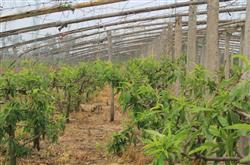 How should newly planted peach trees be pruned? When is the best time to prune newly planted peach trees for the best results? Please provide guidance
Peach trees have a relatively large annual growth increment, and their buds have strong precocity, so a newly planted peach tree can sprout 3 to 4 flushes of shoots in the same year. Therefore, this characteristic of peach trees can be used, on the premise of strengthening fertilizer and water management, to speed up the formation of tree vigor through summer pruning, convert water sprouts into fruiting branch groups suited to the framework branches, promote flower bud formation, and achieve the goals of shaping in the same year, fruiting in two years, and a heavy yield in three years. The methods for newly planted peach trees before summer are described in detail below for reference:
Summer pruning time: Newly planted peach trees begin to enter the rapid growth period in early to mid-June. When the new shoots have sprouted to more than 60 cm, carry out the first summer pruning; carry out the second summer pruning in early to mid-July; and carry out the third summer pruning in early to mid-August.
Reasons for summer pruning: Because peach trees have a strong demand for light, strong apical dominance, and short-lived latent buds, if the main branches are too straight they will cause vigor at the front and dieback at the rear, which is unfavorable for three-dimensional fruiting. If the vigorous shoots on the framework branches are not controlled, they will affect light, disrupt the tree shape, blur the distinction between primary and secondary branches, and also hinder flower formation and the rapid expansion of the canopy. However, pruning too heavily or leaving too few branches, especially pruning too late in summer, so that some water-sprout-type competitive branches grow to the point of being a "tree on top of a tree" before being dealt with all at once, will cause severe weakening of tree vigor and trigger gummosis. Therefore, summer pruning must be done properly.
Summer pruning methods
1. Peach tree pinching methods
(1) Main branch pinching method for peach trees:
First, according to the requirements of the open-center form, allocate the main branches reasonably according to the spacing between trees. Generally, when the spacing between trees is within 2 m, 2 main branches may be selected to extend oppositely toward the row middle (Y-shaped training); when the spacing between trees is more than 2 m, 3 main branches may be selected (with a planar angle of 120° between each other). During the three months of June, July, and August, each time the new shoots grow 60 cm, pinch off more than 10 cm of the new shoot tips. Lateral branches should be used to extend forward, making them turn left and right and stretch forward in a flowing manner, so as to help the fruiting branch groups arranged on the framework branches grow evenly and bear fruit in three dimensions.
(2) Lateral branch pinching method for peach trees:
When the spacing between trees is greater than or equal to 4 m, 2 large dorsally oblique lateral branches should be allocated on each main branch. Generally, the first lateral branch is 40 to 50 cm from the central leader, and the second lateral branch (on the opposite side of the first lateral branch) is about 100 cm from the trunk. The pinching method is the same as for the main branches, but the lateral branch left the first time must be on the outside of the lateral branch. (3) Pinching of other branches. Vigorous branches on both sides of the main and lateral branches and on the back can be pinched continuously at 5 to 10 cm to weaken tree vigor, promote branching, promote flower formation, and train them into medium to large fruiting branch groups. Moderately vigorous, flat, oblique, slender, and weak ones can be left unpruned to form flowers and support the tree body.
2. Branch thinning After the main branches are selected, excessive vigorous branches on the trunk should be removed as early as possible, while flat, oblique, slender, and weak ones can be retained to support the tree body. However, do not remove too many branches at one time, and even more importantly, do not thin large branches on the trunk in "opposite" positions.
3. Branch bending and propping For main branches with too small an angle, do not use the "back branch heading replacement" method to open the angle, otherwise it will result in "the big tree being pruned small, and the small tree being pruned away." Branch bending to open the angle can be done in mid-to-late August (around End of Heat). For main branches with too large an angle, they should be propped up promptly with forked branches to promote balanced growth among the main branches.
Click to get more peach tree planting techniques
Click to get more fruit planting techniques