-
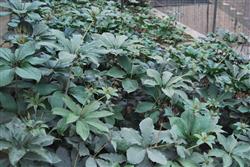
Paris polyphylla cultivation techniques shared, with practical methods explained in detail
Paris polyphylla is a perennial herbaceous plant with a long growth cycle; it takes 8 to 10 years from sowing to harvest. It is one of the main ingredients of state-protected traditional Chinese medicines such as "Yunnan Baiyao" and "Gongxuening". In recent years, with continuously increasing demand, the harvesting rate has far exceeded the rate of natural growth, causing Paris polyphylla resources to become sc...
-
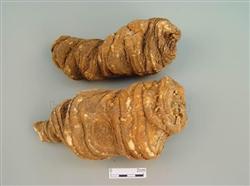
What are the uses of Paris polyphylla? A detailed guide to planting and management methods
What is Paris polyphylla used for? How do you plant and manage it? Please give an introduction. Paris polyphylla is also called Dulian (one-horn lotus), Qiyeyizhihua (seven leaves and one flower), Chonglou yizhijian (Paris polyphylla one arrow), etc. It belongs to the Liliaceae family and is a perennial herbaceous plant. It is one of the main ingredients of nationally protected traditional Chinese medicines such as "Yunnan Baiyao" and "Gongxuening". The medicinal part is the dried tuber of Paris polyphylla. Paris polyphylla tastes...
-
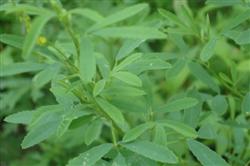
What environment suits Scutellaria baicalensis? Detailed sowing methods
What environment suits growing Scutellaria baicalensis? How do you sow Scutellaria baicalensis well? Here is an introduction: Scutellaria baicalensis can grow in areas with an annual average temperature of 4-10°C, an annual accumulated temperature of 2500-4000°C at ≥10°C, and a frost-free period of 120-180 days. Suitable soil conditions for sowing: deep soil layers, good drainage, loam, sandy loam or humus loam, and both flat land...
-
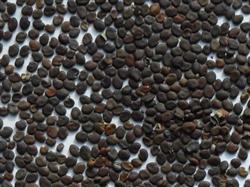
What are the common propagation methods for the medicinal herb Scutellaria baicalensis?
How is the medicinal herb Scutellaria baicalensis propagated? Please explain the methods. The propagation methods for the medicinal herb Scutellaria baicalensis can be carried out with reference to the following methods: 1. Cuttage propagation. The most suitable period for cuttage is May and June, when the plants are in a vigorous vegetative growth stage. Cut the semi-lignified young tender part from the upper end of the stem and branch (the survival rate is very low when the middle and lower parts of the stem are used as cuttings)...
-
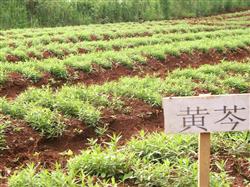
How to fertilize Scutellaria baicalensis (Baikal skullcap) when growing it? Introduction to scientific fertilization methods
How to fertilize when growing Scutellaria baicalensis? Please introduce the fertilization methods. When growing Scutellaria baicalensis, you can fertilize as follows. In the first year, after the seedlings are thinned to a stand, carry out the first fertilization, applying 500 kg of diluted human urine and manure per mu or 3-5 kg of urea, and in June-July topdress with 30 kg of ammonium phosphate. In the 2nd and 3rd years, after green-up, apply 40-50 kg of decomposed cake fertilizer, and in June...
-
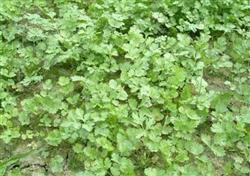
How to prevent and control cilantro leaf blight? These methods you need to master
What harm does cilantro leaf blight cause? How to prevent and control cilantro leaf blight? Netizens, please help share. Zhongdiwang has compiled the harm and control methods of cilantro leaf blight, listed below for netizens' reference. Harm of cilantro leaf blight: once the disease occurs, the condition spreads rapidly and the harm caused is relatively serious. It mainly...
-
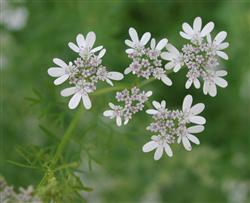
Cilantro growing methods: how to manage it after the Start of Autumn?
How do you manage cilantro after the Start of Autumn? What should you pay attention to? We ask fellow gardeners for guidance. Generally, after the Start of Autumn, open-field cilantro enters its peak season. Zhongdiwang has compiled the points to note for cilantro after the Start of Autumn, listed below for fellow gardeners' reference. Note 1: Prevent cilantro bolting: Summer...
-
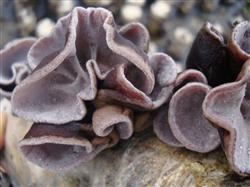
Cultivation Methods and Technical Key Points for Oversummering Auricularia polytricha
How to cultivate oversummering Auricularia polytricha? Please give guidance. For substitute-material cultivation of Auricularia polytricha and Auricularia maxima, there are two types: spring cultivation and autumn cultivation, and in most regions it is spring cultivation. However, in spring cultivation, the early stage generally has low temperatures, making mycelial growth difficult; in the later stage, the fruiting temperature is high, resulting in many malformed fruiting bodies. To solve this problem, soil-covering oversummering cultivation is carried out. Feeding 200...
-
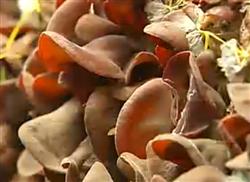
What are the cultivation methods for Auricularia polytricha?
How is Auricularia polytricha cultivated? Please give guidance. Auricularia polytricha is a medium-to-high temperature type fungus with a relatively wide temperature adaptation range; the young fruiting body is cup-shaped, gradually growing into an ear shape, with many ear pieces connected together in a chrysanthemum shape; the diameter is generally 10 cm-20 cm, and after drying it shrinks strongly into a horny texture, hard and brittle...
-
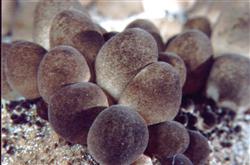
How to prevent straw mushroom death? A detailed guide to practical methods
How to prevent straw mushroom death? Here is an introduction. To prevent straw mushroom death, you can refer to the following methods for prevention and control: 1. Poor ventilation. Straw mushroom is a high-temperature aerobic fungus, and its growth and development require sufficient oxygen. During cultivation, in order to raise the compost temperature, the plastic film is sometimes left in place for too long, causing excessive carbon dioxide in the compost pile and leading to oxygen deficiency. The small mushrooms, due to poor ventilation and poor gas exchange, find it difficult to grow normally and become wilted.
条件筛选