Paris polyphylla cultivation techniques shared, with practical methods explained in detail
Paris polyphylla is a perennial herbaceous plant with a long growth cycle; it takes 8 to 10 years from sowing to harvest. It is one of the main ingredients of state-protected traditional Chinese medicines such as "Yunnan Baiyao" and "Gongxuening". In recent years, with continuously increasing demand, the harvesting rate has far exceeded the rate of natural growth, causing Paris polyphylla resources to become sc...
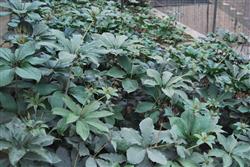
Paris polyphylla is a perennial herbaceous plant with a long growth cycle; it takes 8 to 10 years from sowing to harvest. It is one of the main ingredients of state-protected traditional Chinese medicines such as "Yunnan Baiyao" and "Gongxuening". In recent years, with continuously increasing demand, the harvesting rate has far exceeded the rate of natural growth, causing Paris polyphylla resources to become scarce. Using artificial seedling propagation in production is an effective way to solve this situation. The following Paris polyphylla cultivation techniques are provided for reference:
1. Site selection and land preparation: Paris polyphylla has no strict requirements for macroclimate and soil type, but it requires a special microclimate for growth and development, so site selection is most important. It is most ideal to choose shaded gentle slope land or flat land with relatively short sunshine, and night-damp soil, gray bubble soil, or humus soil that is loose in texture and relatively strong in both water retention and permeability.
2. Planting methods: Paris polyphylla is mainly planted by seed, and rhizomes can also be used. 1. Seed planting. Direct sowing is best, but in order to save seeds and achieve high yield through close planting, seed seedling raising and transplanting can be used. (1) Direct sowing. In mid-to-late May, after thorough rain, on the prepared seedbed surface, make small shallow pits 3-5 cm deep with a row spacing of 30-35 cm and a plant spacing of 20-25 cm; make 4 rows on a narrow bed of 130 cm, and 5 rows on a wide bed of 150 cm. Before sowing, soak the seeds in cold water for 24 hours, mix with plant ash, and sow; place 2-3 seeds per pit, then cover with 2-3 cm of fertile soil made of half fine manure and half fine soil. If the soil is dry, water promptly; seedlings emerge in 7-10 days. (2) Seedling raising and transplanting. This is an important measure for saving seeds and catching the right season. In early April, choose a seedbed in dry land or vegetable garden land with a water source. Before digging the soil, it is best to use 40% quintozene, 5-10 g per sq m mixed with fine soil and spread to disinfect the soil, then repeatedly turn over the topsoil, level and finely prepare the bed surface, open sowing furrows about 5 cm deep on the bed surface at a row spacing of 15 cm, sow in the furrows at a plant spacing of 5 cm, then cover with 3 cm of soil, cover with 2 cm of fine manure, water thoroughly and cover with plastic film; seedlings can emerge in 5-7 days. One month after seedling raising, transplant the small seedlings to the field according to the direct sowing specifications. 2. Rhizome planting. In autumn and winter, dig up robust rhizomes free of pests and diseases and store them in sand in a cool, dry place. In early-to-mid April of the following year, take them out and cut them into small sections according to the characteristics of residual buds and bud scars on stems that have sprouting ability, ensuring each section has 1 bud scar. After cutting, dry them properly and mix with plant ash, then plant them in rows in the seedbed like sowing, and cover with film. After 15-20 days, when roots and buds have grown, transplant them to the field in mid-to-late May according to the direct sowing specifications.
Click to get more Paris polyphylla cultivation techniques
Click to get more medicinal herb cultivation techniques