-
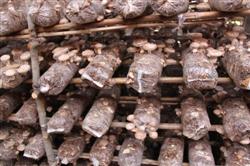
How to prevent mite damage in shiitake mushrooms? These control methods you need to master
How to prevent mite damage in shiitake mushrooms? Please explain. Mites can only be mainly prevented, primarily by keeping the area around the cultivation site clean and sanitary, away from chickens, pigs, warehouses, feed sheds and similar places. The site can be sprayed with 73% propargite emulsifiable concentrate at 3000 times dilution to prevent and kill latent mite sources. During the cultivation process, 9 raw materials must be selected fresh and...
-
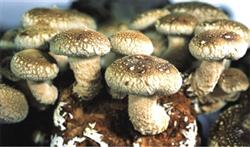
What are the control methods for shiitake mushroom deformity disease?
How do you prevent and control shiitake mushroom deformity disease? Please explain the control methods. During the growth of shiitake fruiting bodies, "candle mushrooms" (stalked with no cap), "pinecone mushrooms" and "lychee mushrooms" (caps clustered together with no stalk or not opening) often appear; these are deformed mutant mushrooms of shiitake and belong to physiological diseases. The control methods include the following...
-
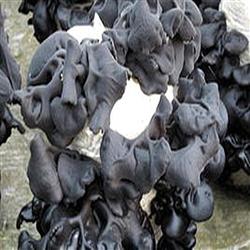
Methods for controlling contaminant fungi and pests in wood ear mushroom cultivation
How do you control contaminant fungi and pests when growing wood ear mushrooms? Please explain the methods. For growing wood ear mushrooms, you can refer to the following methods to control contaminant fungi and pests: 1. Cultivation site: choose a spot facing the sun, sheltered from the wind, with good ventilation and convenient drainage. The site should be cleaned and disinfected regularly; you can spray lime powder, 200x dichlorvos or trichlorfon...
-
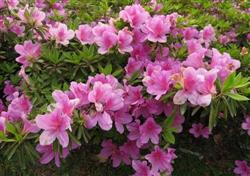
What fertilizer is best for azaleas? Fertilizer selection and application methods
What fertilizer is best for azaleas? Please give guidance. Azaleas are fertilizer-loving plants. In addition to the main nutrients nitrogen, phosphorus and potassium, they also need trace elements such as boron, copper, molybdenum and zinc. For azaleas, fertilizers with mild strength and long-lasting effect are suitable. For home azalea growing, ox horn, ram horn and animal hoof pieces can be used; these fertilizers contain 12%-15% nitrogen and 0.2%-8% phosphorus, and also contain a small amount of potassium and trace elements. Thin hoof pieces take effect 1 month after application, while thick hoof and horn pieces show fertilizer effect after 2 months, and the fertility can last 6-8 months. When using them, they can be buried at the edge or bottom of the pot along with repotting or changing pots. Cake fertilizer is also a relatively complete fertilizer in terms of nutrition. The nutrients in cake fertilizer generally contain 2.1%-7.6% nitrogen, 0.54%-3.3% phosphorus and 0.5%-2.7% potassium. Generally speaking, soybean cake and peanut cake contain more nitrogen, while rapeseed cake and cottonseed cake contain more phosphorus. They must be fully fermented before application. Fertilizer made by composting livestock manure and tree leaves can be mixed into the growing medium when repotting.
-
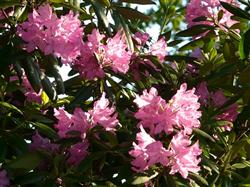
What Is Rhododendron Leaf Spot? Symptom Identification and Control Methods
What is rhododendron leaf spot? How to control it. Please introduce rhododendron leaf spot: Symptoms: It mainly infects the leaves. In the early stage of the disease, small reddish-brown spots appear on the leaves and gradually expand into round lesions, or irregular polygonal lesions, dark brown, 1mm-5mm in diameter. In the later stage, the tissue in the center of the lesion turns grayish white...
-
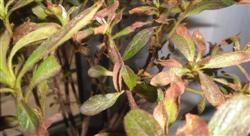
What are the control methods for azalea leaf spot disease?
How do you control azalea leaf spot disease? Please explain azalea brown spot disease: in the early stage of the disease, brown spots appear on the leaf margins, the boundary between diseased and healthy tissue is not obvious, showing a transition of light green?brown?rust red; as the disease spreads, the spots enlarge or the entire leaf turns brown, causing the leaves to drop prematurely, and even the whole plant...
-
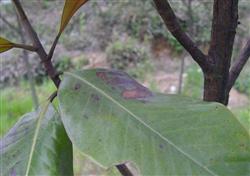
What are the control methods for southern magnolia leaf blight?
How do you control southern magnolia leaf blight? Please give guidance. Southern magnolia leaf blight: 1. Symptoms: The leaf blight pathogen mainly infects leaves. On the surface of diseased leaves, light brown or yellow small spots first appear, which later expand into round or irregular lesions, 5-12 mm in diameter, with dark brown edges and grayish-white centers, on which many small black dots are borne...
-
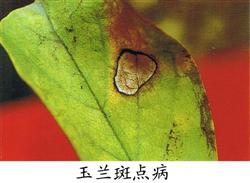
What are the control methods for Magnolia leaf spot disease?
How do you control Magnolia leaf spot disease? Please give guidance. Magnolia leaf spot disease: 1. Symptoms: Also known as brown spot and leaf spot, it mainly damages leaves. It first appears as small yellow to light brown round spots, then expands into nearly round to irregular large spots, with reddish-brown line patterns at the edges and grayish-white centers; in the later stage, small black dots are scattered on the diseased areas...
-
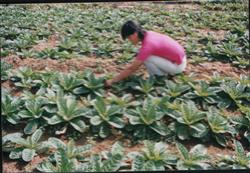
Detailed Explanation of Rehmannia Planting Methods and Technical Key Points
How to plant Rehmannia? Please give a detailed introduction to the planting method. Rehmannia, also known as Huai Rehmannia, Shengdi, and Shudi, is a plant of the genus Rehmannia in the Scrophulariaceae family. Its rhizome is used as medicine and has the effects of nourishing yin and clearing heat, stopping bleeding, and tonifying blood. It mainly treats conditions such as yin deficiency, blood deficiency, blurred vision and tinnitus, and soreness and pain in the waist and knees. The pollution-free cultivation techniques are introduced below...
-
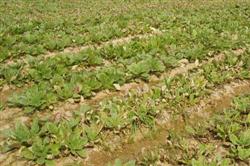
Detailed Explanation of Rehmannia Cultivation Methods and Technical Key Points
How is Rehmannia cultivated? Is there a technical introduction to Rehmannia planting? Rehmannia planting can be carried out by referring to the following methods: 1. Site selection and land preparation. It is advisable to choose sandy loam soil with deep soil layers, fertility, and good drainage. In the winter of the previous year or early spring, plow the soil more than 25 cm deep, and at the same time apply 2000-3000...
条件筛选