What are the cultivation methods for Auricularia polytricha?
How is Auricularia polytricha cultivated? Please give guidance. Auricularia polytricha is a medium-to-high temperature type fungus with a relatively wide temperature adaptation range; the young fruiting body is cup-shaped, gradually growing into an ear shape, with many ear pieces connected together in a chrysanthemum shape; the diameter is generally 10 cm-20 cm, and after drying it shrinks strongly into a horny texture, hard and brittle...
How is Auricularia polytricha cultivated? Please give guidance.
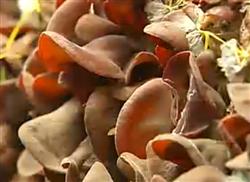
Auricularia polytricha is a medium-to-high temperature type fungus with a relatively wide temperature adaptation range; the young fruiting body is cup-shaped, gradually growing into an ear shape, with many ear pieces connected together in a chrysanthemum shape; the diameter is generally 10 cm-20 cm, and after drying it shrinks strongly into a horny texture, hard and brittle; the back of the fruiting body is raised, with short downy hairs, and the surface is smooth or has vein-like wrinkles; the color varies depending on the variety and cultivation method, appearing dark brown, brown, light brown, slightly yellow, etc. Auricularia polytricha is currently in relatively short supply on the market. The key points of its cultivation technique are introduced as follows:
I. Cultivation season
The best ear-producing season for Auricularia polytricha should be from the Beginning of Summer to the Autumn Equinox. Therefore, fungus bag cultivation (it takes 40 days from inoculation to full mycelial colonization) can be carried out after the Spring Festival. If the cultivation quantity is large, it can be started one month before the Spring Festival. Fungus bags that have been fully colonized with mycelium before the Spring Festival must be strictly protected from freezing. After the Spring Festival, a sunshade shed can be set up behind the house or on open ground, with all four sides tightly enclosed with straw curtains. When placing the fungus bags, a certain gap must be left between rows. The fungus bags can be covered with woven bags on top. Fungus bags that have been fully colonized with mycelium are not afraid of rain. If the spring is dry and there is no rain, water can be sprayed as appropriate.
II. Selection of superior varieties
Select varieties with robust mycelial growth, early ear production, strong resistance, short growth period, good fruit body shape, and high yield, such as Shanghai No. 3, 781, 952 and other strains.
III. Preparation of culture substrate
According to the carbon-to-nitrogen ratio required for the growth and development of Auricularia polytricha, materials can be selected locally based on the local advantageous resources. Commonly used bag substrate formulas are: (1) cottonseed hulls, sawdust, and corncobs each accounting for 1/3, sugar 1%, lime powder 2%. (2) cottonseed hulls 25%, corncobs 35%, sawdust 36%, sugar 1%, gypsum powder 1%, lime powder 2%.
IV. Making fungus bags
Soak the corncobs in lime water in advance, then add sawdust, cottonseed hulls, and various auxiliary materials, and mix thoroughly. The moisture content should be such that 3-4 hours after mixing, water seeps out between the fingers when the culture substrate is tightly squeezed by hand. After sterilization, the pH value is 6-6.5. If there is a difference, adjust the amount of lime. Pesticides such as carbendazim and thiophanate must never be added to the culture substrate. The specification of the plastic bags is 20 cm x 42 cm (each bag can hold 800 g of dry material and can produce 150 g of dried ears). When filling the bags, the tightness should be appropriate, and the mouth string must be tied tightly. After normal-pressure sterilization reaches 100°C, maintain for 11-12 hours. After sterilization with formaldehyde or potassium permanganate, inoculate with the fungus strain. Do not rub the fungus strain too finely, but there should also be no large chunks. Appropriately increase the inoculation amount so that the fungus strain preferentially covers the surface of the substrate, which can effectively block the invasion of contaminating bacteria and reduce spoiled bags. In early spring, inoculate while taking advantage of warmth; in late spring, let it cool before inoculating.
V. Management during the mycelial growth period
(1) Greenhouse and temperature: In the first few days after the fungus bags are put into the room, the room temperature must reach 25°C-28°C, so that the fungus strain can germinate and colonize as quickly as possible under optimal conditions. After the mycelium emerges, lower the temperature to 18°C-22°C. At this temperature, the mycelium is white and robust, and the yield is high. As far as temperature is concerned, the temperature in the first few days determines the success rate, and the later temperature determines the yield.
(2) Light and ventilation: The light should be on the dim side. Light is an important factor in the formation of fruiting bodies. By controlling light intensity, the formation of fruiting bodies can be controlled and nutrient consumption reduced. Wood ear fungus is an aerobic fungus and requires sufficient oxygen throughout its growth and development process, so ventilation and air exchange must be carried out 1-2 times regularly every day. In spring, when the outside temperature is high, ventilation and air exchange can be chosen at night.
(3) Timely inspection for contaminating bacteria: Fungus bags are often contaminated by miscellaneous bacteria and must be inspected promptly. Handle them gently to prevent damage to the bag walls. If mouse damage is found in the greenhouse, spread lime promptly so that a layer of lime covers the surface of the fungus bags, which can stop the damage.
Click to get more wood ear cultivation techniques
Click to get more edible fungus cultivation techniques