-
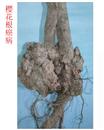
What are the control methods for cherry blossom crown gall disease?
How do you control cherry blossom crown gall disease? Here are the methods. The gorgeous cherry blossom is deeply loved by people, but it is easily infected by a fatal crown gall disease. This disease mainly occurs on the roots and on the trunk and lateral branches of the aboveground part of the cherry blossom. In the early stage of the disease, the root crown swells into spherical or hemispherical tumor-like growths; young galls are white, with a soft texture...
-
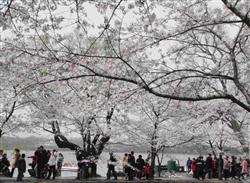
A Detailed Guide to Cherry Blossom Cultivation Techniques and Management Methods
How are cherry blossoms cultivated and managed? Please give an introduction. For cherry blossom planting and management, you can refer to the following: 1. Soil requirements and improvement measures. Cherry blossoms can grow well in sandy loam and clay loam rich in humus (pH 5.5 to 6.5). In places in the south where the soil is heavy clay, generally mix in homemade leaf mold (soil made by composting collected leaves, acidic soil, chicken manure, and charcoal powder). Note that before mixing, all existing clay clods must be broken up, otherwise it will not improve the soil. In places where the groundwater level is less than 1 m, use the raised planting method, that is, level the entire planting hole first, then pile soil on top and plant the seedling. For alkaline soil in the north, sulfur powder or ferrous sulfate, etc. needs to be applied to adjust the pH value to about 6. Apply 2 grams of sulfur powder per sq m, with a validity period of 1 to 2 years, and measure it every year so that the pH value does not exceed 7. Varieties such as mountain cherry and Somei Yoshino have straight trunks and larger tree bodies. They are strongly heliophilous tree species and require shelter from wind and a sunny location, with ventilation and light transmission. When planting in groups, every tree must be able to receive sunlight.
-
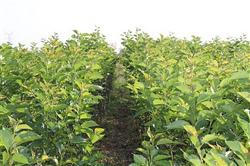
What are the propagation methods for cherry blossoms? A detailed explanation of several common methods
What propagation methods are there for cherry blossoms? Please explain that cherry blossoms are mainly propagated by grafting, though sowing and cuttings are also possible. For grafting, cherry or wild cherry seedlings are generally used as rootstock, with excellent cherry blossom varieties used as scions. Cleft grafting is mainly used, while budding is rarely adopted. Cleft grafting is carried out in March. Select robust 1-year-old cherry blossom branches...
-
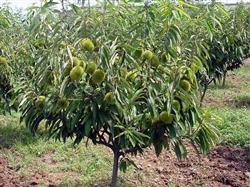
How to prune chestnut trees in winter? Detailed pruning methods
How do you prune chestnut trees in winter? How should chestnut trees be pruned in winter? What methods are best for pruning? Please explain the methods. When growing chestnut trees, pruning is needed in winter. The best pruning time for chestnut trees is from half a month after leaf fall to half a month before spring bud break. For detailed methods, refer to the following list: Chestnut...
-
Cherry Blossom Summer Management Methods and Care Tips
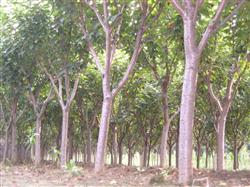
How to manage cherry blossoms in summer? Here is some guidance. In summer, cherry blossoms can be managed by referring to the following methods: 1. Mulching with straw to prevent drought: Summer temperatures are high and evaporation is fast, so the amount of watering is greater than in other seasons, but the principle of "do not water if not dry, and water thoroughly when watering" should still be adhered to. Cherry blossoms are shallow-rooted plants, and their growing roots are close to the soil...
-
What are the key points of cherry blossom planting and management methods?
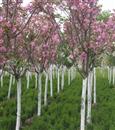
How should cherry blossoms be managed well when planted? Please provide guidance. Cherry blossoms are sun-loving flowering trees that like sunlight, tolerate cold and drought, and prefer well-drained sandy soil. They fear wind during the flowering period, so a sheltered spot should be chosen when planting; they are generally planted in mountain gullies, beside streams and in mixed forests. Cherry blossoms have a strong heliotropic tendency, so when transplanting, the original sun-facing side must still face the sun...
-
How to prune cherry blossoms? Detailed explanation of the correct methods and techniques
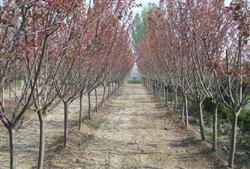
How to prune cherry blossoms? Please give guidance. Three points to note in shaping and pruning cherry blossoms: The shaping and pruning of cherry blossoms should focus mainly on light pruning, following the principles of a natural tree shape that is tall and robust, with branches spaced densely and evenly, and with many lateral branches that are well balanced. When shaping and pruning cherry blossoms, pay attention to the following issues: First: shaping and pruning before flowering should...
-
What to do about gummosis on navel orange trees? Analysis of control methods
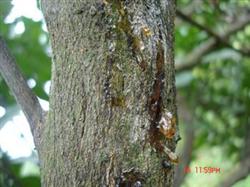
What to do about gummosis on navel orange trees? What causes gummosis on navel orange trees? Please advise. After navel orange trees enter June, temperatures rise, rainfall is plentiful, and with high temperature and high humidity, various pests and diseases begin to occur in large numbers. Gummosis is a fungal disease caused by Phytophthora, mainly damaging the trunk, followed by large branches, weakening the tree...
-
Navel Orange Cultivation Techniques and Orchard Management Methods
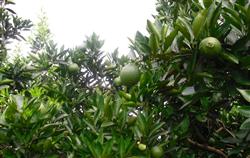
How to manage a navel orange orchard well? Please give a detailed introduction. Navel orange orchard management is divided into mature orchards and young orchards. For detailed methods, please refer to the following list. 1. Management methods for mature navel orange orchards: 1. Navel orange fruit retention methods: (1) From after flower drop to the second physiological fruit drop period, spray the leaves with 0.15% Huangjia natural brassinolide at 5000 times plus new-type nutrient liquid fertilizers such as Jinkuizi L, P, K extract at 500 times, Yelüling at 500 times, etc.) 2 to 3 times;
-
What are the control methods for grape anthracnose?
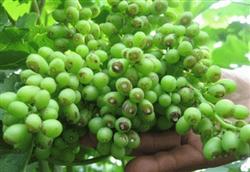
What harm does anthracnose do to grapes? How do you control grape anthracnose? We also ask netizens to help introduce it. Zhongdi Network has compiled the harm, causes and control methods of grape anthracnose, listed below for your reference. The harm of anthracnose to grapes: anthracnose mainly damages the fruit, while leaves, new...
条件筛选