Navel Orange Cultivation Techniques and Orchard Management Methods
How to manage a navel orange orchard well? Please give a detailed introduction. Navel orange orchard management is divided into mature orchards and young orchards. For detailed methods, please refer to the following list. 1. Management methods for mature navel orange orchards: 1. Navel orange fruit retention methods: (1) From after flower drop to the second physiological fruit drop period, spray the leaves with 0.15% Huangjia natural brassinolide at 5000 times plus new-type nutrient liquid fertilizers such as Jinkuizi L, P, K extract at 500 times, Yelüling at 500 times, etc.) 2 to 3 times;
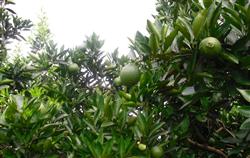 How to manage a navel orange orchard well? Please give a detailed introduction
Navel orange orchard management is divided into mature orchards and young orchards. For detailed methods, please refer to the following list
I. Management methods for mature navel orange orchards:
1、Navel orange fruit retention methods:
(1) From after flower drop to the second physiological fruit drop period, spray the leaves with 0.15% Huangjia natural brassinolide at 5000 times plus new-type nutrient liquid fertilizers such as Jinkuizi L, P, K extract at 500 times, Yelüling at 500 times, etc.) 2 to 3 times;
(2) Remove summer shoots, removing them once every 7 to 10 days;
(3) Continue pruning, mainly thinning pruning, to improve the ventilation and light transmission conditions of the canopy, cut off dead branches and diseased and pest-infested branches, and reduce sources of disease and pest infection;
(4) From mid-to-late May to early June, apply fruit yellow-suppressing ester to prevent navel yellow fruit drop.
2. Navel orange fruit thinning methods:In early June, thin out deformed fruit, diseased and pest-damaged fruit, densely clustered fruit, damaged fruit, wind-scarred fruit, and small fruit, so that the leaf-to-fruit ratio reaches approximately 60:1.
3. Navel orange bagging:In mid-to-late June, after applying pesticide solution to the canopy to control red spider mites, rust mites, canker, anthracnose, and other diseases and pests, promptly bag the fruit with special paper bags for navel oranges, using one bag per fruit.
4. Drought prevention and drought resistance for navel oranges:(1) Spray the leaves with Handilong at 500 times solution once each; (2) Do a good job of covering the tree base. (3) Open trenches in the soil and apply water-retaining resin at 40 to 50 grams per plant to retain water and prevent drought.
5. Navel orange disease and pest control:Continue to control canker, anthracnose, red spider mites, rust mites, scale insects, leaf roller moths (leaf silk worms), and swallowtail butterflies.
(1) To control canker, the following pesticides can be selected: 1.5% Junlimie aqueous emulsion at 1000 to 1200 times; 20% Yeqingshuang wettable powder at 400 to 500 times; agricultural streptomycin at 500 to 600 units plus 1% alcohol; medical streptomycin at 10 to 15 kg, 2% Xinzhiomycin at 2000 times; 50% Daisen ammonium at 600 times, 77% Keshade at 1000 times. (2) To control anthracnose, the following pesticide can be selected: 1.5% Jun Daisen manganese zinc at 800 times.
(3) To control scale insects, spray pesticide once in mid-May. The pesticides can be selected from: 99.1% Disichong at 150 to 200 times, 25% Daoshijing at 1500 to 2000 times, 25% Jiesijing at 800 to 1000 times, and Lesiben at 1000 times.
(4) To control leaf roller moths (hanging silk worms) and swallowtail butterflies, the pesticides that can be selected include: 20% Sulaiting at 2000 to 3000 times, Mieshaoli at 2000 to 3000 times, 1.8% Miechongling at 5000 to 6000 times, and Mieyouniao No. 3 at 1500 to 2000 times.
II. Management methods for young navel orange orchards:
1. Methods for promoting and strengthening shoots in navel oranges:(1) 15 to 20 days before new shoots sprout, combined with shaping, use summer shoots to expand the canopy, and pinch the new shoots when 8 to 10 leaves remain; (2) Apply 0.5 kg of Guomanduo biological organic fertilizer plus 0.05 kg of urea per plant, and spray Yelüling at 500 times, or 0.3% urea plus 0.2 potassium dihydrogen phosphate as a foliar supplement.
2. Drought prevention and drought resistance: (1) Cut orchard weeds and cover the tree base; (2) Spray the leaves with Handilong at 500 times solution 2 to 3 times. (3) Open trenches in the soil and apply "Kehan 98" water-retaining resin at 10 to 20 grams per plant.
3. Disease and pest control for young navel orange trees:The main focus is on controlling leafminer moths, red spider mites, swallowtail butterflies, canker, and anthracnose. For control methods, refer to those for mature trees.
Click to get more navel orange cultivation techniques
Click to get more fruit cultivation techniques