How to prune chestnut trees in winter? Detailed pruning methods
How do you prune chestnut trees in winter? How should chestnut trees be pruned in winter? What methods are best for pruning? Please explain the methods. When growing chestnut trees, pruning is needed in winter. The best pruning time for chestnut trees is from half a month after leaf fall to half a month before spring bud break. For detailed methods, refer to the following list: Chestnut...
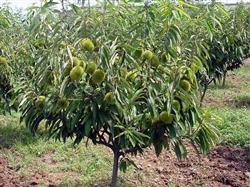 How do you prune chestnut trees in winter? How should chestnut trees be pruned in winter? What methods are best for pruning? Please explain the methods.
When growing chestnut trees, pruning is needed in winter. The best pruning time for chestnut trees is from half a month after leaf fall to half a month before spring bud break. For detailed methods, refer to the following list:
Pruning of young chestnut trees:
For pruning young chestnut trees, master the principle of "dormant-season pruning as a supplement, prefer light pruning over heavy pruning, remove few branches and do not head back."
During winter pruning, cut off all lateral branches below 40-50 cm on the trunk, and thin out overly dense branches, slender branches, overlapping branches, and crossing branches inside the canopy. At the same time, select and retain good fruiting branch groups, adjust the distance and direction between branch groups, and cultivate the main branches well. The extension branches of the scaffold branches can be left unpruned for one year and headed back in the second year.
Pruning of chestnut trees in full bearing period:
Pruning at this stage should remove diseased and insect-damaged branches, dead and dried branches, whorled branches, crossing branches, overlapping branches, and slender branches inside the canopy, strengthen ventilation and light penetration within the crown, and concentrate nutrients so that fruiting branch groups become thick and well filled.
For the terminal branches and the extension branches of scaffold branches, it is advisable to leave 50 cm and head back to promote lateral branches, increase the number of fruiting mother branches, raise the fruiting area to increase yield, and at the same time keep the outward expansion of the crown under control.
A portion of the water sprouts inside the canopy or on the middle and lower parts of large branches can be retained and transformed into fruiting mother branches, which both increases the fruiting area and prevents the crown from becoming "hollow." For overly dense fruiting mother branches, some should be appropriately thinned out, or some should be headed back to serve as new branches.
Before the crowns meet, about 15 fruiting branches can be retained per square meter of crown projection area; after the crowns meet, about 13 fruiting branches can be retained, with a branch spacing of about 40 cm. Overly vigorous fruiting branches can be appropriately headed back to encourage new shoots from the lower part. Fruiting branch groups that have become senescent should be appropriately retracted to encourage new shoots and cultivate them into fruiting branches.
Pruning of aging chestnut trees:
For chestnut trees that are severely aged, they can be dug out and replanted. If there are sprouts at the base, superior varieties can be grafted; after they are trained, the aged tree can be sawed off, so that the new seedlings or grafted seedlings occupy the space and the crown does not become "hollow."
For chestnut trees that are not extremely severely aged, at this stage first cut off dead and dried branches and diseased and insect-damaged branches. Water sprouts and thin, weak branches inside the canopy can be headed back and utilized. Senescent large branches should be retracted to a vigorous branch. From the new shoots that grow the following year, select branches with a good growth direction and plump, healthy development to cultivate into scaffold branches and fruiting branch groups. The renovation of aging trees should not be rushed too much; it is best carried out in stages over several years, with gradual adjustment, so that the branches are evenly distributed and grow well, achieving the goal of restoring normal fruiting.
Click to get more chestnut tree growing techniques
Click to get more fruit growing techniques