-
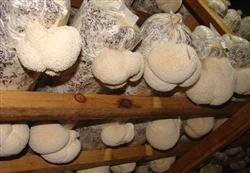
How to grow Hericium erinaceus (lion's mane mushroom) well? Detailed explanation of cultivation methods and techniques
How to grow Hericium erinaceus well? Please advise. Hericium erinaceus is a well-known edible and medicinal mushroom in China. The optimum growth temperature range for the mycelium is 22--24°C, and the best temperature for the fruiting body growth stage is 18--20°C. During bag-culture cultivation, the mycelium growth stage has no strict air humidity requirements, while the fruiting body growth stage requires a relative air...
-
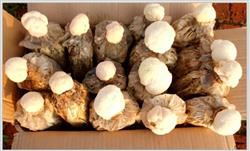
What are the high-yield cultivation methods for lion's mane mushroom?
What methods can achieve high yields when cultivating lion's mane mushroom? Please provide guidance. To achieve high yields in cultivating lion's mane mushroom, attention should be paid to the following aspects: First, select good-quality spawn. The mother culture used for production should have excellent traits, shown by fast growth, uniform and neat growth, and covering the slant within two weeks at the optimal temperature. When stored in a refrigerator, primordia often form, and microscopic examination shows a small number of chlamydospores. If there are too many spores, the yield tends to be low. If the mycelium turns yellow, is thin and weak, or sparse, it indicates that the spawn has degenerated. Uneven or irregular growth, or antagonistic phenomena, indicates that the spawn is not pure, and none of these should be used. All stock spawn should be dense and white, uniform from top to bottom, with no breaks in the mycelium, and vigorous mycelium on the surface. If the substrate shrinks, separates from the container wall, and the color darkens, it indicates that the spawn has aged. If stripes or spots of various colors appear around the wall, it indicates contamination in the spawn, and it cannot be used. Second, the age of the spawn must be appropriate. Generally, mother cultures and stock spawn stored in a refrigerator should not exceed 3 months, and at room temperature (20°C) should not exceed 20 days. If the spawn age is too long, its vigor declines, resulting not only in slow growth and low yield, but also poor stress resistance and high susceptibility to contamination. In addition, excellent varieties suitable for local production should be selected.
-
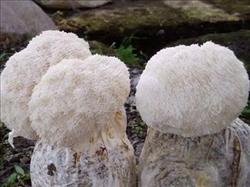
Detailed Explanation of Hericium erinaceus Cultivation Methods and Technical Key Points
How do you cultivate Hericium erinaceus? The following methods for cultivating Hericium erinaceus are provided for reference: 1. Understand the strain characteristics and determine the cultivation season. Hericium erinaceus is a fungus that spawn-runs at medium temperatures and fruits under low-temperature fluctuating conditions. Mycelial growth can occur from 10-33°C, with the optimum at 25-28°C; fruiting body growth can occur from 12-24°C, with the optimum at 16-20°C...
-
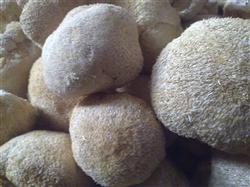
What are the methods for cultivating lion's mane mushroom?
What are the methods for cultivating lion's mane mushroom? Please explain. Lion's mane mushroom (Hericium erinaceus), as a large fungus, has long been known as a "mountain delicacy." It contains 16 kinds of amino acids as well as various vitamins and minerals, and has the advantages of a short growth cycle, simple cultivation methods, high economic returns and good market prospects, making it very suitable for cultivation by individual households....
-
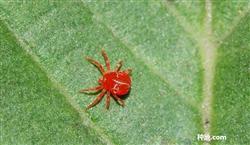
What are the methods for controlling red spider mites on chrysanthemums?
How should red spider mites on chrysanthemums be controlled? Here is an introduction to red spider mites: they damage leaves, initially causing small yellow spots; in severe cases the leaves curl, wither and drop, affecting growth and preventing flowering. Control methods: spray 20% dicofol emulsifiable concentrate at 800 times dilution or "Yaman Qisha" at 1000 times dilution, which also controls aphids; apply 2 to 3 times consecutively. Click...
-
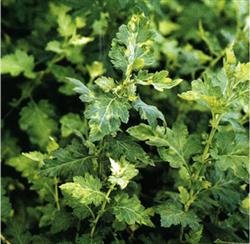
What are the effective control methods for chrysanthemum viral disease?
How to effectively control chrysanthemum viral disease? Please explain. Viral disease is a disease that occurs easily on chrysanthemums, and control must be strengthened. 1. Strict quarantine. Chrysanthemum plants with viral disease are virus-carrying bodies. When introducing varieties, strict quarantine must be carried out to prevent the virus from being spread artificially to virus-free areas, or spread out from virus areas and expanding the affected area...
-
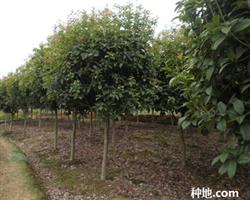
What are the propagation methods for potted osmanthus trees?
What pests and diseases affect osmanthus trees? How should they be controlled? Please advise. Common pests and diseases of osmanthus trees include the following: 1. Leaf spot disease. It mainly harms the leaves, initially appearing as small brown spots; the lesions are round or irregular, later with gray to grayish-white centers and reddish-brown edges, and blackish-gray mold-like growth on the lesions. High temperature and high humidity...
-
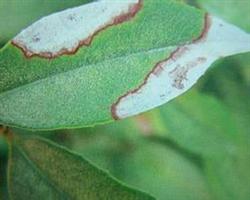
What are the control methods for sweet osmanthus brown spot disease?
How to control brown spot disease in sweet osmanthus? Please provide guidance. Brown spot disease is a common disease of sweet osmanthus, caused by infection with fungi of the Deuteromycotina. It occurs in both field-grown and potted sweet osmanthus plants. When it occurs, mild cases affect the ornamental effect, while severe cases cause plant death. Symptoms mostly occur on leaves, mostly starting from the leaf tip...
-
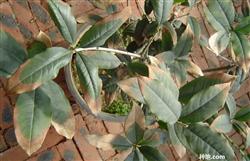
What are the control methods for leaf blight of osmanthus trees?
How to control leaf blight in osmanthus trees? Please introduce and guide. Leaf blight is a common disease in osmanthus cultivation. Its symptoms: it occurs at the leaf margins and leaf tips. It starts as small light brown spots, then gradually expands into irregular large patches. If several lesions connect, the entire leaf dries up by 1/3-1/2. The lesions are grayish brown to reddish brown,...
-
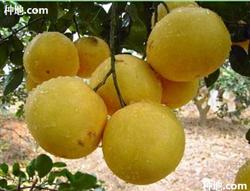
Grapefruit (Citrus paradisi) Planting Techniques and Management Methods (with pictures)
Grapefruit has a relatively high heat requirement and is suitable for planting in areas with an annual average temperature above 18°C. It can be planted where the annual accumulated temperature above 10°C is over 6000°C, and can produce high-quality fruit where it is above 7000°C. It is more cold-tolerant than lemon, withstanding extreme minimum temperatures of around -10°C. It cannot be planted in places where -8°C may occur. Therefore, choose...
条件筛选