-

Detailed Explanation of the Techniques and Methods for Establishing Fast-Growing Goji (Wolfberry) Plantations
Goji has strong adaptability and can tolerate cold, drought, and salinity-alkalinity. It can grow in sandy loam, loam, loess, and sandy wasteland saline-alkali soils alike. Goji prefers a cool climate; it loves light and loves fertilizer. II. Propagation Methods. Goji flowers are solitary or several clustered in the leaf axils, with a pink or pale purple-red corolla bearing dark purple vein patterns; the pedicels are slender...
-
Control Methods and Technical Key Points for Goji Berry Anthracnose
Symptoms Goji berry anthracnose is commonly known as black fruit disease. It mainly damages green fruits, tender branches, leaves, buds, flowers, etc. When green fruits are infected, small black spots or irregular brown patches initially appear on the fruit surface. During continuous rainy weather, the lesions keep expanding, and half or the entire fruit turns black; when dry, the fruit shrivels; when humidity is high, many orange-red gelatinous dots grow on the diseased fruit; tender branches, leaf tips...
-
Planting Methods and Key Technical Points for Grafted Bitter Melon Seedlings
How do you plant grafted bitter melon seedlings? Here is a detailed introduction. Grafted bitter melon seedlings can be planted by referring to the following methods: 1. Choose suitable rootstock and scion varieties. Choose cucurbit varieties with good compatibility and strong stress resistance as rootstock. Currently, Yunnan black-seed pumpkin and local Mopan pumpkin are preferable; for scion varieties, generally choose local main cultivars...
-
Bitter Melon Continuous Cropping: Planting Methods and Key Technical Points
How to grow bitter melon in continuous cropping? Please provide guidance on the methods. First, pay attention to timely pest and disease control. In the middle and late stages, bitter melon's stress resistance decreases, and the likelihood of pest and disease infection increases, so prevention should be carried out early. At present, the main disease harming bitter melon is powdery mildew, which can be controlled by spraying 12.5% myclobutanil emulsifiable concentrate at 2000 times dilution or 12.5% tebuconazole...
-
Summer Corn Ear Stage Management Methods and Technical Key Points
How should summer corn be managed during the ear stage? Please explain the methods. Summer corn ear stage management can refer to the following methods: 1. Remove weak plants and cultivate to promote roots. For those small plants, weak plants and ineffective plants, they should be removed early. During the ear stage, generally cultivate 1-2 times. After the small trumpet stage, cultivation should be shallow, to protect roots and conserve soil moisture; ...
-
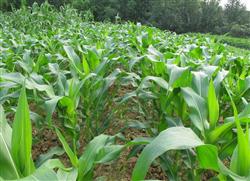
How is corn bred? Understanding corn breeding methods in one article
How is corn bred? Please explain corn's natural cross-pollination habit and the heterozygosity of its genetic basis, as well as the breeding procedure that exploits the heterosis of F1 generations between inbred lines arising from this, which together form the particularity of corn breeding. With almost no exception, every successful corn breeder and research institute starts from...
-
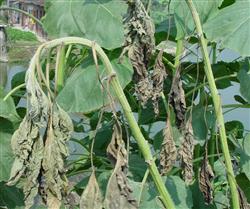
What are the control methods for sunflower sclerotinia rot?
How do you control sclerotinia rot in sunflowers? Please provide guidance on methods. Sclerotinia rot in sunflowers is caused by infection with Sclerotinia sclerotiorum. In addition to damaging sunflowers, it also damages economic crops such as soybean, rapeseed, sesame and tobacco. It can occur at all growth stages of sunflowers, with more cases occurring after flowering. It mainly damages the stems and flower heads, becoming...
-
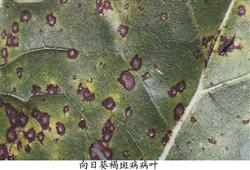
What are the control methods for sunflower brown spot?
How do you control sunflower brown spot? Please give guidance. Sunflower brown spot, also known as leaf blight, occurs widely across our country. In the early stage it can cause seedling death, and in the later stage it often causes premature leaf death, greatly affecting yield. In the early stage of seedling infection, nearly round lesions form on the cotyledons or young leaves, with a diameter of 2-6 mm...
-
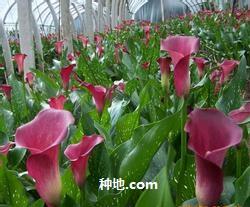
What are the care and management methods for colored calla lilies?
How should colored calla lilies be managed when planting? 1 Current production status of colored calla lilies. Colored calla lily is a perennial bulbous flower of the genus Zantedeschia in the Araceae family, and is an excellent cut flower and potted flower. In recent years, because of its bright colors, elegant form and wide range of applications, colored calla lily has occupied an increasingly important...
-

How to grow the yellow calla lily? A detailed guide to growing methods
How do you grow the yellow calla lily? What should you pay attention to? The yellow calla lily is also known as the yellow arum, belonging to the genus Zantedeschia in the family Araceae. I. Overview The yellow calla lily is elegant and graceful, with golden spathes, emerald green leaves dotted with white spots, making it an ornamental plant outstanding in both flower and foliage. At present, besides being widely used in garden waterscape arrangements, the yellow calla lily has become an important cut flower and potted plant material.
条件筛选