-
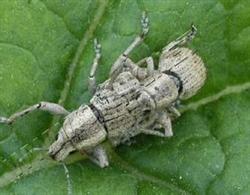
What are the control methods for the ginseng large gray weevil?
The large gray weevil, also known as the snout beetle or "tula lv", has an adult body length of 9-12 mm, grayish-yellow or grayish-black, densely covered with grayish-white scales. The head and rostrum are densely covered with golden shiny scales. The pests occurring this year mainly feed on tender stems and leaves on the soil surface during the seedling emergence period, causing great damage. When disturbed, they feign death and drop to the ground, causing damage in the early morning and evening....
-
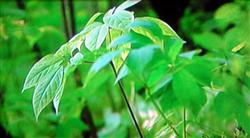
What are the control methods for ginseng click beetles?
The insect's scientific name is the click beetle, also known as wireworm, jinci rake, yellow youyan, etc., and its adult is also called the snapping beetle. It belongs to the order Coleoptera, family Elateridae. It causes the most serious damage to ginseng. It generally begins activity after the soil thaws, and the larvae mainly damage the underground root and stem parts of ginseng, generally in the layer from the ginseng root to 10 cm below the surface...
-
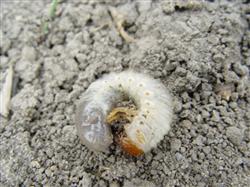
What are the control methods for ginseng white grubs?
White grubs are the larvae of large scarab beetles. They are voracious pests that can cause damage continuously. In spring, they begin activity when the soil temperature at 10 cm below the surface reaches 5°C; the optimal average soil temperature for activity is 13-18°C. Above 23°C they gradually move to deeper soil layers, and when the soil temperature drops in autumn to their suitable activity temperature, they move back up to the upper soil layers. Daily life...
-
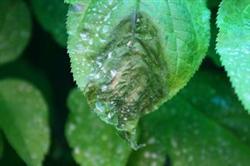
Detailed Explanation of the Occurrence and Control Methods of Ginseng Phytophthora Blight
This year the rainfall has been heavy, and the high temperature and high humidity are very suitable for the reproduction of the ginseng Phytophthora blight pathogen. The suitable temperature for the onset of ginseng Phytophthora blight is induced under soil temperatures of 10-30°C; soil temperatures of 20-26°C are most suitable for the disease to occur, while below 5°C and above 30°C the disease stops occurring. The main pathogen causing ginseng Phytophthora blight is the fungus of the genus Phytophthora in the subdivision Mastigomycotina...
-
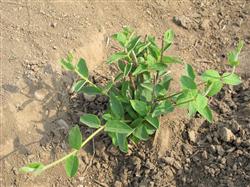
Honeysuckle Cutting Propagation Methods and High-Yield Cultivation Measures
The flower buds, flowers, and leaves of honeysuckle can all be used as medicine, clearing heat and reducing inflammation; the vines are used medicinally to treat rheumatic bone pain; the flowers can be used to extract aromatic oil and to make honeysuckle distillate; it is also a tree species for landscaping and garden ornamental cultivation. 1. Honeysuckle cutting propagation. Honeysuckle can be propagated by seed, and also by cuttings and root division...
-
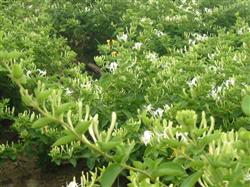
Honeysuckle Propagation Methods and Key Points of High-Yield Cultivation Techniques
Honeysuckle (Lonicera japonica Thunb.), also known as Japanese honeysuckle, Erhua, honeysuckle vine or mandarin duck vine, is a semi-evergreen twining liana of the genus Lonicera in the Caprifoliaceae family. Young branches are densely covered with coarse hairs and glandular hairs; leaves are opposite, ovate or ovate-lanceolate, 3-50n long, entire, with coarse hairs on both surfaces when young. Flowers are borne in pairs in leaf axils, corolla tubular, ...
-
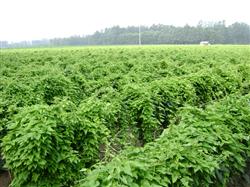
How to fertilize when growing yam? Detailed explanation of fertilization methods
How to fertilize when growing yam? Please give an introduction. During the seedling stage and vine-running stage, yam mainly grows branches and leaves, so fertilizer should be mainly nitrogen. After budding, it enters the vigorous growth period, the underground tubers begin to expand, and the fertilizer requirement is relatively large. This is the key period for fertilization, and nitrogen, phosphorus, and potassium should be applied together. 1. Base fertilizer. Choose a good field, and before plowing apply per mu...
-
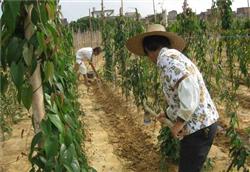
How to Fertilize Chinese Yam? A Complete Guide to Methods and Key Points
How do you fertilize Chinese yam? Please explain the fertilization methods. The following two approaches can be used to fertilize when growing Chinese yam: The first type, in places such as Hebei and Henan, some farmers have grown Chinese yam continuously for many years and can achieve yields of more than 4000 kg per mu. Their approach is based mainly on organic fertilizer, with an appropriate amount of chemical fertilizer as a supplement...
-
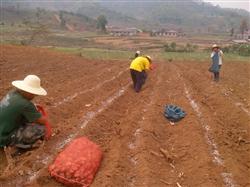
Fertilizer Application Methods for Base Fertilizer and Top Dressing in Yam Cultivation
How do you apply base fertilizer and top dressing when growing yams? Please provide guidance on the methods. For applying base fertilizer and top dressing when growing yams, you can refer to the following methods: 1. Base fertilizer. After selecting a good field, before plowing apply 2000 kg-4000 kg of decomposed farmyard manure and 60 kg-80 kg of compound fertilizer per mu as base fertilizer, then plow the soil 30 cm...
-
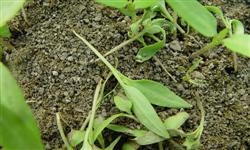
Prevention and control methods for pepper seedling death caused by high summer temperatures
How to prevent and control pepper seedling death in high summer temperatures? Please explain the methods. In summer, the hot and rainy climate conditions easily trigger the occurrence of various pepper diseases. When heavy rain is followed by sudden clearing and a sharp rise in temperature, disease epidemics are easily caused, and plants can die within 3 to 5 days, known as "dead plants." This disease is a devastating disease of peppers...
条件筛选