Planting Methods and Key Technical Points for Grafted Bitter Melon Seedlings
How do you plant grafted bitter melon seedlings? Here is a detailed introduction. Grafted bitter melon seedlings can be planted by referring to the following methods: 1. Choose suitable rootstock and scion varieties. Choose cucurbit varieties with good compatibility and strong stress resistance as rootstock. Currently, Yunnan black-seed pumpkin and local Mopan pumpkin are preferable; for scion varieties, generally choose local main cultivars...
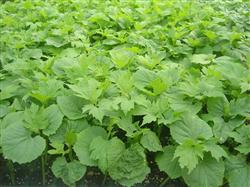
How do you plant grafted bitter melon seedlings? Here is a detailed introduction
Grafted bitter melon seedlings can be planted by referring to the following methods:
I. Choose suitable rootstock and scion varieties
Choose cucurbit varieties with good compatibility and strong stress resistance as rootstock. Currently, Yunnan black-seed pumpkin and local Mopan pumpkin are preferable; for scion varieties, generally choose local main cultivars, such as "Longdu Bitter Melon No. 1" bred by the Zigong City Agricultural Science Institute, large-seed bitter melon, and local large white bitter melon are all acceptable.
II. Seed soaking treatment, prepare nutrient soil, sow at the right time
1. Seed soaking treatment: Before sowing, crack the seed shells of the selected bitter melon seeds, being careful not to damage the seed kernels. Then soak the bitter melon and pumpkin seeds separately in warm water, placing them in hot water at 55-60°C and stirring constantly so the seeds are heated evenly. After 10-20 minutes, when the water temperature drops to about 30%, continue soaking. Bitter melon seeds are generally soaked for 8-10 hours, and pumpkin seeds for 8 hours. Then wash off the mucilage with clean water, remove the seeds after soaking, spread them flat in a porcelain dish, cover with a double layer of wet cloth, and place in a constant-temperature incubator at 28-32°C for germination. If there is no constant-temperature incubator, an electric blanket can be used for germination. During this period, take out the seeds and wash them 1-2 times daily to wash off the mucilage and promote germination. Once the seeds germinate, they can be sown.
2. Prepare nutrient soil: Pumpkin seedling raising must use nutrient pots. The nutrient soil is prepared by mixing field soil that has not grown cucurbits for many years with decomposed barnyard manure or compost at a ratio of 3:1. For each cubic meter of nutrient soil, add 50 kg of decomposed human and livestock manure and 1.0 kg of superphosphate. Spray with 50-fold 40% formalin solution or mix with 100 g of carbendazim or 200 g of chlorothalonil, cover with plastic film and pile for 10-15 days to allow full fermentation and disinfection, then spread out, turn and air for 5-7 days, and fill into nutrient pots. Bitter melon seedling raising must use clean soil to prevent disease infection during the seedling stage.
3. Sow at the right time: Based on the climate characteristics of Zigong City over many years and farmers' cultivation habits, sowing before Awakening of Insects is generally preferable. If sowing and raising seedlings earlier, electric heated seedbeds or soil heated seedbeds must be used. Generally, pumpkin should be sown 3-5 days earlier than bitter melon.
III. Graft at the right time and strengthen management of grafted seedlings
When the pumpkin grows true (heart) leaves and the bitter melon seedlings grow to one leaf and one heart, grafting can be done. Cloudy days, windless weather, and weather with relatively high humidity are most suitable for grafting. Before grafting, the seedbed should be watered appropriately. The grafting methods use the top insertion method and the needle grafting method. For the top insertion method, first prepare two small bamboo sticks 8 cm long, 0.5 cm wide, and 0.25 cm thick, and sharpen one end of each bamboo stick into a small slant about 1 cm long. When grafting, use a grafting blade to cut off the pumpkin true leaves, then insert the bamboo stick diagonally at the top of the cotyledons in the same direction as the cotyledons, cut the bitter melon hypocotyl into a wedge shape, pull out the bamboo stick inserted in the rootstock, insert the bitter melon hypocotyl into the cut surface of the pumpkin, placing it as well as possible, and finally fix it with a grafting clip. The needle grafting method is to first use a grafting blade to cut off and flatten the pumpkin true leaves, then cut off the lower hypocotyl of the bitter melon, and then use a special grafting needle to insert one end into the bitter melon hypocotyl and the other end into the top of the cotyledons of the pumpkin seedling whose true leaves have been cut off. The flat surface of the bitter melon seedling hypocotyl and the flat surface at the top of the pumpkin seedling cotyledons should be in contact and fit together as much as possible, and finally fix with a grafting clip.
During grafting, cover as you graft. After grafting is completed, cover with black film for shading treatment. For 1-3 days after grafting, full-day shading and insulation and moisture retention are needed. After that, depending on weather conditions, shade from 10 a.m. to 3 p.m. each day and allow light at other times; the temperature inside the small arched shed should be controlled at 32°C during the day and 20°C at night, and humidity should be controlled at about 90%. After 7 days, allow light all day and gradually carry out ventilation, cooling, and hardening treatment, keeping the daytime temperature at 25°C and nighttime at 15%. After 10-15 days of grafting, remove the grafting clips and manage according to a general seedbed. After the grafted seedlings survive, promptly remove sprouts emerging from the rootstock.
IV. Field planting and field management
1. Apply sufficient base fertilizer and plant at appropriate density: In combination with plowing and land preparation, apply 3000-3500 kg of human and livestock manure and 70 kg of ternary compound fertilizer per mu, then prepare the beds. Use small high beds with plastic film mulching cultivation, open the field with 1.2-1.5 m including ditches and plant 1 row, with a plant spacing of 33 cm. Grafted seedlings can be planted when they have 4-6 leaves. When planting, choose fully surviving seedlings to ensure that the plants grow uniformly and consistently after planting. When planting grafted seedlings, be sure to expose the graft union by 1-3 cm.
2. Strengthen field management
(1) Fertilizer and water management: In the early growth stage of bitter melon, apply thin fertilizer frequently. From early flowering to the harvest period, apply sufficient fertilizer and topdress multiple times. In hot and dry seasons, in combination with topdressing, promptly supplement water as well to meet the needs of bitter melon's continuous growth and fruiting.
(2) Guide vines onto trellises: After bitter melon vines begin to run, insert trellises promptly. Generally, fence trellises or A-frame trellises are preferable. When the vines are about 30 cm long, tie the vines manually, and thereafter tie the vines once every 4-5 nodes. After the first female flower appears on the main vine, keep 2-3 side branches per plant. Grafted bitter melon seedlings have vigorous growth. In the early stage, prune appropriately. In the middle and late growth stages, no more pruning is needed, but thin and weak side branches at the base, aged yellow leaves, diseased leaves, and excessively vigorous branches and vines must be cut off to facilitate ventilation and light penetration and improve fruit set rate and fruit marketability.
(3) Artificial pollination: Choose warm, sunny weather from 8-10 a.m., and use male flowers with the corolla removed to smear the stigma of female flowers to facilitate fruit set.
(4) Timely prevention and control of pests and diseases: Although grafted bitter melon seedlings have relatively mild pest and disease occurrence, pests and diseases should still be controlled early when encountered. Daconil M-45 mixed with metalaxyl or dimethomorph can be used to control downy mildew, Daconil M-45 mixed with procymidone or pyrimethanil can be used to control gray mold; Nongdile emulsifiable concentrate or fenpropathrin can be used to control aphids, etc.
V. Harvest and market: Bitter melon should be harvested as tender fruit in a timely manner. Especially for the early-maturing cultivation model with multiple layers of film covering in greenhouses, it is even more important to harvest and market promptly. When the fruit strips have fully grown, the tumor-like protrusions on the skin are prominent and swollen, and the fruit tip begins to shine, it should be harvested to ensure bitter melon quality and increase the fruiting rate.
Click to get more bitter melon cultivation techniques
Click to get more vegetable cultivation techniques