-
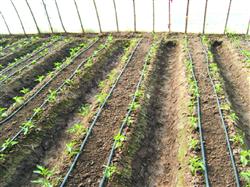
How to use flush fertilization well? You need to master the correct application methods
How do you use flush fertilization well? Please give an introduction. First, correctly choose the type of fertilizer for flush fertilization. Only water-soluble fertilizers can be applied with water. Among nitrogen fertilizers, urea, ammonia water, ammonium sulfate and ammonium nitrate are commonly used; among potassium fertilizers, there are potassium chloride and potassium sulfate, and potassium nitrate can also be used. Among phosphorus fertilizers, even if they are water-soluble monoammonium phosphate and phos...
-
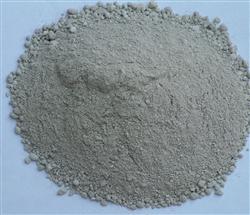
How can you tell good phosphate fertilizer from bad? These methods are simple and practical
The following methods for identifying good and poor phosphate fertilizer are introduced: observe the color and form. Phosphate fertilizer should be grayish white and powdery. If the color is white or yellow, it may be because the acid treatment was incomplete and its phosphorus content is low. Smell the odor. Phosphate fertilizer should have a slight sour odor. If it has no such odor, it means that during production...
-
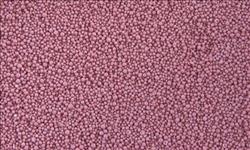
What are the methods for distinguishing potassium sulfate from potassium chloride?
How do you distinguish potassium sulfate from potassium chloride? Please give a detailed introduction. To distinguish potassium sulfate from potassium chloride, you can refer to the following methods: since potassium chloride is lower in price than potassium sulfate and cannot be used on chlorine-sensitive crops, to correctly distinguish and use these two fertilizers, note: first, when buying potash fertilizer, first look with your eyes at the appearance...
-
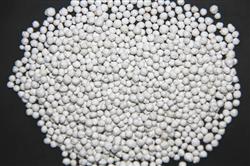
How to identify potassium sulfate? Practical identification methods you can learn
How to identify potassium sulfate? Please explain the identification methods. The identification methods for potassium sulfate can refer to the following: First, look at the appearance. Potassium sulfate is in crystalline form. Second, look at the color. Potassium sulfate is generally white, and some is grayish-yellow, grayish-green or light brown. Third, observe hygroscopicity. Potassium sulfate is basically non-hygroscopic...
-
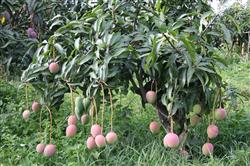
Methods and Technical Key Points for Applying Potassium Fertilizer in Orchards
How should potassium fertilizer be applied in orchards? What methods are there? Traditional orchard fertilization methods often focus only on applying nitrogen fertilizer while neglecting phosphorus and potassium fertilizers, especially potassium fertilizer. Potassium deficiency in orchards can affect flower bud differentiation, the tree's cold resistance and fruit coloring, and can also reduce yield and fruit quality. When potassium deficiency is severe, the leaf margins or entire leaves scorch, spreading from the middle and lower parts upward and downward. After the leaves dry up, they can remain hanging on the branches for a long time. The leaves that have not withered curl and shrink, flower buds are small, and fruit color is poor.
-
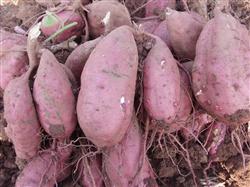
A Detailed Guide to Potassium Fertilizer Application Methods for Underground Tuber Crops
How should potassium fertilizer be applied to underground tuber crops? Why should it be applied this way? Underground tuber crops such as potato, peanut, taro, sweet potato, yam, Jerusalem artichoke, carrot and others all have a potassium-loving nature and a relatively high demand for potassium, so in cultivation even more attention should be paid to applying potassium fertilizer to achieve high yields. For every 1000 kg of potato produced...
-
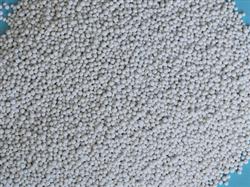
How to choose compound fertilizer correctly? You need to master the selection methods
How to choose compound fertilizer correctly? Please explain the methods. Compound fertilizer increases income and efficiency compared with single-element chemical fertilizers, and this is already widely recognized by farmers. But how to choose high-quality compound fertilizer to achieve the goal of low-consumption and high-efficiency fertilization is still difficult for most farmers to grasp, and in addition, the compound fertilizer types on the market are numerous and complex, with novel names and fancy packaging, which further increases the difficulty of identification.
-
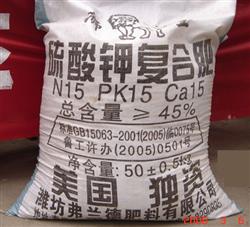
How to Identify Inferior Compound Fertilizer? These Methods Are Simple and Practical
How to identify inferior compound fertilizer? Please advise on methods. Identification of fake and inferior compound fertilizer can be done from the following points: Label identification method. The state has strict regulations on the labeling on compound fertilizer packaging bags: (1) It must be marked with the product name, trademark, nutrient content, production license number, standard number, net weight, factory name, ...
-
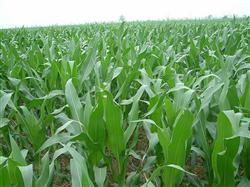
What are the correct methods for applying organic fertilizer?
How should organic fertilizer be applied for best results? Please introduce the methods. Bio-organic compound fertilizers, which combine organic fertilizers with inorganic fertilizers and come with various microorganisms or high-energy compounds, have been launched on the market and are very popular among farmers, with rather obvious effects. First, they can improve soil physical and chemical properties, enhance water and fertilizer retention, and increase...
-
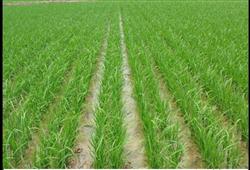
What are the correct methods for applying potassium fertilizer to rice?
How should potassium fertilizer be applied to rice? Please help explain that applying potassium fertilizer to rice can achieve significant yield increases. Sufficient potassium helps enhance photosynthesis, promote sugar synthesis and accumulation, improve plant resistance, and also strengthen the respiration of the rice root system, promote nitrogen uptake and protein synthesis, making rice grains large and plump...
条件筛选