What are the correct methods for applying potassium fertilizer to rice?
How should potassium fertilizer be applied to rice? Please help explain that applying potassium fertilizer to rice can achieve significant yield increases. Sufficient potassium helps enhance photosynthesis, promote sugar synthesis and accumulation, improve plant resistance, and also strengthen the respiration of the rice root system, promote nitrogen uptake and protein synthesis, making rice grains large and plump...
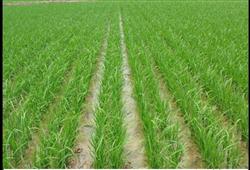
How should potassium fertilizer be applied to rice? Please help explain
Applying potassium fertilizer to rice can achieve significant yield increases. Sufficient potassium helps enhance photosynthesis, promote sugar synthesis and accumulation, improve plant resistance, and also strengthen the respiration of the rice root system, promote nitrogen uptake and protein synthesis, making rice grains large and plump, with high and stable yields. However, the following four points must be noted when applying potassium fertilizer:
1. Reasonable dosage. Adhere to the principle of "four more, four less." Apply more to fields with lower potassium content, and less to the opposite; apply more to early rice, and less to late rice; apply more to tall-stalk varieties, and less to short-stalk varieties; apply more to hybrid rice, and less to conventional varieties. Experiments show that applying 7.5-10 kg of potassium chloride per mu gives the greatest economic benefit.
2. Apply at the right time. Rice has the highest potassium demand during the peak tillering stage and the young panicle differentiation stage. If potassium fertilizer is applied in a single application, it is best applied at the tillering stage; if applied in two applications, it should be applied at the tillering stage and the young panicle differentiation stage.
3. Combined fertilization. Potassium application must be combined with phosphorus and nitrogen to give full play to its effectiveness. The suitable ratio of nitrogen, phosphorus, and potassium is 1 : 0.5 : 1.2.
4. Apply lime as appropriate. Potassium chloride and potassium sulfate are physiologically acidic fertilizers. Long-term use will cause soil acidification. Lime should be applied as appropriate to neutralize soil acidity, which is beneficial to rice growth.
Click to get more rice planting techniques
Click to get more nitrogen, phosphorus, and potassium application techniques
Click to get more chemical fertilizer application techniques