What are the methods for distinguishing potassium sulfate from potassium chloride?
How do you distinguish potassium sulfate from potassium chloride? Please give a detailed introduction. To distinguish potassium sulfate from potassium chloride, you can refer to the following methods: since potassium chloride is lower in price than potassium sulfate and cannot be used on chlorine-sensitive crops, to correctly distinguish and use these two fertilizers, note: first, when buying potash fertilizer, first look with your eyes at the appearance...
How do you distinguish potassium sulfate from potassium chloride? Please give a detailed introduction
To distinguish potassium sulfate from potassium chloride, you can refer to the following methods:
Since potassium chloride is lower in price than potassium sulfate and cannot be used on chlorine-sensitive crops, to correctly distinguish and use these two fertilizers, note: first, when buying potash fertilizer, first look with your eyes to see whether the appearance meets the standard. Second, look at the standard indicated on the bag; potassium sulfate follows HG/T3279---19190 issued by the Ministry of Chemical Industry, while potassium chloride follows the national standard GB6549---1986, so they differ in process and testing methods. Third, do not consider price alone; mainly look at the nutrient content. The problems with potash fertilizers are quite serious, and there are many substandard products, so when purchasing, ask the dealer for the product inspection report, and you can consult the local soil and fertilizer station or the fertilizer quality inspection department.
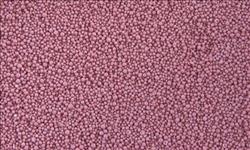
Potassium sulfate appears as white crystals or colored crystals or granules. Its characteristics are low hygroscopicity, so it is not prone to caking in storage, and it is easily soluble in water. It is suitable for various crops and can be used as a base fertilizer, topdressing, seed fertilizer and foliar topdressing. The base fertilizer rate is generally 10~12.5kg per mu. Potassium is generally adsorbed by the soil and will not be lost, but on sandy soil with poor fertilizer retention capacity, the measure of "small amounts, many times" should be adopted. It generally gives the best results when applied to potassium-loving crops such as tubers and melons, and it has a wide range of use and a large application rate.
Potassium chloride appears as white or light yellow crystals, sometimes red due to iron salts. It is easily soluble in water and is a high-concentration quick-acting potassium fertilizer. It can be used as a base fertilizer and topdressing, with a base fertilizer rate of 8~10kg per mu and a topdressing rate of 5~7.5kg per mu. Its range of application is smaller than that of potassium sulfate; in particular, it must not be used on chlorine-sensitive crops such as grapes, tubers and tobacco. In addition, potassium chloride is not suitable for saline-alkali land, but the chloride ions in potassium chloride promote photosynthesis and fiber formation, so it is especially suitable for fiber crops such as hemp.
Click to get more nitrogen, phosphorus and potassium application techniques
Click to get more chemical fertilizer application techniques