Methods and Technical Key Points for Applying Potassium Fertilizer in Orchards
How should potassium fertilizer be applied in orchards? What methods are there? Traditional orchard fertilization methods often focus only on applying nitrogen fertilizer while neglecting phosphorus and potassium fertilizers, especially potassium fertilizer. Potassium deficiency in orchards can affect flower bud differentiation, the tree's cold resistance and fruit coloring, and can also reduce yield and fruit quality. When potassium deficiency is severe, the leaf margins or entire leaves scorch, spreading from the middle and lower parts upward and downward. After the leaves dry up, they can remain hanging on the branches for a long time. The leaves that have not withered curl and shrink, flower buds are small, and fruit color is poor.
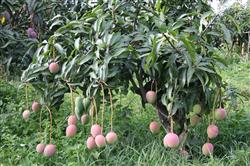
How should potassium fertilizer be applied in orchards? What methods are there
Traditional orchard fertilization methods often focus only on applying nitrogen fertilizer while neglecting phosphorus and potassium fertilizers, especially potassium fertilizer. Potassium deficiency in orchards can affect flower bud differentiation, the tree's cold resistance and fruit coloring, and can also reduce yield and fruit quality. When potassium deficiency is severe, the leaf margins or entire leaves scorch, spreading from the middle and lower parts upward and downward. After the leaves dry up, they can remain hanging on the branches for a long time. The leaves that have not withered curl and shrink, flower buds are small, and fruit color is poor.
The soil itself contains a certain amount of potassium, but because many orchards apply too little farmyard manure and potassium fertilizer topdressing cannot keep up, there is a year-by-year deficit, causing a considerable number of orchards to be deficient in potassium. The most fundamental methods for changing the soil's potassium deficiency mainly include increasing the content of organic fertilizer, because the nutrients contained in organic fertilizer are relatively complete. Orchards with obvious potassium deficiency symptoms can be topdressed with quick-acting potassium fertilizers such as potassium fertilizer. The most suitable period for applying potassium fertilizer is from June to August, when the soil temperature is suitable, the root system is active, and the tree's absorption of potassium fertilizer is high, with obvious effects. Under normal circumstances, potassium fertilizer can be applied together with base fertilizer, and can also be applied in combination with nitrogen, phosphorus, and potassium. The application ratio of nitrogen, phosphorus, and potassium fertilizers can be kept at 1:0.5:1. In combination with the orchard, 1.0-1.5 kg of potassium fertilizer can be applied per 100 kg of fruit. For orchards with severe potassium deficiency, during the growing season, combined with pesticide spraying, 0.3% potassium dihydrogen phosphate or 4% plant ash extract can be sprayed, which has a rapid effect and can reduce costs. Potassium fertilizer has an obvious effect in improving fruit quality and yield, but more is not always better. Excessive potassium fertilizer can affect the tree's absorption of calcium and cause fruit bitter pit, water core, and other disorders, so the application of potassium fertilizer should also be kept within proper limits.
Potassium fertilizer supplementation in orchards can be achieved through the following ways: ① Increase the application of organic fertilizer. In recent years, the amount of organic fertilizer applied in orchards has been insufficient, and some have even never applied organic fertilizer. Relying solely on chemical fertilizers not only fails to supplement potassium in the soil, but may even damage the soil structure. Therefore, increasing the application of organic fertilizer is an effective measure to solve soil potassium deficiency. ② Ground mulching with grass and applying green manure. Plants are rich in potassium, so mulching with grass and applying green manure can effectively increase the potassium content in the soil and also improve the soil's physical and chemical properties. ③ Apply plant ash. Plant ash is the farmyard manure with the highest potassium content. Store plant ash dry and apply 4-5 kg of dry plant ash per mature fruit tree, which can meet its potassium fertilizer needs. ④ Deep plowing of the orchard.
In autumn and winter, carry out deep plowing of the orchard soil (30-50 cm deep) to enhance soil permeability, promote microbial activity, and convert insoluble potassium into available potassium fertilizer. ⑤ Apply biological potassium. As is well known, although the soil contains a lot of potassium, more than 90% exists in an insoluble state. Biological potassium (silicate bacteria agent) can convert insoluble potassium in the soil into available potassium, and can also decompose unavailable phosphorus into available phosphorus for plants to absorb and use.
Click to get more nitrogen, phosphorus, and potassium application techniques
Click to get more chemical fertilizer application techniques