How to choose compound fertilizer correctly? You need to master the selection methods
How to choose compound fertilizer correctly? Please explain the methods. Compound fertilizer increases income and efficiency compared with single-element chemical fertilizers, and this is already widely recognized by farmers. But how to choose high-quality compound fertilizer to achieve the goal of low-consumption and high-efficiency fertilization is still difficult for most farmers to grasp, and in addition, the compound fertilizer types on the market are numerous and complex, with novel names and fancy packaging, which further increases the difficulty of identification.
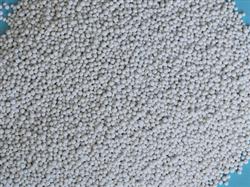
How to choose compound fertilizer correctly? Please explain the methods
Compound fertilizer increases income and efficiency compared with single-element chemical fertilizers, and this is already widely recognized by farmers. But how to choose high-quality compound fertilizer to achieve the goal of low-consumption and high-efficiency fertilization is still difficult for most farmers to grasp, and in addition, the compound fertilizer types on the market are numerous and complex, with novel names and fancy packaging, which further increases the difficulty of identification. For this reason, farmers need to understand some basic knowledge about choosing compound fertilizer.
Mastering the basic production processes of compound fertilizer has a guiding role in choosing compound fertilizer
Compound fertilizer can be simply divided by composition process into potassium chloride type, potassium sulfate type and potassium nitrate type. Among them, the potassium chloride type is the most widely used conventional compound fertilizer, with relatively low cost; the potassium sulfate type is a compound fertilizer used for chlorine-sensitive crops or crops that avoid chlorine, with strong specificity and moderate cost; the potassium nitrate type is a high-grade compound fertilizer developed in recent years, with no side effects on soil. For example, rice can use potassium chloride type compound fertilizer, and tea and vegetables can use potassium sulfate type compound fertilizer. Citrus and tobacco can use potassium nitrate type compound fertilizer.
Mastering the classification standards for high, medium and low concentration grades of compound fertilizer is also very necessary common knowledge for choosing compound fertilizer
Besides being determined by the production process, another important indicator of the intrinsic quality of compound fertilizer is the content of available nutrients. Available nutrients can only be marked as nitrogen, phosphorus and potassium; all other nutrient elements are not marked as nutrients (GB15063-94 standard). It is nonstandard for some enterprises to include elements such as S in the total nutrients, which misleads farmers. Available nutrients ≥40% is high-concentration compound fertilizer, available nutrients 30%-40% is medium concentration, and available nutrients 25%-30% is low concentration. The minimum nutrient standard for three-element compound fertilizer is ≥25%; 20%-25% can only produce two-element compound fertilizer; below 20% is a product that the state does not allow to be produced. Therefore, understanding this concept has positive significance for choosing compound fertilizer. As long as you look at the packaging, you can roughly know the grade of the compound fertilizer.
When choosing compound fertilizer, you cannot judge only by appearance, granules, color and solubility; you should also pay attention to the brand effect
Brands are the product of market competition, and excellent products have recognized market effects. At present, in order to cater to the illegal demands of some distributors, some small domestic enterprises endlessly pass off inferior goods as famous-brand products or imported products, seriously harming the legitimate interests of farmers, and vigilance should be raised. For example, on the market one often encounters sulfur-containing compound fertilizer sold as potassium sulfate compound fertilizer grade, deceiving farmer consumers. In fact, in the true sense, the vast majority of compound fertilizers contain sulfur.
When choosing compound fertilizer, you should also vary it according to time, place and use. For acidic soil and soil with low organic matter content, alkaline compound fertilizer or organic compound fertilizer should be chosen; for alkaline soil, acidic compound fertilizer should be chosen, such as humic acid type three-element compound fertilizer; for soil containing phosphorus or potassium, highly targeted two-element compound fertilizer can be chosen. In the dry season, potassium nitrate compound fertilizer can be chosen. In the rainy season, ammonium nitrogen type compound fertilizer can be chosen. For base fertilizer, coarse-grained compound fertilizer can be chosen to help extend the fertilizer effect, and for topdressing, small-grained compound fertilizer can be chosen to help speed up the fertilizer effect.
In short, choosing or purchasing compound fertilizer should aim at economy, safety, high efficiency and quality improvement, so as to achieve full value for the money.
Click to get more compound fertilizer application techniques
Click to get more fertilizer application techniques