A Detailed Guide to Potassium Fertilizer Application Methods for Underground Tuber Crops
How should potassium fertilizer be applied to underground tuber crops? Why should it be applied this way? Underground tuber crops such as potato, peanut, taro, sweet potato, yam, Jerusalem artichoke, carrot and others all have a potassium-loving nature and a relatively high demand for potassium, so in cultivation even more attention should be paid to applying potassium fertilizer to achieve high yields. For every 1000 kg of potato produced...
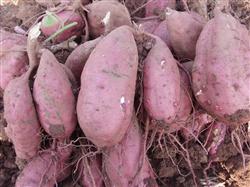
How should potassium fertilizer be applied to underground tuber crops? Why should it be applied this way?
Underground tuber crops such as potato, peanut, taro, sweet potato, yam, Jerusalem artichoke, carrot and others all have a potassium-loving nature and a relatively high demand for potassium, so in cultivation even more attention should be paid to applying potassium fertilizer to achieve high yields.
For every 1000 kg of potato tubers produced, 5 kg of pure nitrogen, 2 kg of phosphorus pentoxide and 10.6 kg of potassium chloride are required, and the absorption ratio of nitrogen, phosphorus and potassium is 1:0.4:2.1. In a plot with a fresh sweet potato yield of 2500 kg per mu, for every 1000 kg of sweet potato tubers formed, 3.5 kg of pure nitrogen, 1.8 kg of phosphorus pentoxide and 5.5 kg of potassium oxide must be absorbed from the soil, and the absorption ratio of nitrogen, phosphorus and potassium is 1:0.5:1.6. When the taro yield per mu is 2000 kg, on average for every 1000 kg of taro produced, the amounts of pure nitrogen and phosphorus pentoxide required increase slightly, but the amount of potassium oxide required increases markedly. It can thus be seen that for cultivated crops with underground tubers such as potato, potassium is the largest requirement among nitrogen, phosphorus and potassium.
After such crops are given additional potassium fertilizer, first, it can increase the turgor pressure of crop cells, making the cells more elastic, and can regulate the opening or closing of leaf cells, which helps the crops absorb more carbon dioxide to produce carbohydrates and form starch and sugars. Second, it can promote root development, absorb more water, alleviate water evaporation and correspondingly improve the drought resistance of the crops. Third, potassium mainly exists in the stems and leaves, can promote the development of stem cellulose, improve the supporting capacity of the stems, and enhance the crops' resistance to lodging, diseases and insect pests, which helps the organic nutrients (starch) in the crop body to be transported to the storage organs (underground roots and stems, fruits), accelerating the enlargement of tubers and pods, thereby increasing yield, improving quality and increasing planting benefits.
In applying potassium fertilizer to underground tuber crops, two methods are generally used: basal fertilizer and topdressing. In the distribution of nitrogen, phosphorus and potassium fertilizers, the basal fertilizer uses 50% of the nitrogen fertilizer, all of the phosphorus fertilizer and most of the potassium fertilizer. The fertilizer varieties for the basal fertilizer can be a medium-concentration general-purpose compound fertilizer, or a combination of single-element fertilizers. For the 50% of nitrogen and the small portion of potassium used in topdressing, urea, ammonium nitrate and potassium sulfate can be selected.
When applying, the period of greatest potassium demand should be seized. The first is the seedling stage. Per mu, 3-5 kg of potassium chloride or potassium sulfate, or 25-30 kg of plant ash (containing 7.5% available potassium), can be applied as a base fertilizer, evenly broadcast during land preparation and mixed with the soil, so as to facilitate timely absorption and use by the crops. Potassium fertilizer can also be applied as a seedling fertilizer topdressing; per mu, 2-3 kg of potassium fertilizer can be applied in bands or holes, with a depth requirement of about 10-15 cm, and after application, irrigate and cover with soil. The second is the tuber formation stage. Per mu, the same amount of potassium fertilizer as above can be used, and after the tubers enlarge or the pods set their pegs, crack fertilizer and pod-setting fertilizer can be applied as topdressing, which can effectively accelerate the pouring of organic nutrients from stems and leaves into the tubers to obtain high quality and high yield. Next, in the late growth stage of underground tuber crops, 1% potassium sulfate, 0.3% monopotassium phosphate, or 5% plant ash water (after soaking for 24 hours, take the clarified liquid or filtrate) can also be sprayed on the leaves 1-2 times (at an interval of 7-10 days), which can lower leaf temperature, help drought resistance, and eliminate diseases and insect pests (carried out in combination with the prevention and control of diseases and insect pests), with very remarkable results.
Pay attention to the fertilization timing; when applying topdressing in a single application, it should not be too early. Generally, seize the tuber enlargement stage before applying it. Applying topdressing too early, especially after excessively applying a large amount of nitrogen fertilizer, will cause excessive vegetative growth of the aboveground part and the problem of small tubers forming underground. Potassium chloride and potassium sulfate are both physiologically acidic fertilizers, and long-term application should prevent soil acidification; they can be applied together with an appropriate amount of lime. Potassium chloride should not be applied in salinized soil, nor can it be used on chlorine-sensitive crops.
Click to get more nitrogen, phosphorus and potassium application techniques
Click to get more chemical fertilizer application techniques