What are the cultivation techniques and growing methods for reishi mushroom?
How is reishi mushroom cultivated? Please provide an introduction to the methods. Artificial cultivation of reishi mushroom in China began in 1960 and was successfully domesticated by Mr. Chen Meipeng of the Edible Fungi Research Institute of the Shanghai Academy of Agricultural Sciences. Reishi cultivation has two types: substitute cultivation and log cultivation. Substitute cultivation means filling artificially prepared culture material into bags and arranging them in a shed to cultivate reishi fruiting bodies...
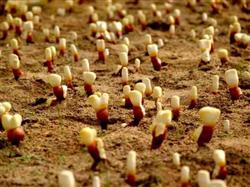
How is reishi mushroom cultivated? Please provide an introduction to the methods
Artificial cultivation of reishi mushroom in China began in 1960 and was successfully domesticated by Mr. Chen Meipeng of the Edible Fungi Research Institute of the Shanghai Academy of Agricultural Sciences. Reishi cultivation has two types: substitute cultivation and log cultivation. Substitute cultivation means filling artificially prepared culture material into bags and arranging them in a shed to cultivate reishi fruiting bodies; log cultivation means sawing wood into logs of a certain length and cultivating reishi by imitating wild soil-covered cultivation. The following 4 methods can be referenced for cultivating reishi:
I. Soil-covered bag cultivation technique
In northern regions, using idle vegetable plastic greenhouses from June to October for soil-covered reishi cultivation not only improves the economic benefit per unit area, but also meets reishi's requirements for ecological conditions. 100 kg of dry material can produce 13-15 kg of dry reishi, 40-50% higher than conventional bag cultivation, and the reishi has a normal shape, with caps over 15-20 cm in diameter, beautiful color, and an export qualification rate above 90%. The cultivation method is as follows:
(1) Culture medium
1. Cottonseed hulls 88%, wheat bran 10%, gypsum powder 1%, sugar 1%.
2. Sawdust 38%, cottonseed hulls 50%, wheat bran 10%, gypsum powder 1%, sugar 1%.
3. Corncob (corn kernel size) 50%, sawdust 29%, wheat bran 20%, gypsum powder 1%.
(2) Bagging and sterilization. Use 15 x 30 x 0.06 cm low-pressure polyethylene or high-pressure polypropylene plastic bags. After mixing and stirring the raw materials with water according to the formula proportions, pile them and let them sit for half an hour. Measure the water content by the hand-squeeze method; it should be 60-65%. Never let the culture material be too wet or too dry. If there is too much water, mycelial growth is inhibited due to lack of oxygen. If there is too little water, the mycelium grows weakly and it is difficult to form fruiting bodies. Bag filling should be moderately tight; each bag contains 500 g of dry material. The filled bags are sterilized under normal pressure.
(3) Inoculation and mycelial growth. Inoculate only after the temperature of the material bags drops below 30°C. Because reishi is cultivated on sterilized substrate, the inoculation workload is relatively large, and inoculation is generally carried out in an inoculation room. Place the inoculated bags on culture racks for mycelial growth. The culture racks should first be disinfected by spraying with 0.2% concentration carbendazim, and a layer of lime powder should be scattered on the floor of the culture room to reduce contamination. Control the temperature at 24-28°C, keep the relative air humidity at 60-65%, and culture in the dark for about 30 days, by which time the mycelium will have fully colonized the bags.
(4) Site preparation. In order to create a good ecological environment for reishi growth, move the fully colonized reishi bags into a vegetable plastic greenhouse for cultivation. Cover the top with straw curtains so that reishi is neither exposed to direct sunlight nor deprived of the required temperature, humidity, light, and air. Before the bags enter the greenhouse, the cultivation site must first be treated. The specific steps are:
① Dig trenches and make beds. Dig beds 100-120 cm wide, 30 cm deep, with length depending on the greenhouse, running north-south, with a 40 cm walkway between two beds.
② Disinfect and sterilize. Spray the ground and greenhouse walls with 0.2% carbendazim, and scatter a layer of plant ash on the bottom of the bed to strictly control contamination sources. Build an arched tunnel. The optimum temperature for reishi fruiting body growth is 27-29°C. For bags moved into the greenhouse in winter or early spring, to prevent malformed reishi caused by low temperature or excessive day-night temperature differences, a small arched tunnel should generally be built inside the plastic greenhouse, using split moso bamboo strips with both ends inserted into the soil and the middle arched, covered with plastic film, so as to keep the temperature inside the small tunnel above 25°C as much as possible.
(5) Soil covering and fruiting. Move the bags with fully grown mycelium into the plastic greenhouse, disinfect the bag surfaces with 1% potassium permanganate solution, then cut the bags open with a blade, remove the film, and stand them upright in the bed with 2-3 cm between bags. Fill the gaps with sandy loam. After the whole bed is filled, scatter about 1 cm of plant ash on top of the bags, then cover the plant ash with about 2 cm of sandy loam. After covering with soil, replenish water in the bed; generally add 500 g of compound fertilizer to 50 kg of water. This not only preserves moisture but also promotes mycelial knotting to form fruiting bodies.
After the bags are covered with soil, management should focus on moisture retention and aeration, and direct sunlight must be prevented. When cultivating in vegetable plastic greenhouses from June to October, the plastic film on all sides should be lifted entirely, and the top of the greenhouse should be shaded with straw curtains. Generally, after 7-10 days of soil covering, the mycelium can knot and form primordia. After half a month, the primordia successively emerge from the ground, and after about 20 days the primordia differentiate to form stipes. At this time, depending on the fruiting density, some connected-stipe reishi may be removed appropriately to prevent the caps from pressing against each other after growing larger. This affects quality. After half a month of stipe growth, caps successively grow out, and the color gradually changes from white to pale yellow, then deepens to yellowish brown. During this period, the air humidity should be maintained at 85-95%, scattered light should be provided, and the greenhouse temperature should be raised to about 29-30°C.
(6) Harvesting and processing. From cap formation to harvest takes about 20 days. When the color of the cap edge changes from white to red and coffee-colored spore powder is faintly visible on the underside of the cap, the reishi is mature and can be harvested. After harvesting the first flush, stop watering for about 7 days to allow the mycelium to recover growth and promote the formation of new mushroom buds. After 2 months, the second flush can be harvested.
After harvesting, reishi should be sun-dried or oven-dried promptly, the stipes trimmed according to purchasing standards, and packed in plastic bags for sale. Reishi cultivated with soil covering in plastic greenhouses has short, thick stipes, deep color, and large caps, very similar to wild reishi, and has relatively high commercial value.
To prevent insect damage, sun-dried or oven-dried reishi must also be fumigated with chemicals to ensure commodity quality. Generally, place 0.5% aluminum phosphide into a sealed plastic tent containing dried reishi and ignite it. After burning is complete, seal for 24 hours, then open the plastic tent. After the gas disperses for 48 hours, pack and seal the reishi for storage.
II. Summer cultivation of reishi in greenhouses
Using large-area winter-warm vegetable greenhouses for summer reishi cultivation achieved a biological efficiency of 8.5-9.2% and relatively high benefits. The techniques used are as follows:
(1) Selecting varieties. Different reishi strains have different growth and development characteristics; therefore, different reishi strains also have somewhat different requirements for environmental conditions. Only by selecting strains suitable for greenhouse cultivation can high quality and high yield be achieved. Practice has proved that Taishan reishi and Korean reishi show good adaptability when cultivated on a large scale in greenhouses.
(2) Regulating temperature. A winter-warm vegetable greenhouse is a special environment. The greenhouse has good airtightness and is isolated from outside air. After sunlight passes through the greenhouse film and is converted into heat energy inside, it is not easily carried away by outside air currents. At night, heat energy in the soil supplements the greenhouse temperature through long-wave radiation, so the temperature inside the greenhouse is higher than outside. Reishi is a high-temperature medicinal fungus, and fruiting body growth and development is optimal at about 29°C; the greenhouse creates good high-temperature conditions for reishi cultivation. However, temperatures above 32°C affect reishi growth and development. Reasonable watering and ventilation can keep the greenhouse temperature from exceeding 32°C. On the other hand, the greenhouse also has obvious day-night temperature differences; the lower the outside temperature, the greater the day-night temperature difference. In late March, the daytime temperature in the greenhouse can reach 30°C, but the nighttime temperature is below 10°C; at this time, fruiting is prone to malformation. In late May, the daytime temperature in the greenhouse can be controlled at about 30°C, and the average nighttime temperature can also reach above 20°C. At this time, move the reishi bags fully covered with mycelium into the greenhouse for fruiting; the reishi is thick, large, and normal in shape.
(3) Regulating humidity. The growth and development of reishi fruiting bodies requires relative humidity between 90-95%. How to maintain humidity in the greenhouse is an important part of achieving high yield and high quality in greenhouse reishi cultivation. After the bags enter the greenhouse and are opened, irrigation helps increase humidity in the greenhouse. The greenhouse is a sealed structure, isolated from the outside, and water evaporated from the ground is not easily lost, so humidity in the greenhouse is easy to maintain. However, changes in relative humidity in the greenhouse are opposite to changes in temperature: the higher the temperature, the lower the relative humidity. When the greenhouse temperature reaches 30°C, under ventilated conditions, the humidity in the greenhouse will drop noticeably. Therefore, irrigation and misting must be used, and at the same time wet burlap pieces should be used at a height of one meter along the front edge of the greenhouse. Through these measures, suitable fruiting humidity was maintained, and obvious results were achieved.
(4) Ventilation and oxygen supply. Reishi is an aerobic fungus, and the carbon dioxide content in the air has a great influence on reishi development. Experiments have shown that when the carbon dioxide content in the air is about 0.1%, it has an obvious promoting effect on stipes; when the carbon dioxide content is between 0.1-0.8%, reishi all grows into antler-like shapes. Therefore, ventilation and air exchange are very important for summer reishi cultivation in winter-warm vegetable greenhouses. For this reason, we opened isosceles triangular exhaust holes in the north wall of the winter-warm vegetable greenhouse, lifted about 1 meter of the bottom edge film on the south side, and replaced it with wet burlap. Open the greenhouse door for ventilation, and a large amount of low-temperature air flows in from the ground to form sweeping ground air. Through these measures, the carbon dioxide content in the greenhouse was always kept below 0.03%, and the reishi formed was large and uniform in shape.
(5) Regulating light. Reishi mycelium grows faster under completely dark conditions than under light conditions. However, fruiting body development is very sensitive to light. Although fruiting bodies can be produced from no light to strong light, the morphology of the fruiting bodies varies greatly. Experiments have shown that when three layers of straw curtains cover the top of the greenhouse and the light intensity inside is below 300 lux, reishi fruiting bodies produce only slender stipes and grow curved toward the bottom edge, with very small caps or even no caps; when one layer of straw curtain covers the top of the greenhouse and the light intensity inside on sunny days is above 10,000 lux, reishi stipes and caps grow thick, rapid, and normal in shape. Therefore, usually one layer of straw curtain is used on top of the greenhouse. Once continuous rainy days occur, the straw curtains on the greenhouse can be spread thinner.
(6) Conclusion. Through three years of trials and extension, summer reishi cultivation in winter-warm vegetable greenhouses has formed a complete set of techniques. Every year in May, after the greenhouse vegetables are harvested, the greenhouse is immediately cleaned and disinfected, and the reishi bags fully covered with mycelium are brought in, stacked, opened, and sprinkled with water to regulate the temperature, humidity, oxygen, and light suitable for reishi cap development. Practice has proved that this technique can obtain more than 20,000 yuan in net income per mu of winter-warm vegetable greenhouse each year, greatly improving the economic benefits of the greenhouse.
III. Korean reishi cultivation technique
In recent years, reishi strains introduced from South Korea have been cultivated in many regions, and the area has expanded year by year. Several cultivation techniques from the Liaoning Academy of Agricultural Sciences are as follows:
(1) Seasonal arrangement. Reishi belongs to the high-temperature constant-temperature type of fungi, and Korean reishi is no exception. Its mycelial growth temperature is 15-32°C, with 26-28°C being optimal. The optimum temperature for fruiting body growth and development is 27-29°C, and the suitable air humidity is 80-90%. In the Liaoning region, cultivation bags are generally made in late April or early May. After inoculation, they are cultured for 18-25 days and moved to the cultivation site, then cultured for another 25-30 days. From mid-July to mid-September, 2-3 batches of reishi can be harvested. After late September, temperatures drop and fruiting bodies stop growing.
(2) Cultivation method. In the Liaoning region, apart from a small amount of log cultivation, most use substitute cultivation. According to the biological characteristics of Korean reishi, plastic greenhouses with good lighting, heat preservation, and ventilation are used for cultivation. The main technical steps of greenhouse substitute cultivation of reishi are:
1. Greenhouse construction. Generally, producing 1 ton of dried reishi requires a greenhouse area of length x width x height = 72 x 8 x 2.5 m = 1440 sq m. An east-west orientation is preferable. Bags are arranged crosswise, stacked to a height of 12-13 layers, and each greenhouse can hold 25,000-30,000 bags (each bag containing 500 g of dry material).
2. Bag specifications. To ensure bag quality, prevent bag breakage, and reduce costs, it is best to use bags made from tubular material blown from imported high-density low-pressure polyethylene raw material. This kind of bag has good toughness and resists high temperatures, with specifications of 17 x 34-36 cm.
Culture material formulas
(1) Sawdust 54%, cottonseed hulls 30%, wheat bran 10%, cornmeal 5%, gypsum powder 1%, urea 0.2%.
(2) Sawdust 77%, corncob 10%, cornmeal 12%, gypsum 1%, urea 0.2%.
Whichever formula is used, the raw materials are required to be fresh and free from mold. Sawdust should combine coarse and fine particles to facilitate ventilation. The material water content should be 60-65%, and the pH should be natural. When filling bags, the tightness should be uniform and compacted, and both ends of the bag should be tied with rubber bands or string, followed by normal-pressure sterilization. Inoculate according to aseptic operating procedures, with an inoculation amount of 9-12 bags per bottle, and keep the contamination rate below 5%.
4. Management techniques. A two-site system is used, that is, the bags are placed on wooden racks in a culture room. Mycelial growth is carried out at 26-28°C, with bags arranged in a crisscross pattern. The air in the culture room should circulate well. During mycelial growth, inspections should be frequent, and bags contaminated by unwanted fungi should be handled promptly. Generally, the mycelium can fully colonize the bags in 18-25 days, after which they are moved into the greenhouse for fruiting management. At this stage, the Liaoning region is in the high-temperature season, so attention should be paid to temperature, humidity, light, and ventilation. After the mycelium has fully colonized the bags, cut openings with a sharp knife to open the bags, but be careful not to tear the bags. Irrigate the trenches between stacks. On sunny days, spray water once in the morning and once in the evening; the amount sprayed should be enough to keep the soil layer moist. In dry weather with long clear periods and no rain, appropriately increase the amount and frequency of spraying, and open about 15 ventilation openings on each side below the greenhouse (spaced 4-5 m apart) to prevent reishi fruiting bodies from rotting due to high humidity. Reishi is especially sensitive to light; if light is insufficient or ventilation is poor, malformed reishi will grow. Therefore, the top of the greenhouse is covered with straw curtains to maintain scattered light. The bags should be placed 8-10 cm apart to avoid overlapping and sticking of the fruiting bodies. Once spore powder appears, do not spray water on the fruiting bodies again. When the white growth ring stops growing and turns yellow, harvest in a timely manner.
5. Harvesting and processing. In the same greenhouse, reishi emerges at uneven times, and the disappearance of the white growth ring and maturity are also not uniform. Therefore, reishi whose fruiting bodies have grown large enough, whose color has turned dark brown, whose hymenium has thickened, and which have more spore powder should be harvested first. When harvesting, cut them off at the base with a sharp knife. On sunny days, spread them on bamboo sieves to dry for 2-3 days, then put them into plastic bags, seal the openings, and add preservative to prevent moisture regain and mold, then pack them in boxes for transport.
IV. Techniques for opening fruiting holes in bag-cultivated reishi
How fruiting holes are opened in bag-cultivated reishi plays a decisive role in primordium differentiation and formation, the growth and development of fruiting bodies, and improving the yield and quality of reishi. The experience explored by Heilongjiang Agricultural Economy School in bag-cultivated reishi production is as follows:
(1) Timing of opening. The time for opening fruiting holes is generally when the mycelium has fully colonized the bag or when the mycelium has knotted and primordia appear. This method opens the fruiting holes earlier, when the mycelium has colonized 1/2-2/3 of the bag, because at this time the mycelium grows vigorously and has strong vitality. Opening fruiting holes in the upper part of the bag where the mycelium is growing, then promptly providing appropriate light, ventilation, heat preservation, and moisture retention, causes the mycelium to begin knotting and forming primordia, while the lower mycelium can still continue growing toward the bottom of the bag. In this way, fruiting can begin 5-7 days earlier and yield can be increased.
(2) Opening method. There are many ways to open fruiting holes in bag-cultivated reishi, such as removing the cotton plug (or cap) at the bag mouth, cutting "V", "+", or "-" shaped openings in the bag film, or not opening holes and letting reishi grow from the edge of the cotton plug at the bag mouth. Practice shows that removing the cotton plug (or cap) at the bag mouth is the best method, and cutting a "V" shaped fruiting hole in the bag film is also relatively good. The other methods of opening holes for fruiting are not advisable. The reasons are: removing the cotton plug (or cap) at the bag mouth, because the opening is relatively small, allows both ventilation and control of moisture evaporation from the medium, so primordium differentiation and formation are fast under suitable conditions. Cutting "V", "+", and "-" shaped fruiting holes leaves the bag film still covering the medium, so ventilation is inferior to removing the cotton plug and is not conducive to primordium differentiation and formation. However, a "V" shaped opening can prevent water sprayed on the bag wall from seeping into the medium and reduce contamination by unwanted fungi, while "+" and "-" shaped openings easily allow water sprayed on the bag wall to seep into the medium, causing excessive local moisture and poor ventilation, which is not conducive to primordium differentiation and formation and increases contamination by unwanted fungi. As for not opening fruiting holes and letting reishi grow from the edge of the cotton plug, because ventilation is poor and the gap between the cotton plug and the bag mouth is narrow, it is relatively difficult for reishi to emerge. This not only prolongs the time to fruiting, but later, because water and nutrient transport and supply are blocked, causes poor reishi growth and even malformation, resulting in low yield and poor quality.
(3) Number of openings. Practice has proved that the number of fruiting holes should be small rather than large; the purpose is to control the number of reishi per bag in the same flush. If the method of removing the cotton plug at the bag mouth is used, there is no need to open additional fruiting holes. Generally, no more than 2 fruiting holes should be opened per bag, and 1 is preferable. With 1 fruiting hole, 1-2 reishi form at the same time, the rate of round and regular fruiting bodies is high, the caps are large and thick, yield is high, and quality is excellent. Otherwise, if there are too many fruiting holes, too many primordia will inevitably form, nutrient supply will be dispersed, and the reishi grown will not only be small and low-yielding, but also have many malformed antler-shaped fruiting bodies, reducing reishi quality.
(4) Opening depth. Opening depth is closely related to primordium differentiation and formation. Practice has proved that when opening fruiting holes, it is necessary not only to cut through the bag film, but also to score the mycelial film so that the medium is exposed, with a suitable depth of 0.5-1.0 mm. Scoring the mycelial film not only facilitates air entry, but also cuts the mycelium to promote primordium differentiation and formation.
(5) Management after opening. After fruiting holes are opened in cultivation bags, good conditions of light, temperature, humidity, and air must be ensured to promote primordium differentiation and formation. Practice has proved that scattered light entering through a glass window in an ordinary room is already sufficient for primordium differentiation and fruiting body growth and development. Temperature should be controlled at 26-28°C, and constant temperature day and night should be maintained to prevent excessive temperature differences and avoid malformed reishi. Air humidity should be raised to 85-95%. Spray water on the ground, walls, and air 3 times a day in the morning, noon, and evening. When spraying, pass over lightly; it is best if there are mist droplets on the bag wall but they do not drip. Combined with spraying, ventilate 3 times a day for about 20 minutes each time. If too many primordia form, keep the superior ones and remove the inferior ones, preferably keeping 1 per bag, with no more than 2 at most.
Click to get more reishi cultivation techniques
Click to get more medicinal herb cultivation techniques