Detailed Explanation of Control Methods for Ginseng Bacterial Soft Rot
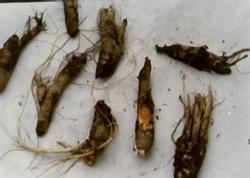
How to control ginseng bacterial soft rot? Please describe the symptoms of ginseng bacterial soft rot: it mainly affects the roots. The lesions appear as brown soft rot, with clear edges, round to irregular in shape, varying in size, often several merging together, and finally causing the entire ginseng root to become soft and rotten. When the lesion is squeezed by hand, white bacterial ooze overflows, with a strong pungent...
How to control ginseng bacterial soft rot? Please describe
Symptoms of ginseng bacterial soft rot: it mainly affects the roots. The lesions appear as brown soft rot, with clear edges, round to irregular in shape, varying in size, often several merging together, and finally causing the entire ginseng root to become soft and rotten. When the lesion is squeezed by hand, white bacterial ooze overflows, with a strong pungent odor. When the disease is severe, the entire ginseng root tissue rots and disintegrates. In the early stage, the aboveground part of the plant shows yellowing at the leaf edges, with slight upward curling; irregular brownish-yellow or red spots appear on the leaves. In severe cases, the entire leaf turns purplish-red, and finally the leaves wilt. The wilting progresses from reversible to irreversible.
Pathogens of ginseng bacterial soft rot: the pathogens are two types of bacteria: (1) Pseudomonas caryophylli Starr et Burkholder, belonging to the genus Pseudomonas. The bacterial cells are rod-shaped, without a capsule, with polar flagella, and Gram-negative. (2) Erwinia carotovora var. Carotovora Bya., belonging to the genus Erwinia. The bacterial cells are short rod-shaped, with peritrichous flagella, and Gram-negative.
Occurrence pattern of ginseng bacterial soft rot: the ginseng soft rot bacteria exist in large quantities in the soil, and the soil is the overwintering site and primary infection source of the soft rot bacteria. The bacteria mainly invade the ginseng roots through wounds. When the ginseng roots grow vigorously and have strong disease resistance, the pathogen remains in a latent state. All parts of the ginseng root can serve as latent sites for the soft rot pathogen, with the highest bacterial carriage rate in the buds. When the ginseng root grows weakly, its disease resistance decreases, or when external temperature and humidity conditions are suitable, soft rot symptoms appear on the ginseng root. In the late stage of the disease, it often causes compound infection with fungi such as Fusarium and Rhizoctonia, and fungal mycelium appears outside the lesions.
Control measures for ginseng bacterial soft rot:
(1) Choose plots with high, dry terrain for ginseng cultivation, to prevent soil compaction and water accumulation; do not use seed roots with wounds, and prevent ginseng roots from being injured during transplanting.
(2) Strengthen cultivation management, provide timely cold protection in winter, and pay attention to controlling underground pests to reduce wounds.
(3) Soil disinfection: 20% copper acetate wettable powder 50 g per curtain, broadcast and mix; 80% ethylicin emulsifiable concentrate 1000-2000 times solution for spraying; 50% chlorobromoisocyanuric acid water-soluble powder 1000 times solution, etc.
Click to get more ginseng cultivation techniques
Click to get more medicinal herb cultivation techniques