-
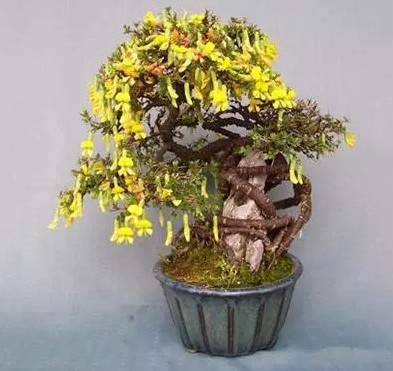
Cultivation methods and key techniques for Caragana bonsai
Caragana arborescens is generally propagated by sowing. Its seeds mostly ripen in early August; when the pods turn dark yellow they should be picked in time, for if picked too late the seeds will burst from the pods and scatter, making them hard to collect. Spread the collected seed pods in the sun to dry so the seeds shed naturally from the pods.
-
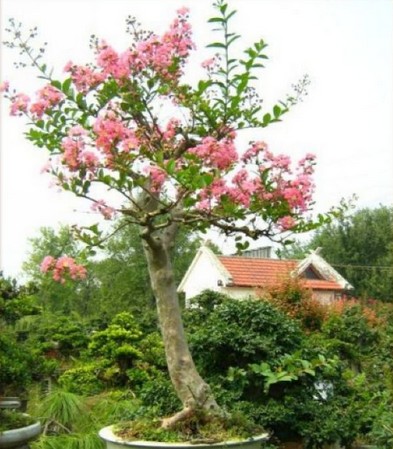
What are the watering methods for crape myrtle bonsai?
Crape myrtle bonsai loves light, and it is generally placed in a sunny, well-ventilated spot to grow. But crape myrtle also likes moisture and fears waterlogging, so watering should be done in moderation. Too much watering causes water accumulation, which will make the crape myrtle rot at the roots and die. But if water is not replenished in time, it will also pause growth or die from lack of water.
-
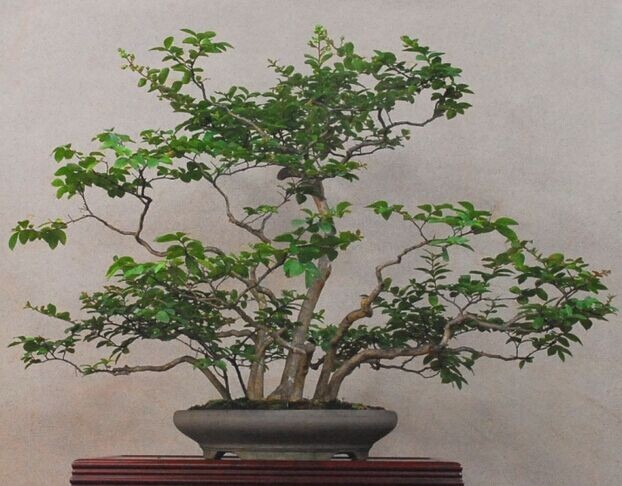
Detailed Explanation of Pruning and Shaping Methods for Crape Myrtle Bonsai
Crape myrtle (Lagerstroemia indica) is tolerant of pruning, has strong branching ability, and produces a large amount of new shoot growth. Therefore, after flowering, the spent flowers should be cut off, which can extend the flowering period. Sucker branches, overlapping branches, crossing branches, radiating branches, and diseased branches should be removed at any time to avoid consuming nutrients. Pruning and shaping: 1. General pruning and shaping of crape myrtle bonsai
-
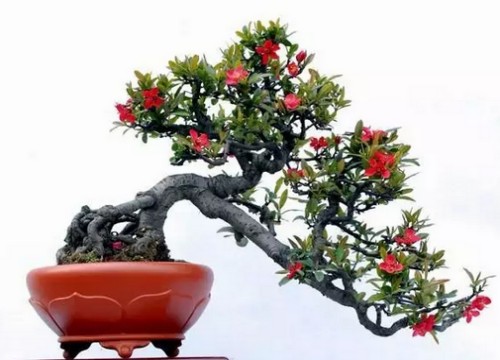
What are the correct methods for correcting bonsai roots?
The longer a bonsai is grown in a pot, the more beautiful its root base becomes, so the age and antiquity of a bonsai tree can be judged from its root base. To create a bonsai with a good root base, use a shallow pot, pile the soil slightly higher than the pot rim, let the roots straddle the mounded soil, barely exposed above the soil surface, spreading out in all directions, and exposed to sunlight to accelerate their growth and transformation
-
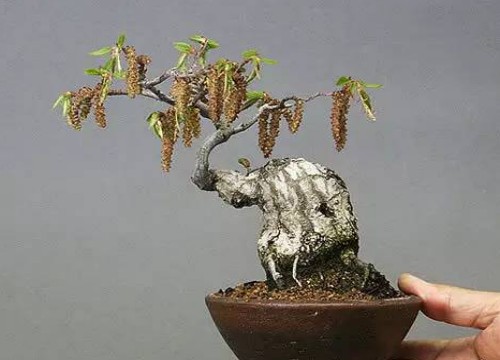
How to thin leaves and shape a bonsai? A full breakdown of methods and techniques
Cutting off the leaves at the tips of branches is called leaf thinning. Besides preventing branches from growing leggy and promoting the sprouting of axillary buds, leaf thinning also allows the entire tree to receive even sunlight, makes the branches near the roots thicker and the branches in the canopy thinner, so that the tree's vigor becomes strong and healthy. If sunlight cannot easily penetrate, causing poor air circulation, the branches and leaves in the lower part of the potted tree will weaken
-
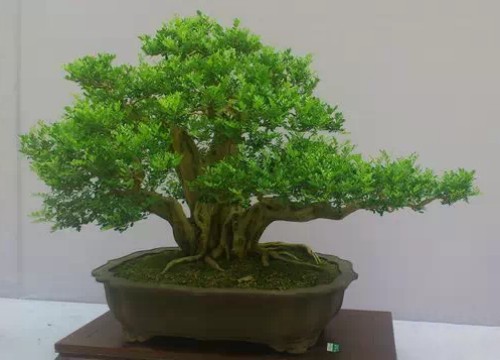
How to prune a Murraya paniculata bonsai? Detailed pruning methods
After the Murraya paniculata (orange jasmine) has taken shape, it continues to grow. If it is allowed to grow naturally without restraint, it will inevitably affect the tree's form and cause it to lose its artistic value. Therefore, it must be pruned in time: long branches cut short, dense branches thinned, to maintain a graceful tree form and appropriate proportions. This is especially true because Murraya paniculata has strong sprouting ability; to maintain a certain tree shape
-
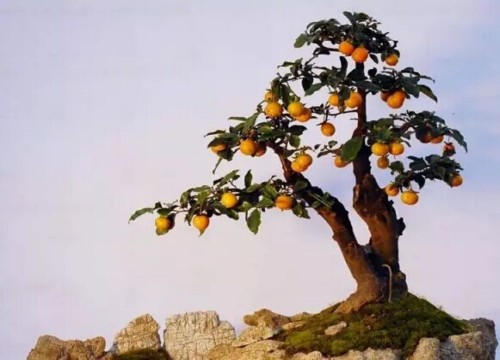
Detailed Explanation of Modeling Methods and Techniques for Diospyros cathayensis Bonsai
Diospyros cathayensis, also known as Heitazi, is also called "bottle orchid" because its flowers are shaped like bottles and its fragrance resembles orchids. It is an evergreen shrub or small tree of the genus Diospyros in the family Ebenaceae, with black branches, thorns, and elliptical, dark green, glossy leaves. The stems of Diospyros cathayensis are sturdy and upright, naturally twisted, and iron-colored, making it suitable for making stump bonsai.
-
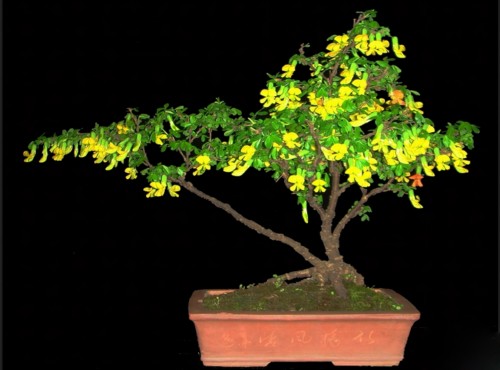
What are the propagation methods for Caragana arborescens?
Caragana arborescens is generally propagated by sowing. Its seeds mostly mature in early August; when the pods turn dark yellow they should be picked promptly, for if picked too late the seeds will burst from the pods and scatter, making them hard to collect. Spread the collected seed pods in the sun to dry so the seeds shed naturally from the pods
-
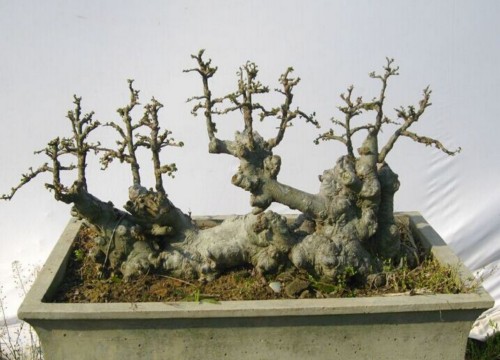
How to Shape a Chinese Elm Bonsai? Detailed Methods and Techniques
When shaping a Chinese elm bonsai, you should base the work on the basic form of the old trunk and, through wiring, pruning and other techniques, create different bonsai styles such as the formal upright style, curved trunk style, slanting style, waterside style, cascade style, wind-swept style, forest style, and root-on-rock style. Shaping can be done either during the dormant period after leaf fall or during the growing season
-
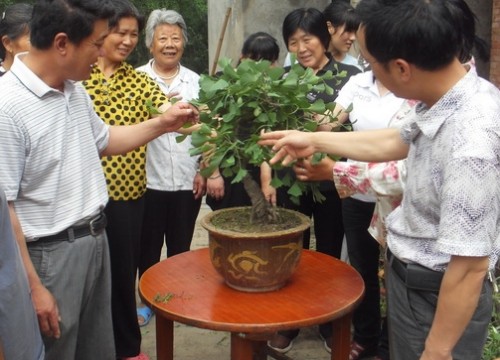
What are the pruning methods for ginkgo bonsai?
Pruning is one of the main techniques in creating ginkgo bonsai. Its purpose is to highlight the trunk, fill out the ornamental branches, express various different artistic conceptions, and enhance artistic value, making it naturally quaint, elegant and understated. The principle is to cut away surplus side branches, parallel branches, crossing branches, overly dense branches, leggy branches and diseased or dead branches
条件筛选