How to Shape a Chinese Elm Bonsai? Detailed Methods and Techniques
When shaping a Chinese elm bonsai, you should base the work on the basic form of the old trunk and, through wiring, pruning and other techniques, create different bonsai styles such as the formal upright style, curved trunk style, slanting style, waterside style, cascade style, wind-swept style, forest style, and root-on-rock style. Shaping can be done either during the dormant period after leaf fall or during the growing season, but the budding period must be avoided.
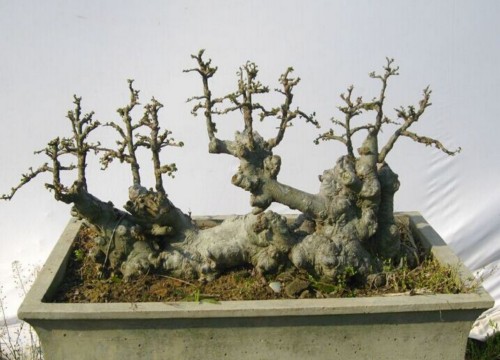
Once the Chinese elm bonsai has taken shape, plant it in a purple clay pot before it starts growing in spring. Be sure to choose a loose, airy, well-draining sandy soil rich in humus. It is best to mix it in the ratio of yellow sand : pine needle soil : loess = 4:3:3; this soil is both airy and moisture-retentive, and it will not become waterlogged. Usually place it in a well-ventilated spot with ample light for care, and it is best to keep the potting soil on the dry side.
In summer, when it is hot and dry, you can sprinkle water on the ground around the plant, but do not spray water directly on the leaves, lest the leaves grow larger and lose their beauty. After a new trunk has taken root, do not rush to fertilize; this is an important reason many people fail when growing the stock. Fertilize after autumn instead, and it is best to use fully rotted, dilute liquid fertilizer.
The Chinese elm has very strong sprouting ability and grows quickly, so it should be pruned frequently during the growing season. Cut away overly long and messy branches to keep the tree's shape graceful. The best viewing period for a Chinese elm bonsai is when the new leaves have just emerged. If you remove all the leaves in early to mid-August and then strengthen fertilizer and water management, new leaves will grow again by late September, raising its ornamental value.
When shaping a Chinese elm, pruning should be the main method, combining pruning and wiring. Based on the basic form of the old trunk, the main trunk can be made into many forms, such as the formal upright style, curved trunk style, slanting style, lying trunk style, waterside style, wind-swept style, forest style, or cascade style. The Chinese elm has a well-developed root system, making it very suitable for exposed-root or root-on-rock bonsai.
The main shaping time is during the dormant period after leaf fall. The Chinese elm's branches and trunk are soft, its sprouting ability is strong, it grows quickly, and it has dense foliage and tolerates pruning. When wiring and shaping with iron wire or palm fiber, its branches and leaves are often pruned into cloud-pad form. During the growing season it should be pruned frequently. When new branches grow to 4-6 cm, cut off the water sprouts and shorten overly long and messy branches to keep the tree's shape graceful.
Leaf removal can promote leaf budding and make the leaves smaller. The best viewing period for a Chinese elm bonsai is when the new leaves unfold, so remove all the old leaves in early autumn. Strengthen water and fertilizer management, and in 20-30 days new leaves will grow again, re-entering the viewing period and delaying leaf fall.