-

What are the propagation methods for Polygala fallax bonsai?
Polygala fallax is a commonly used folk medicinal herb, and its medicinal part is the root, which has the effects of strengthening the tendons, tonifying qi, and unblocking the meridians, and its market demand is increasing year by year. At present, because wild Polygala fallax is continuously being dug up and harvested, in recent years some medicinal farmers have begun planting it in fields. So
-
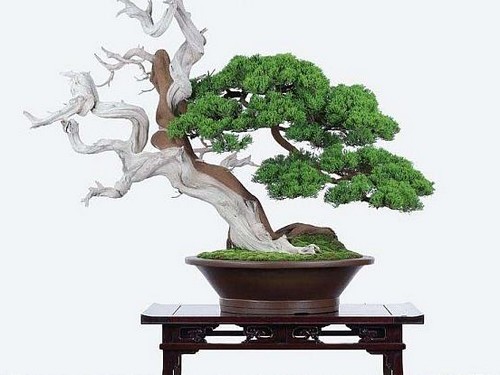
A Complete Guide to the Styling Methods and Techniques of Chinese Swamp Cypress Bonsai
The Chinese swamp cypress (Glyptostrobus pensilis) is hailed as a "living plant fossil." It is a deciduous or semi-deciduous tree of the genus Glyptostrobus in the family Taxodiaceae; the genus contains only this 1 species. It is a relict plant of the world and a tree species endemic to China. It first appeared in the Mesozoic Era more than 100 million years ago, in the same era as the dinosaurs. According to botanists, in coastal areas such as Fujian, being able to find even a few or even a single Chinese swamp cypress is already extremely rare.
-
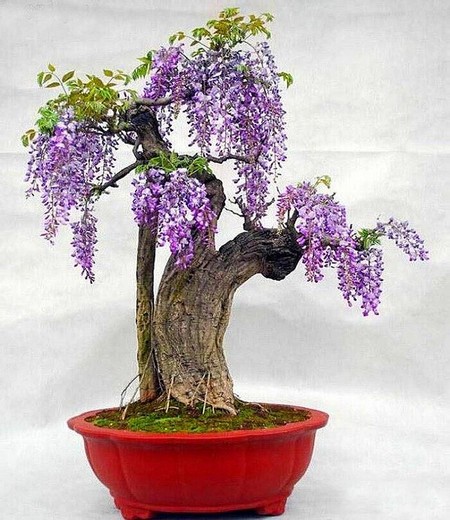
What are the propagation methods for wisteria bonsai?
Wisteria is a perennial woody climbing plant of the genus Wisteria in the Fabaceae family. The flowers are purple, blooming from April to June, forming pendulous racemes, with flat, elongated pods, and it has strong ornamental value. Wisteria is easy to propagate and can be grown from seed, cuttings, layering, division, and grafting, with seed sowing and cuttings being the main methods.
-
What are the cultivation methods for Chinese hackberry (Celtis sinensis) bonsai?
Chinese hackberry (Celtis sinensis) is widely distributed across many regions nationwide, including the Huai River basin, the Yellow River basin, south of the Qinling Mountains, Guangdong, and Guangxi, and mostly grows scattered at village entrances, by riversides, at field corners, and on hillsides in plains and low mountain areas. Because Chinese hackberry material is widely available and highly adaptable, easy to propagate from seed, long-lived, with a rugged tree form, and aged, ancient, and uniquely elegant
-
Detailed Guide to Seed Propagation Methods for Clivia Bonsai
Clivia seed propagation involves unique techniques. The propagation time for Clivia is generally from November to February of the following year. The key to propagation is temperature control. The propagation temperature is generally between 20-30°C, and there should be a certain temperature difference. This ensures fast and even germination. Before propagation
-
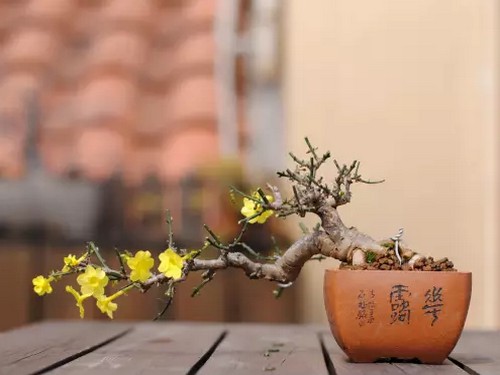
How to Fertilize Small Bonsai: Methods and Precautions Explained
Because bonsai have limited soil, fertilization must be timely, otherwise it easily causes leaves to turn yellow, decline, and branches to wither. The amount of fertilizer varies with the type of plant. For small bonsai grown mainly for their flowers, a lighter fertilizer should continue to be applied after flowering to encourage more blooms the following year
-
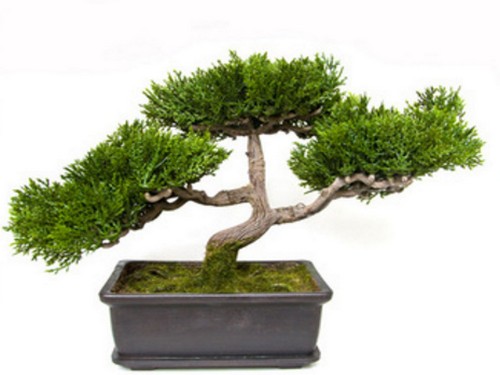
How to fertilize stump bonsai scientifically? These methods you need to master
The fertilization method for stump bonsai is very important. If too much fertilizer is applied, the branches and leaves grow excessively; if fertilizer is lacking, the branches become thin and weak, the leaves turn yellow, and the plant is prone to pests and diseases. So here are three scientific fertilization methods: First, according to quantity. The amount of fertilizer for stump bonsai should follow the principle of small amounts applied frequently
-

How to Fertilize Bonsai? Detailed Explanation of Methods and Principles
The types of fertilizer for bonsai plants are mainly organic fertilizer and inorganic fertilizer. Organic fertilizers mainly include: human feces and urine, barnyard manure, poultry manure, green manure, bone meal, plant ash, soybean cake, sesame paste residue, etc., as well as waste organic matter from daily life such as fishy water and rice-washing water. Inorganic fertilizers mainly refer to various artificially synthesized chemical fertilizers
-
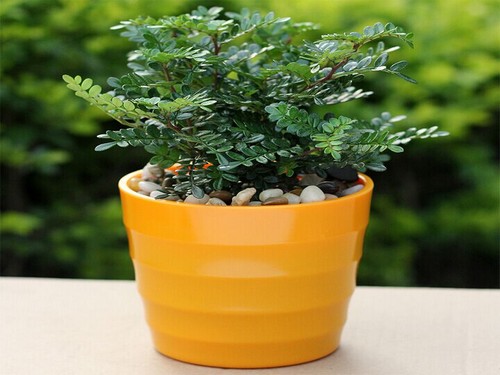
What are the propagation methods for potted fragrant wood (Pistacia weinmannifolia)?
Because the scent given off by fragrant wood itself keeps flies and mosquitoes away, it can also be grown as a potted ornamental for the home. However, during interviews, reporters found that in the Kunming nursery market in Yunnan Province, Guangzhou fragrant wood is in short supply and fetching high prices. Potted fragrant wood with a crown width of 20 cm to 25 cm sells for as much as 13 yuan to 18 yuan
-
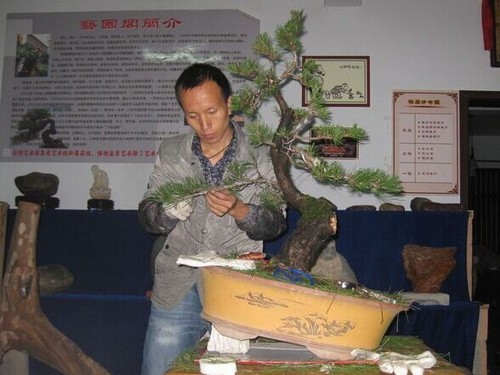
A Detailed Guide to the Pruning and Styling Methods for Black Pine Bonsai
The pruning and styling of black pine bonsai is mainly achieved through pruning and wiring; methods such as grafting and forcing buds on young shoots can only serve as auxiliary techniques. The black pine to be styled must have already been cultivated for 1-2 years: the best time for styling is from December to February of the following year.
条件筛选