-
Detailed Explanation of Common Celery Seed-Saving Methods and Technical Points
In recent years, many regions have cultivated some high-quality common celery varieties, and they also account for a relatively large proportion in sowing. Because celery is a cross-pollinated crop, for common varieties it is especially important to do a good job in seed saving and preventing degeneration, to truly establish a good seed-saving field or seed-production site, and to select and retain good seed plants. Strictly isolate in the seed-saving...
-
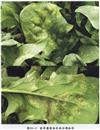
How to prevent and control downy mildew in spinach? Detailed explanation of prevention and integrated treatment methods
The disease is caused by a fungus called spinach downy mildew. It mainly affects the upper surface of the leaves; the lesions are pale yellow, irregular in shape and varied in size, with a diameter of 3-17 mm and indistinct edges. After the lesions expand, they join together into patches, and in the later stage they turn brown and the leaves die; on the underside of the leaves, a grayish-purple mold layer forms on the lesions. The disease spreads from the outer leaves...
-
Luffa leaves can treat livestock diseases, and the clever methods must be mastered
I. Sowing and seedling raising Before sowing luffa, treat the seeds with water at 55-60°C for 15 minutes, then soak them in water at 25°C for 4 hours, rinse off the mucus on the seed coat surface, then wrap the seeds in wet gauze and place them in an incubator to sprout. Select well-sprouted seeds and sow 1-2 seeds per pot, generally using about 500 grams of seed per mu. Before emergence...
-
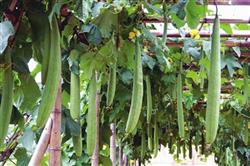
Several Cultivation Methods for Achieving High Yields of Greenhouse Luffa
1. Variety selection. For greenhouse luffa, it is advisable to choose varieties with vigorous plant growth, cold tolerance and strong adaptability, such as the cylindrical luffa. 2. Land preparation and fertilization. Before sowing, in combination with plowing, apply more than 5000 kg of high-quality farmyard manure per mu; after leveling and harrowing evenly, open furrows along the planting rows, and apply another 50 kg of superphosphate and 25 kg of potassium sulfate per mu, ...
-
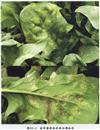
Comprehensive Management and Control Methods for Spinach Downy Mildew
Comprehensive management of spinach downy mildew means integrated management of spinach downy mildew. 1. Fertilizer and water management. Spinach prefers fertile, moist, cool conditions and dislikes drought and waterlogging; it is a fast-growing vegetable. Therefore, during the growing period, sufficient fertilizer and water must be supplied in a timely manner. From sowing to full emergence, the soil must be kept moist to ensure full emergence. At the 3-leaf stage, cultivate and weed, ...
-
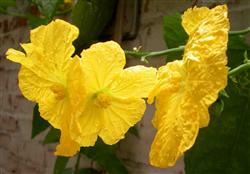
What are the causes of loofah flower rot? Detailed explanation of prevention and control methods
Preparation ratio of flower-dipping solution: The flower-dipping agent generally uses zuogualing, naphthaleneacetic acid (NAA) and 2,4-D as the main agents, plus an appropriate amount of nutrient solution and a fungicide for controlling gray mold for flower dipping, and the effect is very ideal. Smoke fumigation method for controlling flower rot: Smoke fumigation is one method for controlling loofah flower rot. Usually 3-4 days after flower dipping is the...
-
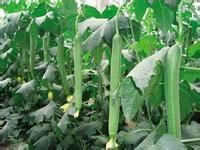
What to Do About Headless Loofah in Deep Winter? Detailed Prevention and Treatment Methods
Growers who cultivate loofah all know that in deep winter, loofah generally grows weakly, and once the headless condition appears, that vine is as good as wasted. Why does a headless vine appear? Because during the process of changing the head of the loofah, all the branches below the growing point are removed, making it very difficult for new ones to appear. If we accidentally damage the upper growing point...
-
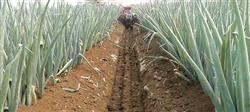
What is the purpose of hilling soil around scallions? A detailed guide to hilling methods
The elongation of the leaf sheath cells in the false stem of scallions requires a dark and moist environment and is based on the input and accumulation of nutrients. Therefore, hilling soil in stages is an important measure to prevent lodging, soften the leaf sheaths, extend the length of the white stalk, and improve the yield and quality of the white stalk. Hilling should be done after entering the vigorous growth period, when the climate and soil temperature turn cooler...
-
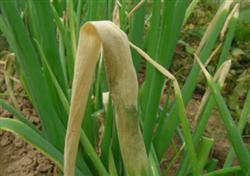
Identification and Control Methods for Dry Tips on Welsh Onions
Welsh onion dry tips fall into two types: physiological dry tips and pathological dry tips, and among the latter, "white dry" and "green dry" often leave onion farmers unable to tell them apart, making it hard to target the right treatment, which leads to missing the best window for control. Here, a brief explanation of the causes and control measures for the two symptoms. White dry is caused by late blight, occurring under high temperature and high humidity conditions...
-
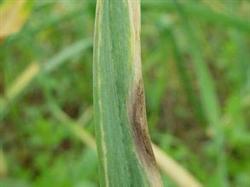
Characteristics and Control Methods of Garlic Gray Leaf Spot
(1) Symptom characteristics: It mainly affects the leaves. The lesions are long elliptical, initially light brown, later turning grayish white. On both sides of the leaves, the lesions produce fine grayish-black mold-like growth. In severe cases, the lesions merge, causing localized death of the leaves. The disease is severe in weather with warm days and cool nights, heavy fog, and heavy dew. (2) Control methods: ① Promptly remove damaged leaves...
条件筛选