-

Detailed Explanation of the Planting Methods and Key Technical Points for Caoguo (Tsao-ko Amomum)
Planting Methods for Caoguo
-
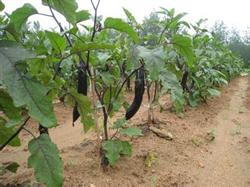
Summer topdressing methods and technical points for eggplant
Furrow application. Vegetable growers have become accustomed to applying chemical fertilizer by broadcasting it with irrigation water, but this method is not suitable during the hot summer season. Because the temperature is relatively high, when chemical fertilizer is applied with irrigation water, a large amount of ammonia volatilizes, which reduces the effect. This is especially true for ammonium bicarbonate, which is more likely to cause ammonia poisoning in eggplant. Applying it in furrows or burying it in holes gives the best results...
-
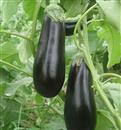
What are the correct methods for fertilizing eggplants?
Seedling-stage fertilization: To grow seedlings with thick stems, short internodes and well-developed roots, the seedbed soil must be fertile. On 11.3 sq m of seedbed soil, apply 200 kg of decomposed organic fertilizer and 0.5 kg each of superphosphate and potassium sulfate, and mix the seedbed soil and fertilizers evenly. You can also apply 100-150 kg of mixed human manure and 1 kg of NPK compound fertilizer.
-
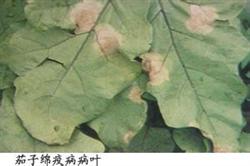
How to treat eggplant Phytophthora fruit rot? A detailed explanation of prevention and control methods
The pathogen of eggplant Phytophthora fruit rot is Phytophthora melonis, and the disease is severe under conditions of high temperature and high humidity. When seedlings and older plants are infected at the stem base, the initial stage shows water-soaked lesions, which later turn dark green or purplish brown, and the diseased part becomes constricted. Prevention and control techniques: adopt measures such as selecting disease-resistant varieties, hot water seed treatment, ridge planting, and humidity control for prevention. In the early stage of the disease, use 50...
-
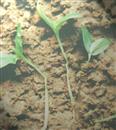
Control methods for acute seedling death in greenhouse cucumbers
In the process of off-season cucumber cultivation under plastic film-covered greenhouses, when cucumbers enter the flowering and fruiting stage, cucumbers that were growing well earlier often suddenly show acute seedling death within a few days. This acute wilt disease of cucumber develops rapidly and is difficult to control. Its causes: weather...
-
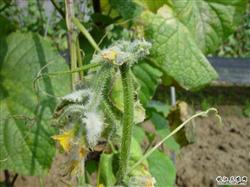
Detailed Guide to Symptom Identification and Control Methods for Cucumber Phytophthora Blight
Cucumber phytophthora blight occurs in all regions. It is one of the important diseases of cucurbit crops. It can harm many kinds of cucurbit crops. 1. Pathogen Cucumber phytophthora blight is a disease caused by fungal infection. 2. Symptom identification 2.1 Leaf lesions appear as light brown, nearly circular large spots. 2.2 Stem base...
-
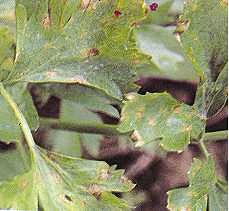
Control Methods for Late Blight in Greenhouse Celery
Celery late blight, also known as leaf spot disease and leaf blight, is a common disease in celery. Late blight in greenhouse-grown celery is more severe than in open-field celery and has a great impact on celery yield and quality. Occurrence characteristics: Celery late blight is a fungal disease, and the pathogen can overwinter on seeds and diseased plant residues. Sowing...
-
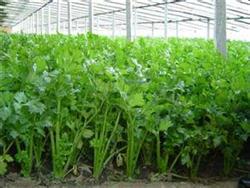
Conventional Celery Seed Saving Methods and Key Techniques
In recent years, many places have bred some excellent conventional celery varieties, which also occupy a relatively large proportion in cultivation. Given that celery is a cross-pollinated crop, conventional improved varieties especially require good seed saving and degeneration prevention work, effectively establishing seed-saving fields or seed-saving bases, and selecting and keeping good seed plants. Strictly isolate at least 4...
-

Key Points of Purslane Planting Technology and Field Management Methods
Purslane Planting Technology
-
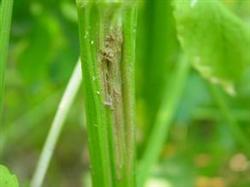
Cause analysis and control methods for celery petiole cracking
Celery petiole cracking mainly shows as the stem base splitting open together with the petiole. The first cause of cracking is boron deficiency; the second is growth being hindered under low temperature and drought conditions. In addition, sudden high temperature and high humidity, with the plant absorbing too much water, cause the tissue to fill with water rapidly, which can also cause cracking. Control methods: first, apply...
条件筛选