Grape Disease Prevention and Control Methods in the Rainy Season
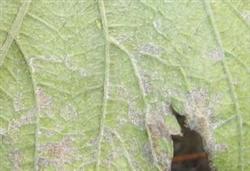
Grape downy mildew is one of the important diseases of grapes and can occur in all parts of our country. It mainly damages the leaves, causing early defoliation, and can also harm new shoots and fruit clusters. The main symptom is the formation of polygonal yellow spots on the upper surface of the leaves, which later die, turn brown, and produce white downy mildew on the underside. Grape downy mildew...
 I. Focus on prevention, spray medicine in time
This concept is generally understood by fruit growers, but in actual practice it is often not done well enough: either they watch the sky and wait for rain, or they are busy with other work, delaying the best time to spray, when grapes are most susceptible to disease. For medicines with a residual effect period of 17 days-21 days, spray once every 15 days. If rain occurs in between, shorten the number of days until the next spraying as appropriate depending on the amount of rain. If heavy rain occurs immediately after spraying, spray again after the sky clears. If two adjacent medicines are respectively alkaline or acidic, strictly pay attention to the interval time to prevent the two medicines from neutralizing each other's acid and alkali. By all means, do not delay the spraying time.
II. At the first sign of disease, treat in time
Continuous overcast and rainy weather, high temperature and high humidity make grapes most susceptible to disease. Observe the vineyard comprehensively once every day. At the first sign of disease, spray the appropriate medicine. For example, downy mildew occurs to varying degrees almost every year. Its peak season is about 10 days before "Start of Autumn," and grapes are most susceptible when the temperature difference between day and night is above 10°C. At this time, observe comprehensively and carefully. If downy mildew is found in any individual place in the vineyard, even on just one grape plant, spray immediately. Commonly used medicines are 70% Kebo 600-fold solution, 80% phosethyl Al 300-fold solution, or 1:0.7:180 Bordeaux mixture.
III. Mainly use Bordeaux mixture, suitably pair it with other medicines
Based on many years of experience and feedback from a number of fruit growers, Bordeaux mixture is both economical and reliable as a good disease-prevention medicine, and its spreading and adhesion are also relatively strong. In the process of preventing grape diseases, take Bordeaux mixture as the main line and suitably pair it with other medicines; the disease-prevention effect is very good. Before flowering, spray once with 1:0.5:240 solution; after flowering, spray once with 1:0.7:220 solution; during the grape swelling period, spray once with 1:0.7:200 solution; after grape harvest, spray once with 1:1:180 solution; in autumn, spray 1 time-2 times with 1:1:160 solution. If diseases such as white rot or anthracnose occur in between, spray the appropriate medicine. These medicines are mostly acidic, so strictly limit the interval time from Bordeaux mixture.
IV. Add fertilizer appropriately to strengthen the tree vigor and improve resistance
In the rainy season, fertilizer nutrients will be lost, weakening tree vigor and reducing resistance. Therefore, in the rainy season, appropriately increase the amount of fertilizer according to the nutrient loss of the plot and the growth of the grapes, and use the "eat less, eat more often" method: apply fertilizer in small amounts and frequently. This is especially true for plots of heavy sandy loam soil.
Foliar topdressing achieves twice the result with half the effort. Generally carry it out together with spraying; if particularly needed, spray it separately. When spraying Bordeaux mixture, add 0.5% urea. When spraying acidic medicines, add 0.5% urea and 0.3% potassium dihydrogen phosphate; a reliable-quality foliar fertilizer can also be sprayed. But new fertilizers must first be tested before large-scale use.
V. Loosen the soil in time to increase soil permeability
In the rainy season, especially after heavy rain or torrential rain, the surface soil in the vineyard will become compacted, soil aeration will be poor, causing grape roots to lack oxygen, weakening tree vigor, reducing resistance, and making disease more likely. Therefore, before the flood season, carry out one deeper intertillage of the soil. In the rainy season, seize the gaps between rainy days to intertill the vineyard in order to increase soil permeability.
VI. Clean up secondary shoots to facilitate ventilation and light penetration
In the rainy season, grapes are most prone to excessive vegetative growth, and the incidence of secondary shoots is very high. Pinch the grapes in time and remove the secondary shoots in time. At the same time, for plants with too many new shoots, remove part of them as appropriate. This facilitates ventilation and light penetration and improves stress resistance.
VII. Clean the orchard at the right time to curb the spread of disease sources
If disease occurs in the vineyard, then with much rain, much water, and high temperature and high humidity, the disease sources are most likely to spread. Therefore, clean the orchard at all times. Remove diseased leaves, diseased branches, and diseased fruit from the orchard, and bury them deeply or burn them. At the same time, remove weeds from the orchard in time. When cutting off diseased branches and diseased fruit, always clean the scissors and disinfect them to prevent cross-infection.