Detailed Explanation of Papaya (Chaenomeles) Cultivation Techniques and Management Methods
(1) Varieties. Papaya (Chaenomeles) varieties. (2) Land conditions. Altitude 300 to 900 m, soil type yellow-brown earth, soil layer thickness over 50 cm, soil pH 5.3 to 7.0, organic matter content ≥1.0%. (3) Cultivation management. 1. Seedling propagation: seedling propagation by seed. Raising seedlings is divided...
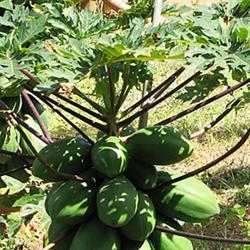
(1) Varieties.
Papaya (Chaenomeles) varieties.
(2) Land conditions.
Altitude 300 to 900 m, soil type yellow-brown earth, soil layer thickness over 50 cm, soil pH 5.3 to 7.0, organic matter content ≥1.0%.
(3) Cultivation management.
1. Seedling propagation: seedling propagation by seed. Raising seedlings is divided into autumn sowing and spring sowing. Autumn sowing, from late October to early November. Spring sowing, from early to late March. Select well-developed, fully mature papaya (Chaenomeles) fruits, take the seeds, wash them clean, dry them, and store them in a cool, dry place for later use. Seeds sown in spring must undergo low-temperature sand stratification treatment. Both spring sowing and autumn sowing are acceptable.
When the seedling diameter reaches over 0.5 cm, grafting can be carried out. Spring grafting is carried out 20 days before the rootstock buds, using cleft grafting, tongue grafting, or bark grafting, etc. After grafting, check the survival rate promptly and re-graft as needed. Prune the rootstock promptly, remove sprouts and loosen the ties.
2. Planting: Planting time, autumn planting after the papaya (Chaenomeles) tree's normal leaf fall until before the ground freezes (mid-November to early December); spring planting when the soil thaws until before the saplings sprout (late February to mid-March). Plant ≤900 plants per hectare.
3. Fertilization: Mainly decomposed farmyard manure or crushed high-quality cake fertilizer, supplemented with chemical fertilizers (special fertilizer for papaya/Chaenomeles). Decomposed farmyard manure application rate 37500 to 75000 kg/hectare, high-quality cake fertilizer 2250 to 3750 kg/hectare.
4. Training and pruning: Pruning is mainly winter pruning, combining winter pruning and summer pruning. The main task of winter pruning is to cut back strong branches, thin out overly dense branches, thin and weak branches and diseased or dead branches, and leave moderate branches unpruned. In summer, use measures such as thinning branches, pinching, twisting shoots, thinning flowers and fruits, and thinning leaves to adjust tree vigor and improve ventilation and light penetration.
5. Environmental and safety requirements: The use of pesticides, chemical fertilizers, etc. must comply with relevant national regulations and must not pollute the environment.
(4) Harvesting.
In late October, when the fruit skin turns from green to yellow and the fragrance is rich, harvest.
Handle gently during harvesting to avoid mechanical damage, and harvest and stack according to large, medium and small grades, with stacking thickness not exceeding 30 cm.
(5) Storage.
Bulk fresh papaya (Chaenomeles) fruits stored at natural temperature for no more than 10 days. Fresh papaya (Chaenomeles) fruits packaged in fresh-keeping bags stored at natural temperature for no more than 30 days.