Detailed Explanation of Grape Downy Mildew Symptoms and Identification Methods
Symptom identification: It is a fungal disease, mainly affecting leaves, new shoots and young fruit. On affected leaves, pale yellowish-brown water-soaked spots with indistinct edges first appear; the lesions gradually expand into irregular or slightly rounded large yellowish-brown patches, up to 1-3 cm in diameter, with indistinct edges. Multiple lesions can merge into large patches, and in wet...
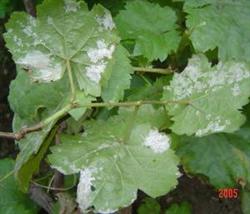
Symptom identification: It is a fungal disease, mainly affecting leaves, new shoots and young fruit. On affected leaves, pale yellowish-brown water-soaked spots with indistinct edges first appear; the lesions gradually expand into irregular or slightly rounded large yellowish-brown patches, up to 1-3 cm in diameter, with indistinct edges. Multiple lesions can merge into large patches. Under high humidity, a grayish-white, frost-like mold layer develops on the underside of the lesions; in dry years, when atmospheric humidity is low, no frost-like mold layer forms. The lesions turn reddish-brown or yellowish-brown. In severe cases, the lesions and the leaf tissue outside the lesions dry up, or the entire leaf dries up, leading to leaf drop. On affected new shoots, water-soaked brown spots appear; in severe cases the new shoots become distorted, stop growing and may even die, and under high humidity a frost-like mold layer develops on the lesions. Tendrils, petioles and rachises can also be affected. After young fruit is affected, water-soaked pale brown spots appear; under high humidity, a grayish-white mold layer develops on the young fruit and fruit clusters. Second-crop fruit in autumn is affected more severely. After the fruit colors, it is affected less severely.