Management Methods and Technical Key Points for Cherry Trees After Harvest
How to manage cherry trees well after harvest? Please introduce the methods. The main management methods for cherry trees after harvest are: pinching new shoots. To promote flower bud differentiation and prevent excessive vegetative growth, the method of pinching new shoots should be adopted for control. That is, pinch the new shoots that have not stopped growing, and the pinching position is generally at the half-leaf boundary; after pinching...
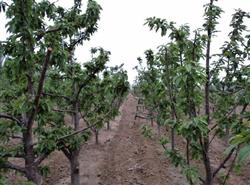
How to manage cherry trees well after harvest? Please introduce the methods of management
The main management methods for cherry trees after harvest are:
Pinching new shoots
To promote flower bud differentiation and prevent excessive vegetative growth, the method of pinching new shoots should be adopted for control. That is, pinch the new shoots that have not stopped growing, and the pinching position is generally at the half-leaf boundary; after pinching, secondary shoots will emerge after 10-15 days of dormancy, and when they grow to 15-20 cm, a second pinching should be carried out, still with the half-leaf boundary as the position.
Branch bending
After cherry harvest, large branches with a small angle on the primary branches can be bent so that their angle with the main branch forms an included angle of 70-80 degrees. This can improve the ventilation and light transmission of the tree body, while also moderating the growth vigor, which is very beneficial to flower bud differentiation. Note that before bending, a protective pad should be placed at the binding point to avoid damaging the cortex of the large branch.
Large branch pruning
Too many large branches and a closed tree canopy are one of the important reasons for weakened cherry tree vigor, reduced resistance, and the occurrence of pests and diseases. Moreover, the younger the cherry branch age, the stronger the resistance. Carrying out a certain amount of large branch pruning can improve the overall stress resistance of cherries. At the same time, through pruning, excessive flower buds are reduced to ensure larger fruit size the following year.
Removing large branches should grasp the following aspects:
First, large branch pruning should be carried out from top to bottom, and one should not rush. In summer pruning, the large branches removed each year should be about 15%-20% of the total, and they should be removed year by year according to the condition of the tree body. Generally, it is appropriate to complete one round of pruning in 3-4 years. Maintain an overall tree shape with relatively sparse upper main branches and relatively dense lower main branches.
Second, it should be carried out according to the length of the fruiting branches. The longer the fruiting branch, the earlier it should be removed, to promote the retraction of fruiting branches and make the tree shape compact.
Third, selective removal should be made according to the growth amount of new shoots. Those with small new shoot growth should be removed first.
Fourth, grasp the timing of removal. Removing large branches can generally be carried out from after harvest to mid-July. In some cases, it can even be carried out during the fruit harvest period, such as combining cherry picking with top removal, sawing off excessively long top branches together with fruit, and picking the fruit after they fall to the ground. In addition, sawing large branches should generally avoid periods of heavy rainfall to prevent gummosis.
Note that when removing large branches, a certain length of branch stub should generally be left at the pruning site to promote wound healing and prevent excessive retraction of fruiting branches.
Click to get more cherry tree planting techniques
Click to get more fruit planting techniques