What are the key points of seed pumpkin cultivation and management techniques?
How should seed pumpkins be managed? Please provide guidance. Seed pumpkin management can refer to the following methods: Thin and set seedlings early. Thinning and setting seedlings of pumpkins is better done early than late. Early thinning and setting of seedlings helps ventilation and light penetration and promotes early, rapid seedling growth. Generally, thinning begins as soon as the seedlings can be handled, preferably thinning during the 2-leaf stage and setting seedlings at the 3-leaf stage, ...
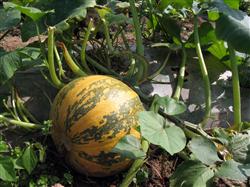
How should seed pumpkins be managed? Please provide guidance.
Seed pumpkin management can refer to the following methods:
Thin and set seedlings early. Thinning and setting seedlings of pumpkins is better done early than late. Early thinning and setting of seedlings helps ventilation and light penetration and promotes early, rapid seedling growth. Generally, thinning begins as soon as the seedlings can be handled, preferably thinning during the 2-leaf stage and setting seedlings at the 3-leaf stage. Keep large, strong, and middle seedlings, one plant per hill, and remove small, weak, diseased, damaged seedlings and those with poorly developed root systems.
Carry out intertillage early. Before shoveling, perform deep subsoiling or plow one furrow to release cold and increase temperature, activate the soil, eliminate weeds, and promote early, rapid seedling growth. After the seedlings align with the rows, that is, after all seedlings have emerged, carry out intertillage and weeding early to enhance soil microbial activity, promote root development, and ensure good vine growth. During intertillage and weeding, avoid injuring the seedlings. If the vines grow long, arrange the vines properly before intertillage.
Hill soil, press vines, and remove buds. Before vine extension, apply directional soil once at the leaf nodes and press the vines twice. Before fruit set, remove buds to reduce nutrient and water consumption.
Do a good job of pollination and fruit retention. Carry out artificial supplementary pollination by placing the stamens onto the stigma of the pistils. Keep 3-4 female flowers per plant to set fruit, and retain fruit at nodes 10-21. After removing the root fruit, keep 2 fruits per plant. Once the fruit is secured, top the vine 10-12 leaves before the fruit.
Drought resistance, waterlogging removal, and fertilization. After fruit set and during the fruit expansion period, if drought occurs, resist drought by irrigating early, irrigating thoroughly in one application, and avoiding the formation of dry interlayers in the soil. If waterlogging occurs, drain internal waterlogging and standing water. Combine irrigation with rational fertilization, and maintain moderate water and fertilizer to promote good growth and development of pumpkins.
Prevent diseases, eliminate insects, and resist disasters. At the seedling stage, spray Xiaoye Di at 600 times dilution to cultivate strong seedlings and reduce diseases. In the later stage, control lady beetles with 2.5% Decis at 1500 times dilution, control aphids by spraying 10% imidacloprid at 3000 times dilution, and control powdery mildew by spraying 70% thiophanate-methyl at 600 times dilution. For viral disease, spray Leidus 600 solution plus carbendazim at 600 times dilution. For anthracnose, use mancozeb at 800 times dilution.
Click to get more pumpkin cultivation techniques
Click to get more vegetable cultivation techniques