A detailed explanation of the five main aspects of ginkgo management
Ginkgo, also known as bai guo (white fruit), is one of the rare and precious fruit trees, and its seeds, leaves and their preparations have a wide range of uses. The relevant key points of cultivation techniques are introduced as follows: Ginkgo, also known as bai guo (white fruit), is one of the rare and precious fruit trees, and its seeds, leaves and their preparations have a wide range of uses. The relevant key points of cultivation techniques are introduced as follows: 1...
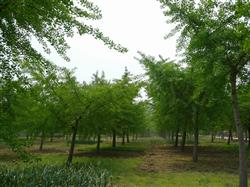 Management after ginkgo planting mainly consists of soil and fertilization, irrigation and drainage to reduce waterlogging, shaping and pruning, and pest and disease control.
Soil management: mainly deep digging and expanding the planting holes, improving the soil, and cultivating and weeding.
Fertilization management: after ginkgo has survived planting, it must be fertilized reasonably. Ginkgo growth requires 19 elements, among which carbon, hydrogen and oxygen can be obtained from the atmosphere and water; nitrogen, phosphorus, potassium, calcium and magnesium are major elements; copper, zinc, iron, manganese, boron, molybdenum and chlorine are trace elements; ginkgo development also requires small amounts of beneficial elements such as cobalt, iodine and sodium. Therefore, ginkgo fertilization is generally based mainly on organic fertilizers, appropriately combined with special-purpose ginkgo fertilizer. Fertilization methods can be trench application, hole application, punch-hole application and broadcast application.
Irrigation and drainage to reduce waterlogging: this is the most critical issue after ginkgo planting. In dry weather, when the soil lacks water, timely irrigation is generally something everyone can do. But digging trenches for drainage to reduce waterlogging is often neglected, and for Shanghai, where the groundwater level is relatively high and rainfall is plentiful, this is especially important. For block planting, a 50-100 cm medium drainage trench to reduce waterlogging should be opened on all four sides, and small drainage ditches should be opened between the rows. The key is that the middle of the bed surface should be somewhat higher, which is favorable for drainage; the middle of the bed must never be somewhat lower, as this easily causes water accumulation and root rot. This is often one of the main reasons for a low survival rate after planting.
In Shanghai, a batch of large ginkgo trees were planted, with diameters at breast height ranging from 20-50 cm. Although they were planted with soil balls, the water absorbed by the root system could not meet the consumption of the aboveground part, resulting in the phenomenon of surviving the first year, declining the second year and dying the third year. Therefore, in the year large trees are transplanted, in addition to emphasizing drainage and irrigation, supplementary fluid measures can be taken for large trees. That is, drill slanted holes in the lower part of the large tree, install tubes, and use a high-pressure sprayer to inject nutrient solution, once every 5-10 days. The effect is especially good. After they have completely survived, the holes are then filled in.
Shaping and pruning: after ginkgo trees are planted, apart from considering some special tree forms, generally one should consider ginkgo as tall, upright, well-proportioned and beautiful. Because after transplanting and heavy pruning, the branches produced are especially messy, so pruning must be carried out purposefully, and especially overlapping branches, upright crossing branches and lateral branches should be dealt with in advance. Maintain a certain tree form.
Pest and disease control: compared with general greening tree species, ginkgo trees have very few diseases, but it is not that there are none. In Shanghai, the main insect pests are slug moths, bagworm moths, tea thrips and the smaller leaf-roller moth. The main diseases are root rot and leaf blight. Root disease is mainly caused by water accumulation at the roots. Leaf blight is mainly caused by lack of fertilizer and weakened tree vigor, and is especially severe when the roots are waterlogged. Secondly, it also has a certain relationship with high temperatures. The above is a summary of the author's more than 20 years of practice, and it is hoped that it will be helpful to professional workers.