Key Technical Points for Irrigation and Drainage Management of Ginkgo Trees
In recent years, ginkgo production has developed rapidly, and the demand for seedlings is very large, but the seedling breeding cycle is relatively long, which is not conducive to production. Using cuttings to raise seedlings can save seeds, eliminate the grafting process, reduce seedling costs, and also speed up propagation. According to reports, treating ginkgo softwood cuttings with a low concentration of rooting powder has a certain effect on promoting root...
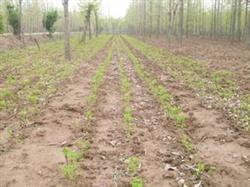 Ginkgo trees have relatively strict water requirements. They prefer moist conditions but are afraid of waterlogging. Seedlings will die after being soaked in water for 3-4 days. During production, attention must be paid to drainage and timely watering.
1. Irrigation principles Ginkgo needs sufficient water at all stages of growth and development. Irrigation is determined according to conditions such as the tree body, precipitation, and soil moisture content. Specifically, irrigation should be well managed during the following periods:
Before bud break, at the end of the dormant period and before buds swell, this is commonly called "spring irrigation"; after flowers fade, as fruits expand and new shoots grow rapidly, the water requirement is relatively high, and in many cases irrigation can be done 2 times in succession; during fruit development, this period coincides with the rainy season, so irrigation is generally not needed, but in dry years irrigation should still be carried out. Before overwintering, after fruit harvest, when leaves turn yellow and fall and before the soil freezes, irrigation promotes flower bud differentiation and enhances the tree's ability to resist cold and survive the winter.
2. Drainage Ginkgo is afraid of waterlogging. If the root system is in 15 cm of standing water for 10 consecutive days, it will cause leaf drop and root rot, and in severe cases the plant will die. When choosing an orchard site, attention should be paid to selecting areas with a groundwater level of 1-2 m. When planning the orchard, design the drainage system well, that is, dig deep ditches around the orchard, and dig a drainage ditch every two rows within the orchard; open ditches or hidden ditches are both acceptable. For drainage on hillside land, water can be removed along ditches in combination with level terraces, fish-scale pits, and terraced fields. When the moisture content in the root distribution layer reaches the soil's maximum water-holding capacity, drainage is needed.