-
Control Methods and Technical Key Points for Gray Mold in Greenhouse Chinese Chives
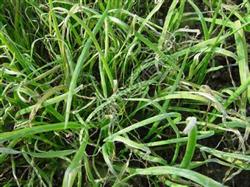
When humidity inside a greenhouse for Chinese chives is high, gray mold is likely to occur. After the disease develops, pale grayish-brown to white spots gradually appear on the leaves from the tip downward, on both the upper and lower surfaces; after expanding, they become elliptical or spindle-shaped lesions and merge with each other into large dead patches. When air humidity is above 85% and the temperature is 15°C~20°C, warm and humid conditions favor the occurrence of this disease.
-
Succulents ravaged down to almost nothing? Use this method in autumn to grow a whole patch
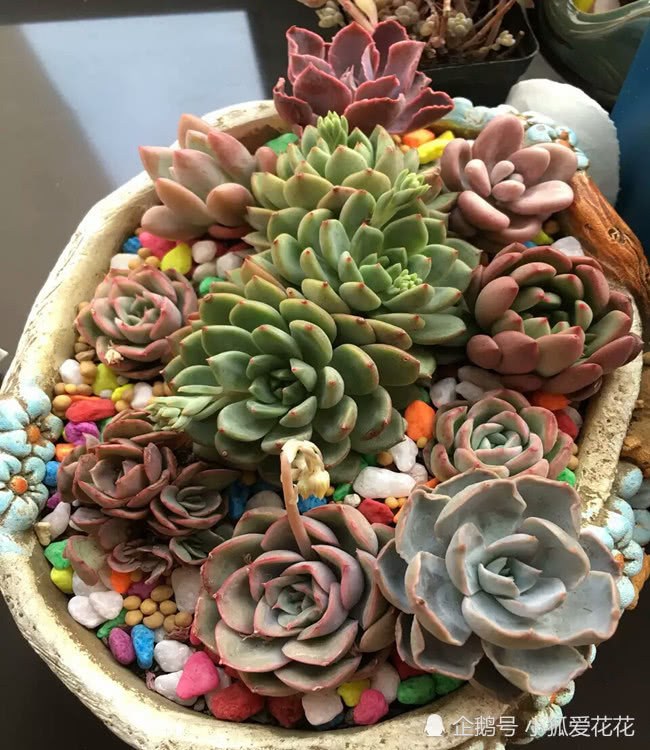
In summer, some gardeners' succulents were scorched by the sun into a pile of shriveled dead leaves, and it was heartbreaking to see the little succulents "ravaged" down to almost nothing. Despite careful care every day, they still could not protect the poor little succulents, letting them die...
-
Safety management points for the control of leek blight in greenhouse and shed conditions
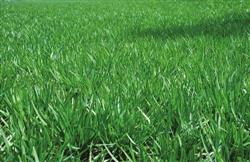
Damage symptoms: It mainly affects the false stem and bulb, and the leaves, roots, and flower stalks can also be affected. Lesions on affected leaves mostly begin on the lower part, initially producing dark green water-soaked lesions, and when they later spread to about 1/2 of the leaf, the whole leaf turns yellow, droops, and becomes soft-rotted. When humid, grayish-white mold develops on the diseased part. When the false stem is affected...
-
Key Technical Points for Early Spring Management of Greenhouse Chives
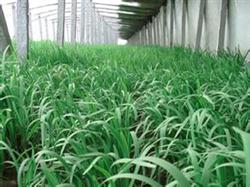
1. Temperature management. Chives prefer cool conditions, with an optimum growing temperature of 15-24°C, and should be ventilated appropriately during the day. To promote sprouting, after the greenhouse is covered, the daytime room temperature should be kept at 18-25°C, and after sprouting, the daytime room temperature should be controlled at 17-23°C. Before the first harvest of chives, the daytime temperature should be 15-22°C and the nighttime temperature 10-12°C. After each subsequent harvest...
-
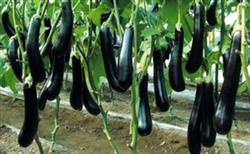
Key Cultivation Techniques for Winter-Spring Crop Eggplant in Greenhouses
1. Sowing and Seedling Raising: Choose early-maturing or mid-maturing varieties. For seedling raising in a sun-facing cold frame, sowing can be done from late November to early December, with a seedling age of over 90 days. If electric heating seedbeds are used for seedling raising, or seedlings are raised in a winter-warm greenhouse, the seedling age can be shortened to 70-80 days, meaning the sowing date can be postponed to mid-to-late December. The morphological indicator for seedlings of suitable age...
-
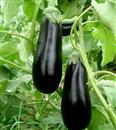
Detailed explanation of key techniques for early-maturing cultivation of greenhouse eggplant
Seed selection and seedling raising: For protected cultivation of eggplant in early spring, it is advisable to choose early-maturing, high-yielding, disease-resistant, high-quality green eggplant varieties. Such as Zhoukou Waibacao and Xinxiang Caoqing eggplant. These two varieties generally produce flower buds at 7 leaves and are suitable for close planting. When raising seedlings with heating cables in a greenhouse, the seedling age is 90-100 days. It is best to transplant when they reach 7-8 leaves and show large buds. Seedlings...
-
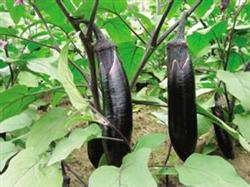
Managing light, temperature and moisture well in greenhouse eggplant cultivation
Eggplants like warmth and cannot tolerate cold. Greenhouse-grown eggplants require suitable "microclimate" conditions. The suitable room temperature for seed germination is 25-30°C, and the low temperature is 11-18°C; the suitable temperature for flower bud differentiation at the seedling stage is 20-25°C during the day and 15-20°C at night. Within the suitable temperature range, if the temperature is slightly lower, flower bud differentiation is delayed, but long-styled flowers...
-
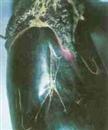
What are the methods to prevent lumpy fruit in greenhouse eggplants?
When the temperature in a solar greenhouse is too low, eggplants often develop lumpy fruit. The lumps are mainly concentrated at the front end of the fruit and appear as finger-like protrusions 0.5-1 cm high. When the fruit is broken open, it is found that in the places where the lumps have formed, there is a relatively large gap between the peel and the flesh. Causes: the greenhouse temperature is too low, especially under unusual weather conditions, when for 3 consecutive...
-
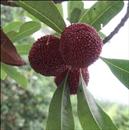
What to Do About Copper Deficiency in Waxberry? Causes and Control Methods Explained
Waxberry twig blight is caused by boron deficiency, so planned boron supplementation can eliminate the harm of this disease. Spraying a 0.1 to 0.2 borax solution 2 to 3 times during the waxberry growing period can effectively control the disease. Root application can also be used; for mild boron deficiency, use 0.3 to 0.6 kg of borax per mu, and for severe boron deficiency, use 1.3...
-
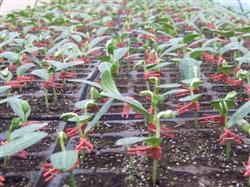
Key Technical Points for Pollution-Free High-Efficiency Cultivation of Bitter Melon in Greenhouses
I. Grafting Seedling Cultivation 1. Seedling Raising Methods The rootstock is raised in nutrient pots, and the scion is raised in sterile soil to strictly prevent soil-borne disease infection. Soak bitter melon seeds in a 75% thiophanate-methyl 800-fold solution for 12 hours, then soak in clean water for 16 hours, remove and air-dry, bury in sand for 2 days of warm germination; disinfect the nutrient soil with quintozene...
条件筛选