-
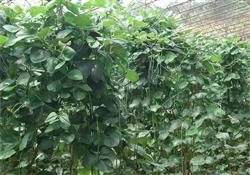
What to Do About Spindly Overgrowth in Greenhouse Beans? Detailed Analysis of Causes and Control Methods
The causes of spindly overgrowth in summer vegetables differ at each stage. Practice has proven that greenhouse beans are most prone to spindly overgrowth during the summer, and the main causes can be grouped into two major categories: 1. Seedling-stage overgrowth. The main cause of spindly overgrowth in seedlings is excessively high temperature, especially when nighttime temperatures are too high and respiration consumes too much...
-
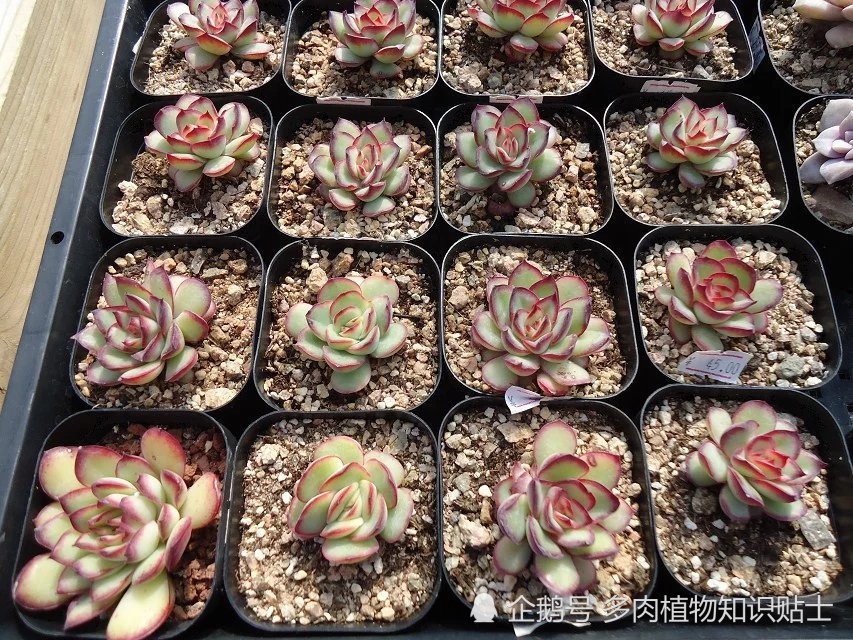
Strolling through a succulent greenhouse in early summer, I can't resist wanting to buy a few pots
Thanks to luanfeifei for the material, most of them are Sedum most of them are Sedum most of them are Sedum most of them are Sedum most of them are Sedum most of them are Sedum most of them are Sedum most of them are Sedum most of them are Sedum...
-
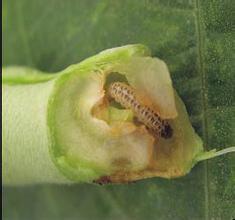
Detailed Explanation of Chemical Regulation Techniques for Beans in Greenhouses
Spraying should adhere to the principle of primarily treating the buds, spraying to kill the larvae in the flower buds during the flowering period. The best time to spray is from 8-10 AM on a sunny day when the flower buds are open. After the flowers fade, when the pods are about 10 cm long, spray once to kill newly hatched larvae and young larvae that have bored into the young pods. For the pesticide, you can choose Kongfu 1500x dilution, or abamectin 150...
-

What to Do About Split Winter Melon? Detailed Explanation of Causes and Prevention Methods
When winter melon splits, it not only affects the appearance but also affects the quality and reduces its commercial value. In addition, split melons can also allow pathogens to invade the melon and multiply, causing localized deterioration or rot of the winter melon and affecting storage and transportation. Choose crack-resistant varieties. In rainy areas or rainy seasons, use deep furrows with high beds or ridge cultivation with trellising...
-
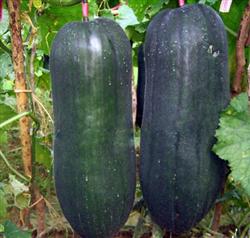
Wax gourd vine dropping should be flexible to ensure uniform growth in the greenhouse
In the early stage of black-skinned wax gourd expansion, drench the roots once with a mixture of 800x Xingpeng Phosphorus-Potassium No. 1 and 800x Xingpeng Calcium-Magnesium No. 1, applying 1~1.5 kg per plant, evenly poured into the soil around the plant roots. At the same time, during the expansion period of black-skinned wax gourd, spray the leaves once every 7~10 days with 0.1% magnesium sulfate, 0.3% monopotassium phosphate, 3...
-

Propagating Christmas cactus by cuttings in autumn: use this and it grows big white roots in ten days without rotting
When it comes to the Christmas cactus, I believe gardening friends are all familiar with it. It has thick, fleshy leaves and belongs to the cactus family, but it is not a true cactus. Its flowers are bright in color and bloom at the tips of the leaves. Its normal flowering season is in winter...
-
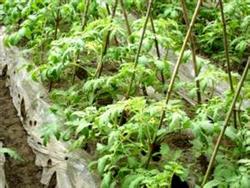
Key Technical Points for Preventing Spindly Growth in Greenhouse Tomatoes
The main causes of spindly seedlings and stunted seedlings in greenhouse tomato cultivation are insufficient light, excessively high temperatures and excessive moisture. Once spindly or stunted seedlings appear, the harm is considerable. Spindly seedlings differentiate flower buds late, drop many flowers, have a low survival rate, and suffer large yield reductions, while also failing to achieve early maturity. The measures to prevent spindly seedlings mainly...
-
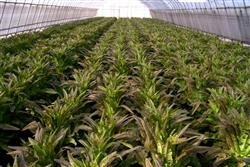
High-Efficiency Multiple Cropping Technology for Greenhouse Lettuce, Thick-Skinned Melon, and Green Garlic
In the multiple cropping model of greenhouse lettuce, thick-skinned melon, and green garlic, lettuce is sown and raised as seedlings in mid-to-late September, transplanted in late October, and harvested in mid-March; thick-skinned melon is sown and raised as seedlings in late February, planted out in late March, and harvested at the end of June and the beginning of July; green garlic is sown in late July and harvested in mid-to-late October. Per mu, the yield can reach 4500-500...
-
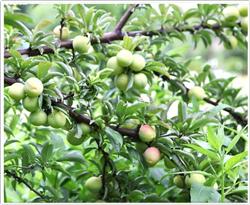
Key Technical Points for Plum Cultivation and Management in Greenhouses
In order to explore early-fruiting and early-high-yield techniques for cultivating plums in greenhouses, our station conducted experimental research from 1997 to 2000. The greenhouse was covered in the winter of the second year after planting, and in 2000, a 4-fen plot greenhouse produced 1000 kg of plums. The output value was over 10,000 yuan, and the maturity period was about 60 days earlier than open-field cultivation. Through the experiments, we summarized the techniques for cultivating plums in greenhouses...
-
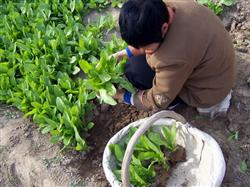
High-Efficiency Multiple Cropping Technique for Winter Lettuce and Early Spring Peppers in Greenhouses
1. Select good varieties: For greenhouse cultivation of early spring lettuce, it is advisable to choose early-maturing pointed-leaf varieties with strong cold resistance, such as Hefei pointed-leaf duck-egg lettuce and Beijing crucian carp lettuce. 2. Grow strong seedlings: Sow and raise seedlings in a greenhouse in mid-to-late January. Before sowing, first soak the seeds in clean water at 20°C for 3-4 hours, rub and wash them, then remove and drain the water, and put them into...
条件筛选