-

Detailed Introduction to Common Beekeeping Tools and Their Uses
1. Foundation Foundation is the base installed inside the frame for bees to build comb; it is a man-made sheet of beeswax pressed by a foundation mill, with a base plate having cells and cell walls. There is Italian bee foundation for keeping European honey bees; drone foundation for producing drone pupae; and Chinese bee foundation for keeping Chinese bees. Combs built with foundation are neat, flat, and sturdy, with few drone cells. 2. Veil The veil is a tool used when managing colonies to protect the operator's head and neck from bee stings. 3. Hive tool A special tool for beekeeping. One end is a curved blade, the other end
-
What to Do When Straw Mushroom Mycelium Shrinks? Causes and Control Methods
1. Using inferior spawn: Spawn that is too old or too young, degenerated spawn, weak mycelial vitality, poor stress resistance, or spawn stored for a long time in environments with temperatures that are too low or too high can all lead to failure to germinate after spawning and shrinkage of mycelium in the spawn blocks. Control: Select spawn of the appropriate age and high quality, and ensure the temperature during the cultivation process does not get too low. 2. Improper control of compost temperature: When the air temperature is high, the compost is too thick, and the mushroom house has good insulation, the temperature inside the compost after spawning exceeds 42°C for an extended period, which causes mycelium to shrink and die, resulting in burning of the mycelium.
-
How to treat rumen atony in cattle? Shenling Baizhu San can be used for treatment
Rumen atony in cattle is a relatively common digestive tract disease in clinical practice. We used Shenling Baizhu San to treat this disease and achieved good expected results, successfully curing hundreds of cases. The application situation is described as follows. 1 Prescription: white hyacinth bean, ginseng (Codonopsis pilosula), Atractylodes macrocephala, licorice, Chinese yam, lotus seed kernel, Platycodon grandiflorus, Coix seed, Amomum villosum, decocted in water for oral administration. It tonifies qi and strengthens the spleen, harmonizes the stomach and drains dampness. It is mainly indicated for weakness of the spleen and stomach, undigested feed, eating half and lying down half the time, chest and abdominal distension and fullness, occasional diarrhea, emaciation, and weakness of the limbs.
-
What are the green and eco-friendly fishery drugs? Introduction to several commonly used varieties
Quicklime, table salt, and the like, although not specialized fishery drugs, are effective for preventing and treating aquatic diseases, and they pose no threat to the environment, with no drug residue problems. Quicklime: regularly splashing quicklime into the aquaculture water body can not only reduce the occurrence of many diseases, but also provide the calcium element essential for aquaculture organisms, which is especially important for crustacean aquaculture. Method of use: choose quicklime that has not weathered; for pond clearing and disinfection use 150-200 kg per mu; for disease prevention and treatment, generally 5-9, use once about every 20 days, for a water depth of 1
-
What to Do If Silkworms Do Not Spin Cocoons? Cause Analysis and Control Methods
I. Causes of silkworms not spinning cocoons: 1. Pathological factors. For example, pebrine and flacherie are prone to infection and disease before mounting, which destroys the silk gland secretion function of silkworms, or the pathogens produce large amounts of toxic metabolites in the silkworm body, paralyzing the silkworm's nerves and preventing them from spinning silk and forming cocoons; 2. Physiological factors. The first is abnormality of the middle silk gland, mainly caused by rearing temperature being too high or too low, leaf quality being too tender, secretory gland disorder, etc., causing silk gland abnormality and preventing spinning; the second is abnormality of the anterior silk gland, mainly because during rearing
-
What to Do If Silkworms Don't Spin Cocoons? Causes and Solutions
I. Main Causes 1. Pathological factors. For example, with pébrine or flacherie, infection and onset before mounting for spinning destroys the secretory function of the silkworm's silk glands; or the pathogen produces large amounts of toxic metabolites in the silkworm's body, paralyzing the silkworm's nerves so it cannot spin silk or form a cocoon. 2. Physiological factors. Abnormal middle silk glands, mainly caused by excessively high rearing temperatures, overly tender leaves, disordered secretory glands, etc., leading to abnormal silk glands and inability to spin. Next is abnormal anterior silk glands, mainly caused by exposure to large amounts of coal gas, fishy odors,
-

Can Dipladenia be placed indoors in a bedroom? Causes of yellowing leaves and solutions
Dipladenia is currently very popular among consumers on the market in our country. This is mainly because it has extremely high ornamental value. Can Dipladenia be placed indoors in a bedroom? Causes of yellowing leaves and solutions: Can Dipladenia be placed indoors in a bedroom: It is best not to place it indoors in a bedroom; it can be placed on a balcony or in a living room
-
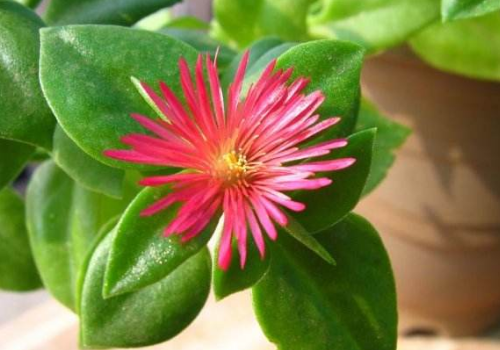
How to care for Aptenia cordifolia in winter? Analysis of the causes of yellowing leaves
Starting from autumn, Aptenia cordifolia should gradually have its water reduced, and in winter it can basically be left unwatered or very rarely watered. How to care for Aptenia cordifolia in winter? What causes yellowing leaves: How to care for Aptenia cordifolia in winter: preparation for overwintering, before winter arrives
-
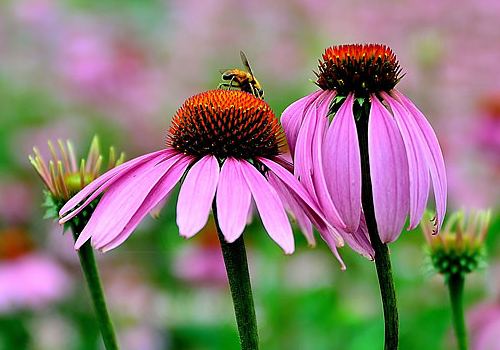
A Detailed Guide to Growing Echinacea from Seed, Its Benefits and Uses
Keeping some beautiful flowers and plants at home is not only decorative but also purifies the air. How do you grow echinacea from seed? What is the market price per jin: How to grow echinacea from seed: seed treatment. Before sowing, first soak the seeds to promote germination and disinfect them. Put the seeds in a basin, add warm water at 35°C to 40°C.
-
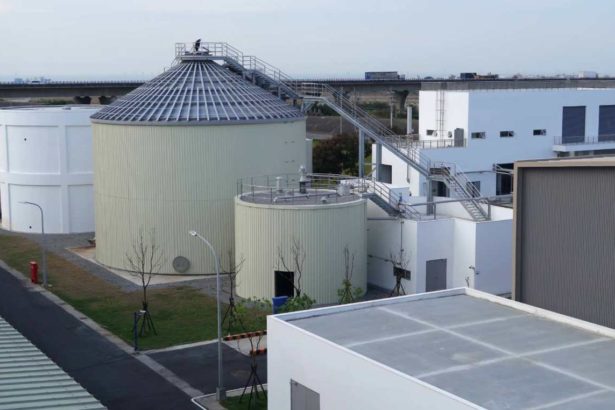
Food waste power generation feeds in 250 metric tons per day, estimated to supply electricity for 60,000 households annually
The Battle Against Epidemic and Food Waste 09"Food waste-to-power packs a punch, 250 metric tons of food waste fed in daily, estimated annual output to supply electricity for 60,000 households
条件筛选