Food waste power generation feeds in 250 metric tons per day, estimated to supply electricity for 60,000 households annually
In response to preventing and blocking African swine fever, the issue of food waste disposal has become a focal point of discussion. In addition to composting, feeding food waste into biomass energy for power generation has also drawn attention from all sectors. Kuo Wen-chien, head of the Department of Environmental Engineering and Science at National Pingtung University of Science and Technology, said that foreign countries began experimenting 20 to 30 years ago, mainly feeding in expired food, and there are currently more than 17,000 biomass gas production plants.
Taiwan's biomass energy got off to a relatively late start. Including those already completed and those completed under BOT, there are three plants in total. Among them, Tainan built a food waste biogas power generation system in 2017, but that system can only feed in raw food waste. Taichung's Waipu completed the country's first biomass energy plant in 2018, expected to begin operation in June of this year (2019). It currently also focuses mainly on raw food waste, and it is estimated that every 7 liters of food waste can generate 1 kWh of electricity.
The Taoyuan City Biomass Energy Center BOT project has already been tendered and contracted, and is expected to officially begin operation before July 2021. It will be the only biomass energy plant in the country at present that can feed in both raw and cooked food waste (food waste fed to pigs), and is estimated to process 250 metric tons of food waste per day. It will also feed in dead branches and fallen leaves, wood chips, and the like, and is estimated to produce 200 million kWh of electricity per year, enough to supply residential electricity for 60,000 households.
Traditional composting is "aerobic respiration," while biomass energy uses "anaerobic digestion" to convert into energy
Domestic disposal of food waste is divided into two categories. Raw food waste (that is, food ingredients that humans cannot eat, such as fruit peels, leafy vegetables, bones, and hard shells) is taken for composting. Cooked food waste (that is, food ingredients that humans can eat, such as any leftover cooked food, canned food, and seasonings) is mostly taken by pig farmers to feed pigs. At present, raw food waste is composted using what is called the "traditional composting method."
The traditional composting method mainly uses aerobic (oxygen-loving) microorganisms to decompose and metabolize organic materials so as to reach a state suitable for crop growth. Township and town offices or private composting sites currently all use this method to handle food waste. There is a new method of food waste treatment in the country, which uses "anaerobic digestion" to decompose organic materials, allowing microorganisms to decompose in an oxygen-deficient state, and using the gas produced during decomposition as a renewable energy source. This conversion process is "biomass energy," and it is currently another hotly discussed way of handling food waste besides traditional composting.
The International Energy Agency (IEA) defines bioenergy as directly using biomass as fuel, or converting it through processing to produce liquid or gaseous energy. Biomass generally refers to all organic matter derived from plants or animals and is a renewable resource; its sources include forest wood, agricultural crops, herbaceous and woody energy crops, urban organic waste, and manure (IEA, 2012). Our country's "Renewable Energy Development Act" defines biomass energy as "energy produced by the direct use or processing of agricultural and forestry plants, biogas, and domestic organic waste."
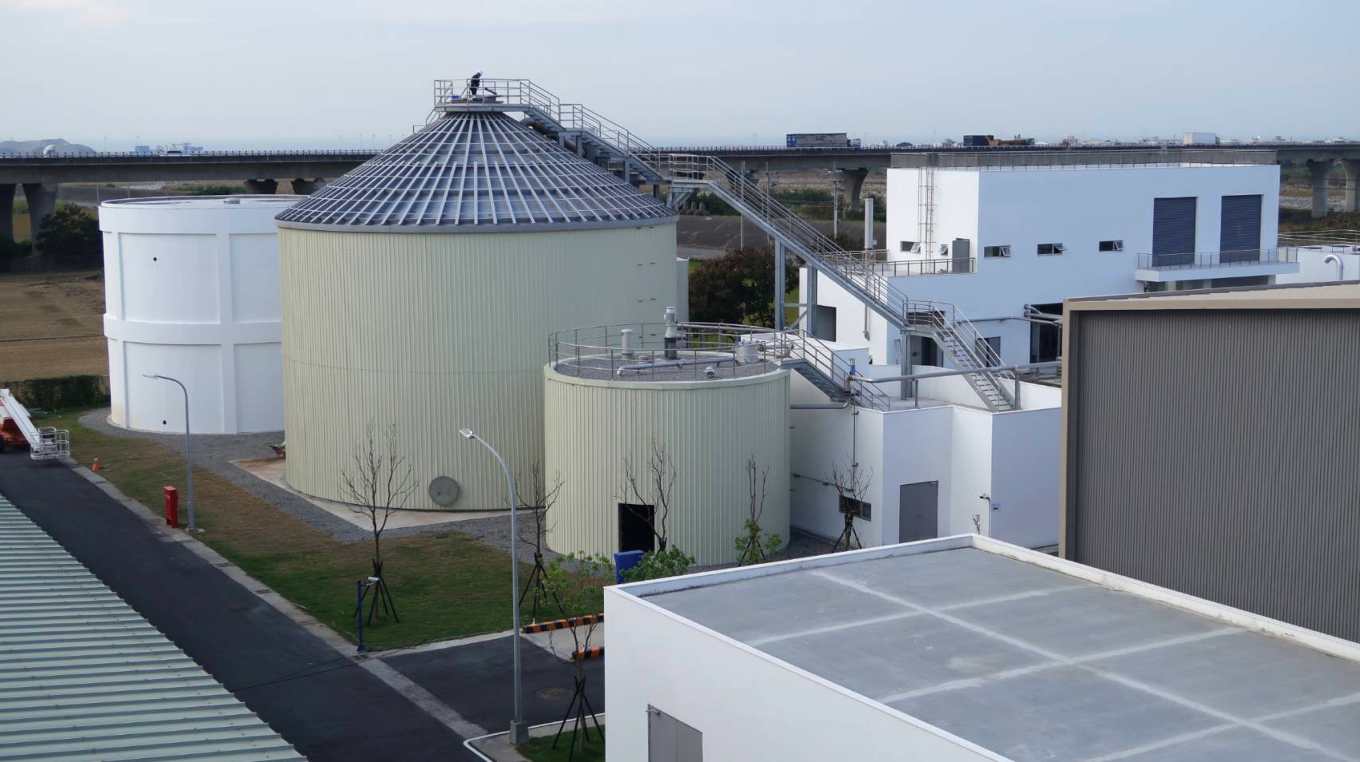
Taiwan's food waste is watery, requiring local adjustments
At present, there is more and more technology and discussion in the country around using food waste for biomass energy. Kuo said that in addition to hardware equipment, software management must also be considered at the same time. For example, Germany and Denmark began doing this 20 to 30 years ago, and there are currently more than 17,000 biomass gas production plants. Foreign food waste mainly comes from expired food, while Taiwan's food waste is watery, so subsequent biomass energy processing will also require some adjustments and localization. In addition to keeping up on equipment, learning from foreign experience in adjusting operations, operational maintenance, and management is also a part worth learning for Taiwan.
Taiwan's three biomass energy plants are gradually starting up, with Taichung and Tainan feeding in raw food waste for power generation
There are also related plans for biomass energy plants in various parts of the country. Taichung's Waipu completed the country's first biomass energy plant last year. It currently mainly uses raw food waste for research and development. In response to the food waste disposal problem caused by African swine fever, it is studying whether the plant's equipment can handle cooked food waste. The Taichung City Environmental Protection Bureau said that based on the current assessment, if preliminary purification equipment such as oil skimming and decontamination equipment is purchased, cooked food waste should be able to be disposed of through the biomass energy plant.
The Waipu Biomass Energy Plant is currently carrying out the first phase of construction and can handle 80 metric tons of food waste per day. After the second phase of construction is completed in the future, the plant's total food waste disposal capacity can reach 160 tons per day, with operation planned to begin in June of this year. It is estimated that every barrel of 7 liters of food waste can generate 1 kWh of electricity, and each ton of raw food waste can produce about 142 kWh of electricity.
In 2017, the Tainan City Environmental Protection Bureau cooperated with the Green Energy and Environment Research Laboratories of the Industrial Technology Research Institute (hereinafter referred to as ITRI) to build Tainan's first food waste biogas power generation demonstration system, using raw food waste to produce biogas for power generation. However, ITRI said that because this system requires a waste source with low moisture and stable composition, it currently uses raw food waste for demonstration research and has not used cooked food waste for power generation or other green energy development. At present, there are also no related plans to use cooked food waste for power generation.
Taoyuan Biomass Energy Center can digest cooked food waste, estimated to supply residential electricity for 60,000 households annually
The Taoyuan City Biomass Energy Center BOT project has already been tendered and contracted, and is expected to officially begin operation before July of the 110th year of the Republic of China. Lu Ming-chi, a senior technical specialist at the Taoyuan City Environmental Protection Bureau, explained that the biomass energy center is estimated to process 250 metric tons of food waste per day. Compared with Taoyuan City's daily food waste volume of 150 metric tons, it will be able to fully handle the city's food waste volume in the future.
The Taoyuan City Biomass Energy Center will also be the only biomass energy plant in the country that can put in cooked food waste. In addition to raw and cooked food waste, it will also add dead branches and fallen leaves, wood chips, and the like. It is estimated to produce 200 million kWh of electricity per year, supplying electricity for 60,000 households.
Kuo Wen-chien said that because composting itself has low added value, if a large and centralized composting site is used, the transport costs of bringing in recovered food waste and shipping compost products out are too high. Therefore, if composting is used, it should be decentralized and localized. As for biomass energy plants, because their processing is complex and their process levels are higher than composting technology, it is recommended that they be set up in metropolitan areas, such as Taipei City and New Taipei City, where food waste generation is large and more resources are invested. These are suitable locations for setting up centralized biomass energy centers.
Special articles:
- The Battle Against Epidemic and Food Waste 01"Direct look at pig farming with food waste, pig farmers: This is our life and property, we are more afraid of being hit than anyone else!
- The Battle Against Epidemic and Food Waste 02"Civil war among pig farmers: Pig farming with food waste is high-risk and outdated VS food waste can be more finely sorted after high-temperature cooking
- The Battle Against Epidemic and Food Waste 03"Expert opinion: If you want to use food waste, you have to do it perfectly, otherwise leave the industry! Distinguishing food waste with meat and without meat reduces risk
- The Battle Against Epidemic and Food Waste 04"Food waste ban rushed, Environmental Protection Administration fumes, "Swine fever hasn't even come in yet, and the country is already in chaos"
- The Battle Against Epidemic and Food Waste 05"Opportunities and challenges for composting! Local food waste made in a decentralized way, even Daan Forest Park can do it
- The Battle Against Epidemic and Food Waste 06"Comprehensive inventory of food waste generation and disposal capacity across Taiwan (six municipalities)
- The Battle Against Epidemic and Food Waste 07"Comprehensive inventory of food waste generation and disposal capacity across Taiwan (Yunlin and Pingtung)
- The Battle Against Epidemic and Food Waste 08"Pingtung has something to say: The food waste ban impacts the black pig industry chain, and non-food-waste feed also needs attention
- The Battle Against Epidemic and Food Waste 09"Food waste-to-power packs a punch, 250 metric tons of food waste fed in daily, estimated annual output to supply electricity for 60,000 households