How to care for Aptenia cordifolia in winter? Analysis of the causes of yellowing leaves
Starting from autumn, Aptenia cordifolia should gradually have its water reduced, and in winter it can basically be left unwatered or very rarely watered. How to care for Aptenia cordifolia in winter? What causes yellowing leaves:
How to care for Aptenia cordifolia in winter:
1. Preparation for overwintering
Before winter arrives, a typical change in Aptenia cordifolia is that it basically stops growing, which means it has entered its dormant period. At this point, growers need to cut off diseased and pest-infested branches, then trim the dense, overlapping branches to leave reasonable growing space.
2. Overwintering maintenance
The most crucial step is “cut, cut, cut.” In addition to what is cut before overwintering, after entering deep winter you should also cut off leggy branches and weak, spindly branches. Never underestimate this operation, because it can extend the plant's lifespan. 3. Overwintering management
Managing the plant according to its growth habits is the primary prerequisite for safe overwintering. So the cold-sensitive Aptenia cordifolia needs to be moved to a warmer place when winter arrives.
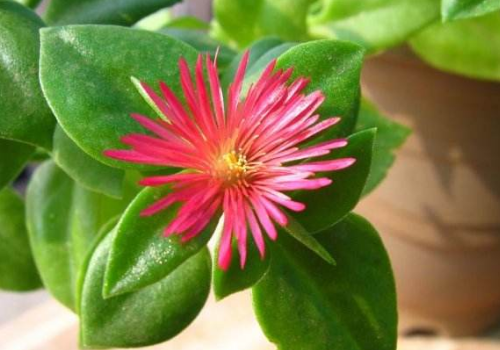
What causes yellowing leaves in Aptenia cordifolia:
1. Natural metabolism
If Aptenia cordifolia has been grown for a long time, the leaves at the bottom will naturally wither and turn yellow. This is a very normal phenomenon, and growers need not worry. Even if many bottom leaves wither and turn yellow, it does not matter, as long as the top leaves are normal.
2. Intense sun exposure
If Aptenia cordifolia is exposed to harsh sunlight, its leaves will be scorched yellow. If it is kept long-term in an environment without light, chlorophyll will decrease, and yellowing leaves will also appear
3. Lack of fertilizer or excessive fertilization
If the pot has not been repotted or the soil changed for a long time, the various nutrient elements contained in the potting soil have been depleted, and the three key elements nitrogen, phosphorus and potassium have not been replenished in time. The plant lacks nutrients, and the leaves appear yellow and thin. At this point, it should be promptly repotted with fertile loam and watered with alum fertilizer water.
Have you understood all this knowledge about Aptenia cordifolia?
How to propagate Aptenia cordifolia by cuttings; what causes yellowing leaves in Aptenia cordifolia
Aptenia cordifolia is a fairly common potted plant, and it is very easy to grow. It produces rose-red flowers that contrast beautifully with its green leaves. Many people want to grow it to decorate their home environment, so how is it propagated? In fact, its main method of propagation is by cuttings.
How to propagate Aptenia cordifolia by cuttings: 1. Choose branches from a relatively robust plant, and cut off healthy branches, about 10cm long is enough.
2. Prepare the potting soil. Generally a mixed-type soil is chosen; peat soil mixed with perlite, small stones and the like will do, and some organic fertilizer can also be added. Insert the branches as cuttings, and be sure to water thoroughly.
3. After cutting, place it in a ventilated, shady place and mist it frequently. Generally, roots will form in about 2 weeks. Once it grows new shoots, it can be moved to a place with plenty of light.
What causes yellowing leaves in Aptenia cordifolia
1. Natural metabolism
If Aptenia cordifolia has been grown for a long time, the leaves at the bottom will naturally wither and turn yellow. This is a very normal phenomenon, and growers need not worry. Even if many bottom leaves wither and turn yellow, it does not matter, as long as the top leaves are normal.
2. Intense sun exposure
If Aptenia cordifolia is exposed to harsh sunlight, its leaves will be scorched yellow. If it is kept long-term in an environment without light, chlorophyll will decrease, and yellowing leaves will also appear
3. Lack of fertilizer or excessive fertilization
If the pot has not been repotted or the soil changed for a long time, the various nutrient elements contained in the potting soil have been depleted, and the three key elements nitrogen, phosphorus and potassium have not been replenished in time. The plant lacks nutrients, and the leaves appear yellow and thin. At this point, it should be promptly repotted with fertile loam and watered with alum fertilizer water.
Excessive fertilization is relatively easy to judge; mainly check whether fertilizer has been applied recently. If the fertilizer exceeds the plant's needs, the leaves will appear glossy and uneven, then the root system will rot and the leaves will turn yellow. Fertilization should be stopped, more clear water should be poured, or the plant should be repotted, the roots cleaned, and fresh soil replaced.
4. Waterlogging
Some growers' Aptenia cordifolia has potting soil with poor aeration, and they water frequently, which causes the potting soil to remain waterlogged for a long time without drying, making root respiration difficult and causing leaves to turn yellow. At this point, the soil should be loosened promptly and water controlled.
How to care for Aptenia cordifolia in winter
1. Preparation for overwintering
Before winter arrives, a typical change in Aptenia cordifolia is that it basically stops growing, which means it has entered its dormant period. At this point, growers need to cut off diseased and pest-infested branches, then trim the dense, overlapping branches to leave reasonable growing space.
2. Overwintering maintenance
The most crucial step is “cut, cut, cut.” In addition to what is cut before overwintering, after entering deep winter you should also cut off leggy branches and weak, spindly branches. Never underestimate this operation, because it can extend the plant's lifespan. 3. Overwintering management
Managing the plant according to its growth habits is the primary prerequisite for safe overwintering. So the cold-sensitive Aptenia cordifolia needs to be moved to a warmer place when winter arrives.
Secondly, this plant also needs plenty of light. This helps prevent the plant from getting sick in winter and plays an important role in making the plant grow more luxuriantly the following year. In deep winter it grows relatively slowly and does not need much water supply. Starting from autumn, the water amount should be gradually reduced, and in winter it can basically be left unwatered or very rarely watered.
How to eat Aptenia cordifolia
Step one: Wash the fresh stems and leaves of Aptenia cordifolia clean, and cut them with a knife.
Step two: Add clear water to a pot, heat until it bubbles and rolls, then pour in the cut Aptenia cordifolia, stir briefly, then scoop it out and drain the water.
Step three: Peel the garlic, wash it clean, add a little salt and mash it into garlic paste, and prepare to make the sauce.
Step four: Take a clean small bowl (or plate), pour in a little soy sauce and vinegar, add a little refined salt, and stir appropriately as a seasoning sauce.
Step five: Pour the prepared sauce into the container holding the Aptenia cordifolia.
Step six: Scoop in the garlic paste and mix well, combining the sauce with the Aptenia cordifolia leaves.
Step seven: Add oil-splashed chili according to personal taste preferences.
Although Aptenia cordifolia is very easy to grow, the harsh winter still requires it to have a certain ability to survive. Pruning, light and watering are the three things that need special attention for its overwintering, as mentioned above. Do these protective measures well, and next year the Aptenia cordifolia will surely be a feast for the eyes!
How to care for Aptenia cordifolia in winter; reasons why Aptenia cordifolia does not bloom
Aptenia cordifolia is an evergreen green plant that blooms, with flowers generally rose-red and very eye-catching. Aptenia cordifolia can also grow and reproduce in winter. However, in winter care, there will be some changes in the care methods, so if you want it to overwinter safely, some techniques are still needed.
How to care for Aptenia cordifolia in winter
1. Preparation for overwintering. Before winter arrives, a typical change in Aptenia cordifolia is that it basically stops growing, which means it has entered its dormant period. At this point, growers need to cut off diseased and pest-infested branches, then trim the dense, overlapping branches to leave reasonable growing space.
2. Overwintering maintenance. The most crucial step is “cut, cut, cut.” In addition to what is cut before overwintering, after entering deep winter you should also cut off leggy branches and weak, spindly branches. Never underestimate this operation, because it can extend the plant's lifespan.
3. Overwintering management. Managing the plant according to its growth habits is the primary prerequisite for safe overwintering. So the cold-sensitive Aptenia cordifolia needs to be moved to a warmer place when winter arrives. Secondly, in daily management, although it is grown indoors, this plant also needs plenty of light in winter. This helps prevent the plant from getting sick in winter and plays an important role in making the plant grow more luxuriantly the following year. This flower, like other hibernating plants in winter, grows relatively slowly in deep winter and does not need much water supply. Starting from autumn, the water amount should be gradually reduced, and in winter it can basically be left unwatered or very rarely watered. The key points of winter care for this plant are the three things mentioned above: pruning, light and watering. Do the above overwintering maintenance methods well, and next year the Aptenia cordifolia will reward growers with a potted display that catches everyone's eye.
Reasons why Aptenia cordifolia does not bloom
1. Watering too frequently. If watering is too frequent, the plant will absorb a large amount of nitrogen and phosphorus elements that are beneficial to stem and leaf growth, while potassium fertilizer is difficult to dissolve in water and hard to absorb, causing Aptenia cordifolia to grow only leaves without blooming.
2. Insufficient light. If light is insufficient, it may also cause Aptenia cordifolia to be unable to bloom.
How to grow Aptenia cordifolia so it blooms
1. Light control. Aptenia cordifolia is a plant that relatively likes sunlight, and to bloom more it especially needs plenty of light, at least more than 6 hours of light per day. It is most suitable to grow on a south-facing or west-facing windowsill, and in winter it can get light through the window. (In summer it needs appropriate shading)
2. Attention to watering. Aptenia cordifolia likes a warm and moist environment, and its water needs are quite high. Of course, watering should be appropriately reduced in winter. In summer, keep the potting soil in an appropriately slightly moist state, as long as the potting soil does not become waterlogged. After autumn turns cool, begin to reduce watering frequency and keep the soil slightly dry. If your Aptenia cordifolia has particularly lush leaves but no flowers instead, then you should appropriately control water and let the potting soil dry out a bit, so that flower buds can form.
3. Fertilization techniques. Aptenia cordifolia likes light fertilizer. Applying light fertilizer frequently can make the plant more robust. Combined with appropriate pinching of the tips, it can grow lush branches and leaves, which is more conducive to forming flower buds. Generally, fertilize more in spring and autumn, and do not fertilize in winter. In spring and autumn, you can give light fertilizer twice a month; ordinary compound fertilizer or decomposed cake fertilizer will do. If you want it to bloom more easily, you can water with monopotassium phosphate once a month, which can promote the formation of more flower buds.
4. Soil and repotting. Aptenia cordifolia likes loose humus soil. Choose a mix of leaf mold, garden soil and river sand, or directly use peat soil paired with perlite. Its root system is fleshy, so drainage must be guaranteed.
Causes of yellowing leaves in Aptenia cordifolia and how to deal with them
1. Intense sun exposure, or long periods without light. If Aptenia cordifolia is exposed to harsh sunlight, its leaves will be scorched yellow. If it is kept long-term in an environment without light, chlorophyll will decrease, and yellowing leaves will also appear.
2. Lack of fertilizer or excessive fertilization. Some growers' Aptenia cordifolia has been grown for a long time without repotting or changing the soil, so the various nutrient elements contained in the potting soil have been depleted, and the three key elements nitrogen, phosphorus and potassium have not been replenished in time. The plant lacks nutrients, and the leaves appear yellow and thin. At this point, it should be promptly repotted with fertile loam and watered with alum fertilizer water. Excessive fertilization is relatively easy to judge; mainly check whether fertilizer has been applied recently. If the fertilizer exceeds the plant's needs, the leaves will appear glossy and uneven, then the root system will rot and the leaves will turn yellow. Fertilization should be stopped, more clear water should be poured, or the plant should be repotted, the roots cleaned, and fresh soil replaced.
3. Waterlogging. Some growers' Aptenia cordifolia has potting soil with poor aeration, and they water frequently, which causes the potting soil to remain waterlogged for a long time without drying, making root respiration difficult and causing leaves to turn yellow. At this point, the soil should be loosened promptly and water controlled.
In winter, Aptenia cordifolia should be given more sunlight so that it can grow more healthily. As for water, it should not be watered too much, otherwise it will cause root rot. If Aptenia cordifolia does not bloom, you need to understand the reasons that prevent blooming, and then set about preventing and treating them.