-
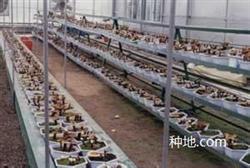
How are lingzhi (Ganoderma lucidum) bonsai cultivated in a greenhouse?
Question: How are lingzhi bonsai cultivated in a greenhouse? Lingzhi bonsai is a shaped handicraft that has emerged in recent years, made by processing dried mature lingzhi. By using foam plastic greenhouse technology to pot living lingzhi at the growth stage, live lingzhi bonsai can be made, just like potted flowers, allowing you to observe the lin...
-

What medicinal herb is Bletilla striata? An introduction to its effects and uses
What medicinal herb is Bletilla striata?
-

What to Do About Cracked Fruit in Monk Fruit? Causes and Control Methods
What to Do About Cracked Fruit in Monk Fruit
-

What are the propagation methods for Rosa laevigata? Detailed introduction to the commonly used methods
Propagation methods for Rosa laevigata
-

Detailed Explanation of Planting Techniques and Management Key Points for Humifuse Euphorbia
Planting Techniques for Humifuse Euphorbia
-

Detailed Explanation of Pollution-Free High-Yield Cultivation Techniques for Goji Berry in Greenhouses
Goji berry (Lycium barbarum) is a perennial deciduous small shrub of the genus Lycium in the Solanaceae family. Its tender shoots and leaves (also known as goji tips) are eaten as a vegetable and can be stir-fried, served as a cold dish, or used in soups. They are nutritious, delicious and refreshing, and are highly favored by consumers. Lishui County, Jiangsu Province began introducing and cultivating it in 2002. The products are mainly sold to large and medium-sized cities such as Shanghai, Nanjing and Wuxi, and demand in the market exceeds supply, achieving relatively high economic returns. The pollution-free high-yield cultivation techniques for goji berry in greenhouses are introduced as follows: 1. Variety selection: Choose the large-leaf goji. This variety has large, green, oval-shaped leaves, with leaves
-
Many Methods for Propagating Goji Berry: A Full Analysis of Commonly Used Propagation Techniques
1. Seed propagation: Spring sowing should be carried out from late March to mid-May, when temperatures rise noticeably. Soak the seeds in 30°C warm water for 24 hours, then rub them, pick out the flesh and skin, take out the sunken seeds, and dry them. Mix the seeds with wet sand at 1:3, then place them indoors at about 20°C to germinate, keeping them moist. When about 30% of the seeds have cracked and shown white, germination is complete. For the nursery site, loam or sandy loam near a water source can be chosen as the seedbed. It requires flat terrain, good drainage, and ample sunlight. Apply 5000 kg of decomposed barnyard manure per mu
-
Detailed Explanation of the Harvesting and Processing Methods and Uses of Lingzhi (Reishi Mushroom)
Harvesting and Processing: Lingzhi generally requires 50-60 days from inoculation to harvest. When the edge of the cap stops growing and brownish-red basidiospores appear on the hymenium beneath the cap, it indicates that the fruiting body has matured, and it can then be harvested. Cut it off from the middle of the stipe with a small knife, taking care not to crack the cut surface, then spread it out to air-dry or dry it at low temperature. If collecting spore powder, place clean plastic sheeting or smooth, clean paper under the fruiting bodies on the cultivation rack, collect with a bristle brush, and after the spore powder has been sun-dried and dried, store it in plastic bags for medicinal use. Uses:
-
Dry Pinellia Greenhouse Planting Methods and Technical Key Points
Dry Pinellia, also known as three-leaf pinellia, three-step jump, and hemp jade fruit, is a commonly used Chinese medicinal herb, with wild distribution throughout both northern and southern China. In recent years, due to people's reclamation and utilization of barren hillsides and the extensive use of herbicides in farmland, its ecological environment has been damaged, resources have decreased year by year, and prices have continued to rise. According to surveys, dry Pinellia products are currently scarce in seventeen specialized medicinal herb markets nationwide, supply has fallen short of demand, and the market price has remained firm at 36-42 yuan/kg. Therefore, the market prospects for artificially cultivating dry Pinellia are very broad. In recent years, we
-
What are the benefits and effects of Angelica sinensis (dong quai)? With commonly used formulas
Dong quai, also known as Qin gui, Yun gui, Xi gui, Quan dong gui, You dong gui, Bai dong gui, Gan gui, and Min gui. Its nature is sweet, pungent, bitter, and warm; it enters the Liver, Heart, Spleen, and Lung meridians, and has effects such as nourishing blood and regulating menstruation, invigorating blood and relieving pain, expelling toxins and promoting tissue regeneration, and relieving cough and calming wheezing. Clinically, dong quai is used to treat many diseases, such as: blood deficiency with sallow complexion, pale lips and nails, dizziness and blurred vision, irregular menstruation, scanty or absent menstruation, dysmenorrhea, excessive menstruation, metrorrhagia and blood in the stools as well as gastrointestinal bleeding, traumatic injuries, blood stasis with swelling and pain, headache, postoperative blood stasis pain, arthralgia with numbness, stroke with hemiplegia, sores and abscesses
条件筛选