-

Potato tubers infected with Phytophthora cause cellar rot
Symptoms: Slightly sunken dark or purple lesions appear in patches on the surface of the tubers, extending less than 1cm into the tuber. White mold is generally not easy to see, but when humidity in the cellar is high, white mold grows on the diseased area, which is the pathogen's sporangiophores and sporangia. This causes cellar rot. For the pathogen, transmission routes and disease conditions, see Potato Diseases - Potato Late Blight. For control methods, see Potato Dry Rot.
-
What to Do If Silkworms Don't Spin Cocoons? Causes and Solutions
In silkworm rearing, the phenomenon of silkworms not spinning cocoons occurs from time to time, causing certain losses to sericulture production. First, the causes of silkworms not spinning cocoons must be identified, and then measures taken for prevention and control. The main causes are: 1. Pathological factors. For example, flacherie and soft rot infect and develop before mounting, destroying the secretory function of the silkworm's silk glands; or pathogens produce large amounts of toxic metabolites in the silkworm body, paralyzing the nerves so that the silkworm cannot spin silk and form a cocoon. 2. Physiological factors. Abnormal middle silk glands, mainly due to excessively high rearing temperature,
-
How to prevent fruit russeting in Huangjin pear? Causes and measures
Huangjin pear was introduced to our city in 2000. Through top-grafting and variety replacement, it has now expanded to 2567 hectares, and began bearing fruit in 2001. However, in production it was found that the fruit surface of Huangjin pear is prone to forming fruit russeting, with the rate of good fruit at 30%-50%, seriously affecting the economic benefits of fruit growers. For this reason, we conducted investigation and analysis, identified the causes and proposed corresponding countermeasures. 1. Causes Internal factors: The occurrence of Huangjin pear fruit russeting is closely related to its peel structure. The fruit of Huangjin pear
-
Why do continuous and alternating soybean cropping reduce yields? Cause analysis and countermeasures
With China's accession to the WTO and the opening-up policies of the grain market, the problem of continuous and alternating soybean cropping has become increasingly serious, and the yield reduction increases as the number of consecutive cropping years rises. According to surveys and research, alternating cropping reduces yield by 6.1%, one year of continuous cropping by 9.9%, two years of continuous cropping by 13.8%, and three years of continuous cropping by 19.0%. Moreover, in continuous and alternating cropping soybeans, the 100-seed weight decreases, the rate of diseased seeds and insect-damaged seeds increases, and commercial quality drops significantly. With long-term continuous cropping of more than 3 years, the protein content of soybeans increases markedly while the fat content decreases markedly. According to research by scientific research departments
-
What to Do When Chicken Immunization Is Ineffective? Cause Analysis and Countermeasures
Now many chicken farmers generally report the following problems: (1) The flock is fine when not vaccinated, but as soon as they are vaccinated, the flock breaks out with disease. (2) Sometimes the flock breaks out with disease before they have even been vaccinated. (3) No matter what measures are taken, the immune effect of the vaccine is always poor. Why do these problems occur? The reason is that the chickens' immune organs have been damaged. After the immune organs of chickens are damaged, the body's resistance to bacterial and viral infections declines, and the flock is very prone to large outbreaks of various epidemic diseases, bringing huge economic losses to the poultry industry. So
-
What to Do About Severe Fruit Russeting in 'Hwangkeum' Pears? Causes and Control Measures
1. Causes of severe russeting in bagged fruit 1.1 Improper pesticide use during the young fruit stage. 'Hwangkeum' pears are sensitive to pesticides during the young fruit stage, which is very different from the management of 'Yali' pears. If the pesticide application procedures for 'Yali' pears are followed, russeting is bound to occur. 1.2 Orchard crowding, excessive canopy branch density, and poor ventilation and light penetration lead to russeting. At present, most pear orchards in our area are high-density orchards developed in recent years, with spacing mostly 4 m x 4 m or 3 m x 4 m, and trees about 15 years old. In pursuit of early bearing and high yield, the high-yielding tree form used for 'Yali' pears has been adopted, resulting in a top-heavy tree with excessive retained branches, which makes the orchard air humidity, especially inside the canopy, too high and lasting too long. In this humid environment, physiological factors and the synergistic effect of pesticide residues on the fruit surface aggravate russeting in bagged 'Hwangkeum' pears.
-
Analysis of Issues in the Formulation and Use of Complete Feed for Ussuri Raccoon Dogs
The raccoon dog is an animal endemic to East Asia, mainly found in China, Russia, Korea, Japan, Mongolia and other countries, and is divided into many subspecies. The Ussuri raccoon dog is mainly distributed in China's Heilongjiang Province, the eastern and southeastern regions of Jilin Province, and northeastern Korea. At present, the vast majority of raccoon dogs bred in captivity in China are Ussuri raccoon dogs originating from Heilongjiang Province. The raccoon dog is one of the fur-bearing animals with high economic value. Compared with foxes and mink, it has the advantages of bearing more cubs, a high survival rate, being easy to raise, and having a stable market; therefore, in recent years the number of raccoon dogs raised in China has steadily increased year by year, with good momentum
-
What disinfectants are commonly used in snake farms?
"Disinfect the snake farm often, and with diligent care the snakes stay disease-free." For snake farms (and keepers), "prevention is better than cure" is an eternal rule. Especially under captive breeding and home propagation conditions, routine chemical disinfection must be kept up, otherwise a trivial matter can "brew" into a big problem, and by then it will be a bit late to try to salvage the situation. Disinfectants now on the market come in a confusing array of types, but snake farms (and keepers) must not blindly misuse disinfectants that are irritating, smelly or corrosive, such as caustic soda, Lysol, 84 disinfectant, formalin (formaldehyde)
-
Method for building a greenhouse for raising Schisandra chinensis seedlings in nutritional pots
Build a plastic greenhouse of a suitable size according to the number of seedlings to be raised (or use a solar greenhouse). For general vegetable (cucumber) cultivation, a plastic greenhouse is used, with a width of about 12 m, a length of 80-100 m per greenhouse, and a height of more than 2 m, with doors at the front and rear, welded from steel bars. A small shed can also be set up, using materials such as steel bars, bamboo strips or wooden poles. Building a simple shed costs little but has a short service life.
-
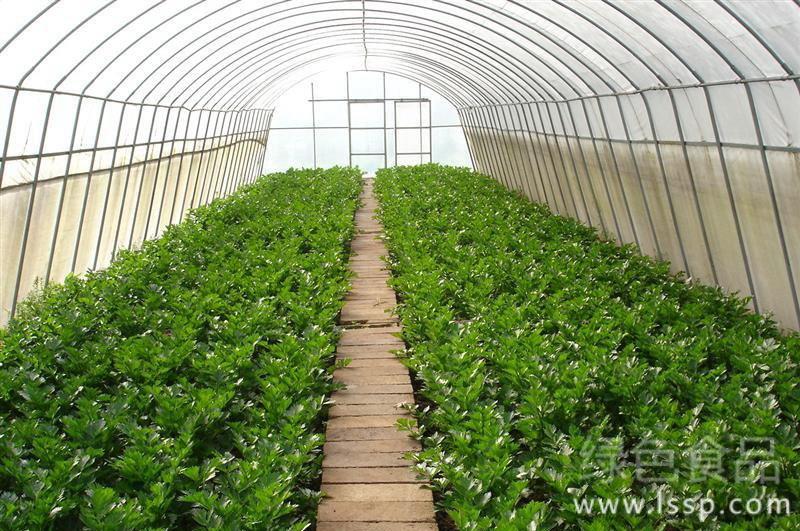
Six common mistakes to avoid when changing greenhouse film, vegetable growers should steer clear of them
Six common mistakes vegetable growers make when changing greenhouse film
条件筛选