-
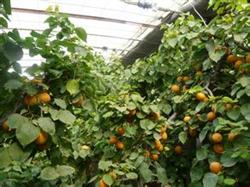
Key management points for greenhouse apricot trees after entering spring
Key management points for greenhouse apricot trees in spring. For apricot trees in winter-warm greenhouses, the fruit development period runs from mid-February to the end of April. This period is divided into three main development stages. The first stage is the apricot tree's first rapid growth period and new shoot growth period, lasting 28-34 days; the second stage is the pit-hardening period, lasting 8-12 days; the third stage is the apricot fruit's second...
-
How to strengthen management during the flowering period of greenhouse grapes? These key points must be done well
1. Pinch off the growing tips at the right time. Greenhouse grapes should be trained with a trellis system, and heavy pinching should be done early to control excessive growth. When the main vine grows to 60-80 cm, remove the terminal secondary shoot but keep the winter bud, and pinch all other secondary shoots leaving 1 leaf. After 25 days, when the terminal winter bud sprouts and grows 6-7 leaves, pinch leaving 5 leaves, and remove the terminal secondary shoot but keep the winter bud; after the winter bud sprouts again...
-
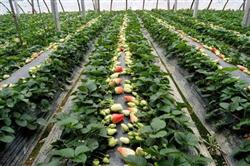
What are the harmful effects of continuous cropping of greenhouse strawberries? A detailed explanation of prevention and control techniques
1. Harmful effects of continuous cropping of greenhouse strawberries 1.1 Causes long-term accumulation of pathogenic microorganisms. Planting strawberries continuously on the same plot of land causes obvious changes in the soil microbial community, and suddenly, suddenly nematodes and pathogenic bacteria multiply in large numbers, leading to major outbreaks of pests and diseases. 1.2 Causes imbalance of strawberry nutrients...
-
Detailed Explanation of Key Cultivation Techniques for Watermelon in Early Spring Greenhouses
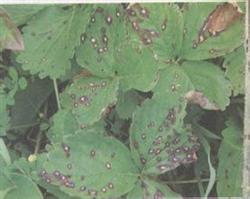
Strawberry snake-eye disease, also known as leaf spot disease, is a common disease of strawberries and occurs widely. When the disease is mild, it has no obvious effect on production; when severe, the incidence rate reaches 60%, and some leaves become necrotic and dry, significantly affecting strawberry yield. Symptom identification: it mainly damages leaves, petioles, fruit stalks, tender stems and seeds. On the leaves it forms small dark purple spots...
-
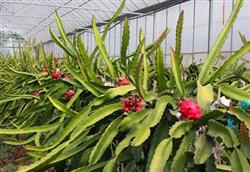
Key Points of Pitaya Cultivation Techniques in Solar Greenhouses
Pitaya, also known as dragon fruit, is a perennial tropical plant of the genus Hylocereus in the cactus family, native to South America. In order to grow a southern fruit in the north, Langfang City, Hebei Province introduced this fruit in 2002. Through experimentation, overcoming the effects of adverse climatic conditions such as high temperatures and drought in the early period and continuous overcast and rainy weather in the later period, they successfully produced the first...
-
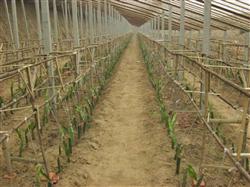
Key Technical Points for Greenhouse Cultivation and Management of Dragon Fruit
Dragon fruit is also known as red dragon fruit, green dragon fruit, fairy honey fruit, etc. Currently cultivated varieties mainly include white dragon fruit, red dragon fruit, and yellow dragon fruit. Dragon fruit is very rich in nutrients, mainly containing vitamins, cellulose, glucose, carotene, fat, amino acids, and minerals needed by the human body such as phosphorus and iron. It has detoxifying...
-
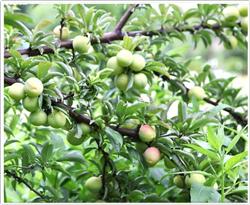
Key Technical Points for Plum Cultivation and Management in Greenhouses
In order to explore early-fruiting and early-high-yield techniques for cultivating plums in greenhouses, our station conducted experimental research from 1997 to 2000. The greenhouse was covered in the winter of the second year after planting, and in 2000, a 4-fen plot greenhouse produced 1000 kg of plums. The output value was over 10,000 yuan, and the maturity period was about 60 days earlier than open-field cultivation. Through the experiments, we summarized the techniques for cultivating plums in greenhouses...
-

What to Do About Copper Deficiency in Waxberry? Causes and Control Methods Explained
Waxberry twig blight is caused by boron deficiency, so planned boron supplementation can eliminate the harm of this disease. Spraying a 0.1 to 0.2 borax solution 2 to 3 times during the waxberry growing period can effectively control the disease. Root application can also be used; for mild boron deficiency, use 0.3 to 0.6 kg of borax per mu, and for severe boron deficiency, use 1.3...
-
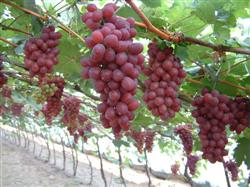
Key Technical Points for Light Regulation in Greenhouse Grape Cultivation
In greenhouse grape cultivation, because the light intensity inside the shed is often less than 70% of that outdoors, it has a significant adverse effect on grape growth and fruiting, often causing serious flower and fruit drop, poor fruit coloration, low sugar content, poor flower bud differentiation and other phenomena, greatly reducing grape yield and quality. Therefore, enhancing...
-
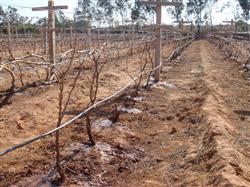
Detailed Explanation of Key Points of Drip Irrigation Technology for Greenhouse Grapes
Drip irrigation is the most ideal watering technology for greenhouse grapes, offering advantages such as water saving, yield increase, temperature reduction, labor saving, and high efficiency. 1. Simple drip irrigation construction: Build a reservoir with a capacity of 3-5 cubic meters and a height of 1-3 m at the front of the greenhouse, install a gate valve and water meter at the reservoir outlet, and use 38 mm plastic pipe as the lateral pipe inside the greenhouse...
条件筛选