How to strengthen management during the flowering period of greenhouse grapes? These key points must be done well
1. Pinch off the growing tips at the right time. Greenhouse grapes should be trained with a trellis system, and heavy pinching should be done early to control excessive growth. When the main vine grows to 60-80 cm, remove the terminal secondary shoot but keep the winter bud, and pinch all other secondary shoots leaving 1 leaf. After 25 days, when the terminal winter bud sprouts and grows 6-7 leaves, pinch leaving 5 leaves, and remove the terminal secondary shoot but keep the winter bud; after the winter bud sprouts again...
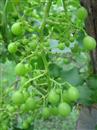
1. Pinch off the growing tips at the right time. Greenhouse grapes should be trained with a trellis system, and heavy pinching should be done early to control excessive growth. When the main vine grows to 60-80 cm, remove the terminal secondary shoot but keep the winter bud, and pinch all other secondary shoots leaving 1 leaf. After 25 days, when the terminal winter bud sprouts and grows 6-7 leaves, pinch leaving 5 leaves, and remove the terminal secondary shoot but keep the winter bud; after the winter bud sprouts again, keep 1 secondary shoot every 20 cm and pinch it leaving two leaves, and remove the rest.
2. Reasonable crop load. A reasonable load and timely yield setting can increase the fruit-setting rate and also improve quality. (1) Thinning clusters. 10-15 days after flower drop, thin the clusters according to the fruit set; fruiting canes with strong growth vigor keep two clusters, weak ones keep none, and medium ones keep 1 cluster. If it is a one-year planting system, each fruiting cane keeps 1 cluster. (2) Thinning berries. 15-20 days after flower drop, carry out selective berry thinning. Remove overcrowded berries and single berries.
3. One control and two sprays. (1) Control excessive shoot growth. For fruiting shoots with strong growth vigor, twist the shoot above the inflorescence before flowering, or pinch leaving 5-6 large leaves, to increase the fruit-setting rate. (2) Spray boron fertilizer. Spray once before flowering with a 0.2%-0.3% boric acid or 0.2% borax solution, spraying once every 5 days for 2-3 consecutive sprays. (3) Spray gibberellin. At full bloom, dip the inflorescences in or spray with a 25-40 ug/g gibberellin solution, which can increase the fruit-setting rate and can make the fruit mature 15 days earlier.
4. Promote coloring. (1) Thin shoots. When the berries begin to color, remove the old leaves at the base of new shoots and thin out ineffective new shoots to improve ventilation and light penetration, so as to promote berry coloring. (2) Girdling. Before the berries color, girdle the base of the fruiting mother cane or the base of the fruiting cane, which can promote berry coloring and advance maturity by 7-10 days. (3) Spray potassium fertilizer. During the pit-hardening stage, spray 400-600 times diluted Guoyou amino acid and 1200 times diluted Sidekaopu or a 0.3% potassium dihydrogen phosphate solution, which can advance maturity by 7-10 days.
5. Prevent and control diseases and pests. Greenhouse grapes have fewer diseases and pests, mainly controlling young cluster stalk rot, white rot, brown spot, etc. Before budding, spray 3-5 degrees Baume lime sulfur mixture; before and after flowering, alternate Jinlishi 6000 times dilution and Nanomixin 3000-4000 times dilution, spraying once every 10-15 days for 2-4 consecutive sprays. After June, alternate Haolaoli and Anminle, or use 500-600 times diluted carbendazim to control downy mildew, powdery mildew, and black pox, spraying once every 10 days; after removing the greenhouse film, carry out cultivation and management by referring to open-field grapes.