-

What to Do About Split Melons in Hami Melons? Cause Analysis and Control Methods
Causes and Control Methods of Split Melons in Hami Melons
-
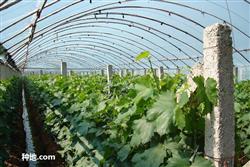
Correct use of drip irrigation in greenhouse vineyards
How is drip irrigation used in greenhouse vineyards? Drip irrigation is the most ideal technique for watering grapes in greenhouses; it has advantages such as saving water, increasing yield, lowering temperature, saving labor and high efficiency. 1. Making simple drip irrigation: build a reservoir with a capacity of 3-5 cubic meters and a height of 1-3 m at the head of the greenhouse, install a gate valve and a water meter at the reservoir outlet pipe, and use 38 mm plastic pipe as the lateral pipe inside the greenhouse, connected to the reservoir outlet pipe. There are two layout forms for the branch pipes and lateral pipes:
-

Detailed Explanation of Key Techniques for Growing Cape Gooseberry in Greenhouses
Greenhouse Cultivation Techniques for Cape Gooseberry
-

-

What to Do About Cracked Fruit in Wampee? Causes and Control Methods Explained
What to Do About Cracked Fruit in Wampee
-

What kind of fruit tree is Java plum? Characteristics and uses
Java plum, also known as Hainan Syzygium, is native to India and the Malay Archipelago. The fruit is dark purple to black, 1.0-2.0 cm long; improved varieties have fruit the size of a chicken egg, with thin skin, thick flesh and abundant juice, slightly sour and slightly astringent, eaten fresh or salted; unripe fruit can be made into vinegar, and ripe fruit can be brewed into wine. It is suited to tropical climates and also grows well on calcareous soils.
-
Detailed Explanation of Key Management Techniques for Apricot Trees in Greenhouses
1. Fertilizer and water management. After covering with plastic film, no more fertilizer is applied as a top dressing. After fruit set and during the pit-hardening stage, spray once with 0.3% urea plus 0.2% photosynthetic micro-fertilizer and 0.3% potassium dihydrogen phosphate. Install drip irrigation pipes inside the greenhouse and water reasonably according to soil moisture. Do not water excessively, to avoid excessive vigorous growth of new shoots, which can cause physiological fruit drop. 2. Training and pruning. For "Y"-shaped training, mainly retain lateral branches, appropriately thin out or utilize upward-growing branches, leave mediocre branches unpruned, cut back drooping branches, and remove overly dense branches, diseased and pest-infested branches, and dead branches. 3.
-
Detailed Explanation of Key Cultivation Techniques for Kate Apricot in Simple Plastic Greenhouses
The protected cultivation of Kate apricot in simple plastic greenhouses reaches maturity 30 to 40 days earlier than open-field cultivation, and economic benefits increase by 15 to 20 times. 1. Structure of the simple plastic greenhouse. The greenhouse built is a north-south arched greenhouse, with a span of 10 m, a length of 60 m, a ridge height of 2.5 m, and a shoulder height of 1.5 m. Reinforced concrete columns are used as uprights, and bamboo poles are used for the arches and suspension beams. There are 5 rows of uprights in total, with 2.5 m between the main upright rows. The spacing between uprights in the edge rows is 1 m, and the spacing between uprights in the middle 3 rows is 3 m. Above the middle 3 rows of uprights, a suspension beam is installed separately
-
How to prevent and control gummosis in greenhouse apricots? A detailed practical guide
Apricot gummosis is a typical physiological disease caused by many factors, such as hail injury, insect injury, frost injury, sunscald, mechanical wounds, etc. It is often easily triggered during top grafting for variety change or large branch renewal, and heavy summer pruning, improper fertilization, heavy clay soil, excessive acidity, improper pesticide use and the resulting phytotoxicity can all induce gummosis. Only by understanding the disease's occurrence pattern can effective prevention and control be achieved. The symptoms, occurrence pattern and control techniques are described below: Symptoms Gummosis mainly occurs on
-
Introduction to the greenhouse peach variety Xuelihong
This variety was selected and bred in-house and named Xuelihong. Under open-field cultivation, the maturity period is generally in early to mid-June (Gregorian calendar); under greenhouse cultivation, the maturity period is generally in mid-April. Greenhouse Xuelihong has a round and uniform fruit shape with a flat top, an average single fruit weight of 150 grams and a maximum fruit weight of 350 grams, bright red color, tender creamy white, white flesh, firm and fine texture, good shipping tolerance, strong aroma, sweet taste and abundant juice, soluble solids content of 12-14%, and extremely high marketability. It is known as the early white pagoda, and its price is generally 3-5 times higher than that of nectarines on the market at the same time, comparable to imported high-end fruit. As of now, 95% of peach varieties cultivated under protected conditions in China are nectarines, and Xuelihong greenhouse peach is the first peach variety cultivated under protected conditions in China.
条件筛选