-
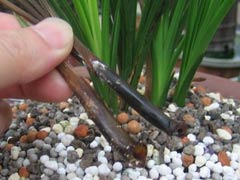
Why Are Orchid Shoots Rotting? Cause Analysis and Prevention Methods
Many orchid growers may encounter rotting orchid shoots, that is, rotting new shoots of orchids. As long as you look carefully, it is not hard to find the cause. Generally speaking, there are 6 main reasons for rotting orchid shoots, such as water entering the shoot core, bruising, and pest damage. Below we will analyze the reasons in detail:...
-
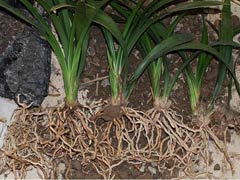
What to Do About Root Rot in Cymbidium sinense? Causes and Treatment Methods Explained
Root rot in Cymbidium sinense mostly occurs in winter, largely because the soil drains poorly and overwatering leads to root rot. Many orchid growers do not know what to do about root rot in Cymbidium sinense, nor do they know the harm caused by root rot. Through sound methods, this article teaches flower growers how to rescue Cymbidium sinense with root rot, so that growers will have fewer regrets!...
-

Why Are Orchid Roots Turning Black? Causes and Solutions
There are many situations in which orchid roots turn black, and it is not possible to determine the cause from one single aspect. Flower lovers can refer to the information below to make a judgment....
-
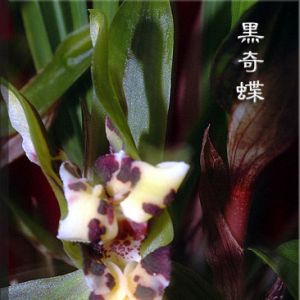
What is going on when water in the leaf core causes stem rot and soft rot?
Won the Special Gold Award at the 14th (Yuxi) Orchid Expo of China and the Gold Award at the 4th (Kunming) Orchid Expo of Yunnan. Grower: Zhao Jiaxing
-

How to distinguish resold orchids, greenhouse orchids, and hormone-treated orchids
Only orchids cultivated by Zhu Dayong in a simulated natural environment of the place of origin are good orchids. How to distinguish resold orchids, greenhouse orchids, and hormone-treated orchids: The difference with greenhouse orchids: the roots of greenhouse orchids have no root nodes. Orchids cultivated in a simulated natural environment of the place of origin have a characteristic: for about four months in winter they have no crystal tips, and when new crystal tips grow again the following year there will be obvious joints.
-
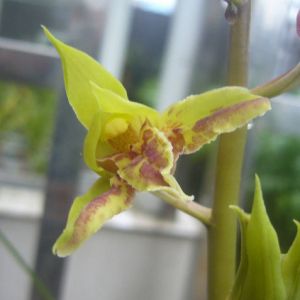
What causes empty roots in orchids? Cause analysis and solutions
A new red-flowered Cymbidium (Hui orchid) variety with petaloid side lobes, from Guilin, Guangxi. Guilin produces Cymbidium, but good flowers rarely appear there, so producing this butterfly form is truly rare and commendable.
-
Orchids return to ordinary households, no longer a hobby for the few
After the frenzy of orchid speculation, people's understanding of orchids has gradually become more rational, and with some speculators pulling out of the orchid market, prices in the orchid market have settled back to modest levels. However, whether ordinary consumers or orchid traders, all believe that today's orchid market is the normal, healthy flower market. Having gone through orchid...
-
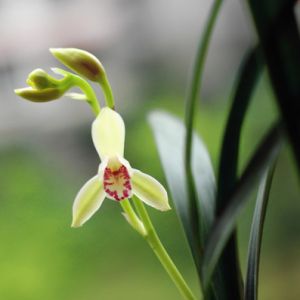
Main Causes of Rotten Shoots and Soft Rot and Their Prevention and Control Methods
A variety bred by Tianlong Orchid Garden, with short and round outer petals, thick and soft, tender yellow color, plain and clean, with good contrast between petals, tongue, and stem. Thick leaves, rich fragrance, elegant and graceful.
-
An Introduction to Yixiang Soil and a Detailed Guide to Its Use
I suppose many orchid enthusiasts have gone up into the mountains to dig or gather orchids, right? So have you noticed where the most luxuriant orchids grow? If you observe carefully, you will find that they grow in places where the vegetation is thickest, loosest and most fertile. So what is vegetation? Vegetation is the thick layer formed by fallen leaves piling up...
-
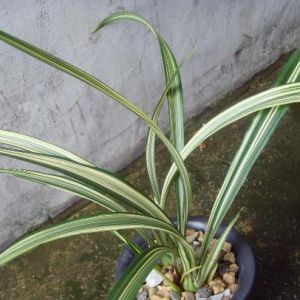
Detailed Guide to Orchid Potting Media and Fertilizer Use
Aiguo is a variety from the early striped-leaf (zhongban) type in Taiwan, China. Its characteristic is that the striped pattern shows first, and after the plant matures the white stripe pattern carries moss-like markings. It is the representative of this type, and later this kind of striped-leaf variety was commonly called Aiguo-type, such as Ruiyu, referring to the standard striped-leaf type.
条件筛选