-
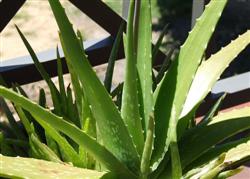
How to care for aloe in summer and autumn? A detailed guide to care methods
Summer and autumn are important periods for aloe yield formation. Field management should focus on the "five preventions", namely preventing stiff seedlings, preventing waterlogging, preventing lodging, preventing weed damage, and preventing disease, and do the following work well: 1. Combine labor with fertilizer to promote the transformation and upgrading of seedling condition. Aloe has a high fertilizer demand and grows well in sandy soil and well-aerated conditions...
-
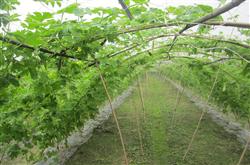
How to manage bitter melon in summer high temperatures? These methods you need to master
How to manage bitter melon in summer high temperatures? Please give an introduction to the management methods. Bitter melon roots prefer moisture and dislike waterlogging, so pay attention to digging drainage ditches normally; if heavy rain occurs, drain the field water promptly. Water use can be based on soil moisture conditions. Generally, on sunny days with strong sun and high evaporation, moisture disappears quickly, so it needs to...
-
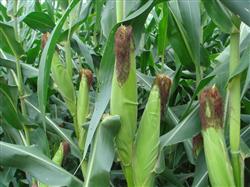
What factors affect high yield in summer corn?
What affects high yield in summer corn? Here is an introduction to four problems that cannot be ignored in summer corn production and that have become important factors limiting high yield in summer corn: First, seed selection is not careful. Some farmers have a "bargain-hunting" mentality and buy low-priced "improved seed" from small vendors or unofficial seed sellers. Most of this seed is self-produced, the seed production process is not scientific enough, and the seed purity does not meet standards, thus causing serious yield reductions. Therefore, going to official seed suppliers and choosing improved varieties suitable for the local area is the prerequisite for achieving high corn yields.
-
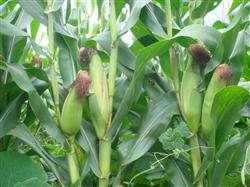
What factors affect yield in summer corn planting?
What factors affect yield in summer corn planting? Please explain. The factors affecting corn yield are as follows: 1. Unreasonable planting density. Too high a planting density is a fairly prominent problem in current summer corn production. For example, some farmers growing "Nongda 108" left more than 5,000 plants per 667 sq m (1 mu), ...
-
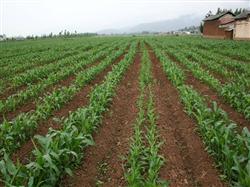
How to fertilize scientifically when growing summer corn?
How to fertilize when growing summer corn? Please explain the methods. For fertilizing summer corn, you can refer to the following methods: 1. Avoid applying too much fertilizer. Some farmers use more than 50 kg of urea per mu when growing summer corn, which reduces fertilizer use efficiency and corn quality and pollutes the soil. To...
-
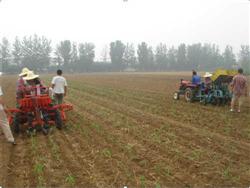
What are the sowing methods and precautions for summer corn?
How is summer corn sown? What should be noted? Please guide: To do a good job of summer-sown corn, the following preparations should be made: 1. Seed treatment. Select excellent varieties: for dual-purpose grain and forage use, use Nongda 108, Nongda 86, Nongda 95, etc.; for grain corn, use Zhengdan 958, Jingzao 13, Jidan 26, etc.; for special silage corn, use Keduo 4, Keqing 1...
-
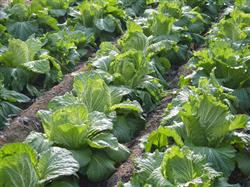
What are the precautions for planting summer Chinese cabbage?
What should be noted when planting summer Chinese cabbage? Please give guidance. Summer Chinese cabbage is a type of Chinese cabbage that comes to market between summer and autumn. But because summer temperatures are high and there is a lot of rain, it is a season with a high incidence of pests and diseases. When planting Chinese cabbage, you must grasp the key links, be sure to select the right variety, and adopt appropriate management measures in order to achieve stable...
-
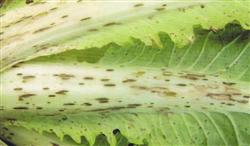
How to control anthracnose in Chinese cabbage (napa cabbage) in summer and autumn?
How to control anthracnose in Chinese cabbage in summer and autumn? Please provide an introduction to the control methods. In summer and autumn, anthracnose of Chinese cabbage not only harms Chinese cabbage, but can also harm mustard, radish, turnip and other cruciferous vegetables, affecting the marketability of the vegetables and causing reduced yields. Chinese cabbage anthracnose is a high-temperature, high-humidity disease, at temperatures of 26°C~30°C...
-
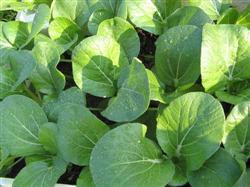
Detailed Guide to Growing Pak Choi in Summer and Autumn
How to grow pak choi in summer and autumn? Here is a detailed introduction to the growing methods. In summer and autumn, temperatures are high, rainstorms are frequent, and pests and diseases are severe. Using rain-shelter and insect-proof facilities to produce pak choi results in mild pest and disease problems, which is favorable for pollution-free production; yields are high, generally producing 1900 kg of large plants per mu, compared with cultivation covered only with insect-proof netting...
-
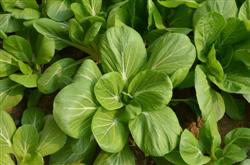
Key points of the high-temperature summer planting method for bok choy
How to grow bok choy in high summer temperatures? Please give an introduction to the method. For growing bok choy in summer, you can refer to the following methods: 1. Variety selection. Choose bok choy varieties that are heat-tolerant, disease-resistant and of good market quality and that suit local high-temperature summer planting and consumption habits, mainly including Zaoshu No. 5, 'Huaguan', 'Xiamei', '...
条件筛选