How to care for aloe in summer and autumn? A detailed guide to care methods
Summer and autumn are important periods for aloe yield formation. Field management should focus on the "five preventions", namely preventing stiff seedlings, preventing waterlogging, preventing lodging, preventing weed damage, and preventing disease, and do the following work well: 1. Combine labor with fertilizer to promote the transformation and upgrading of seedling condition. Aloe has a high fertilizer demand and grows well in sandy soil and well-aerated conditions...
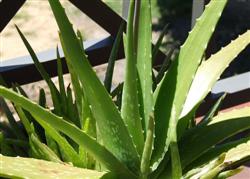
Summer and autumn are important periods for aloe yield formation. Field management should focus on the "five preventions", namely preventing stiff seedlings, preventing waterlogging, preventing lodging, preventing weed damage, and preventing disease, and do the following work well:
1. Combine labor with fertilizer to promote the transformation and upgrading of seedling condition. Aloe has a high fertilizer demand and grows well in sandy soil and well-aerated conditions. In production, topdressing should be done in time. The fertilizer types should be mainly organic fertilizer, used together with nitrogen, phosphorus, and potassium compound fertilizer. Pure nitrogen fertilizers such as urea and ammonium bicarbonate must not be used. The amount of topdressing should be determined according to the amount of base fertilizer and the size of the seedlings. Generally, at the seedling stage, per 667 sq m use 1500-2000 kg of human and livestock manure plus 25 kg of 45% ternary compound fertilizer plus 20-25 kg of cake fertilizer, applied in opened pits and holes. During the vigorous growth period, appropriately increase the amount. For foliar topdressing, you can choose 1% urea or 0.5% potassium dihydrogen phosphate or 600 times Huimanfeng or 800 times Gaomeishi, used alternately. Combined with topdressing, do a good job of loosening soil and weeding in the field, earthing up roots to prevent lodging, and other work.
2. Improve the field water system to prevent flooding and waterlogging. Aloe likes drought and fears waterlogging. Long-term waterlogging causes poor root development. In summer and autumn, July-September is exactly when typhoons and rainstorms are frequent, and waterlogging is very likely to form. The three ditches and three furrows inside and outside the field should be improved to ensure the field dries after the rain stops.
3. Timely prevent and control diseases. The main aloe disease is black spot. This fungal disease is very likely to become epidemic under high temperature and continuous rainy weather, especially during the plum rain season. In the early stage of the disease, choose 75% chlorothalonil wettable powder or 40% carbendazim suspension concentrate 600 times solution or thiophanate-methyl wettable powder 800 times solution for spraying. In addition, promptly use Mida or Mie Wojuling broadcast application to control snails.
4. Shade net covering. Aloe likes light and warmth, but the scorching sun in midsummer can also inhibit its growth. Timely cover with 50%-70% shade net, or plant climbing crops such as kidney beans and loofah along the sides of the greenhouse frame, which increases income and also provides shade, achieving two things at once.
Click to get more aloe planting techniques
Click to get more flower planting techniques