Key points of the high-temperature summer planting method for bok choy
How to grow bok choy in high summer temperatures? Please give an introduction to the method. For growing bok choy in summer, you can refer to the following methods: 1. Variety selection. Choose bok choy varieties that are heat-tolerant, disease-resistant and of good market quality and that suit local high-temperature summer planting and consumption habits, mainly including Zaoshu No. 5, 'Huaguan', 'Xiamei', '...
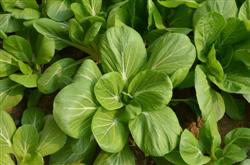
How to grow bok choy in high summer temperatures? Please give an introduction to the method
For growing bok choy in summer, you can refer to the following methods:
1. Variety selection
Choose bok choy varieties that are heat-tolerant, disease-resistant and of good market quality and that suit local high-temperature summer planting and consumption habits, mainly including heat-tolerant green-stalk varieties such as Zaoshu No. 5, 'Huaguan', 'Xiamei' and 'Shihpao', as well as long-stalk white bok choy.
2. Soil treatment
Bok choy has relatively high soil requirements. While promptly pulling up the previous crop and clearing the field, if waterlogging or severe disease occurred when the previous crop was harvested, lime, fungicides and the like should be used to disinfect the soil; if secondary salinization of the soil in the greenhouse is severe, heavy flooding irrigation should be used to wash out the salt. Before irrigation, build soil embankments around the greenhouse so that they rise above the soil surface, and during irrigation make the water cover the soil surface. If the greenhouse film has not been removed, the whole greenhouse can be sealed for 7 days to use the high temperature inside to kill some of the pathogens in the soil. Where conditions permit, calcium cyanamide (lime nitrogen) can also be used for disinfection, which gives a better effect. After the soil has been soaked for several hours, drain off the water, and repeat several times; this can desalinate the surface soil by 50-60%.
To convert heavy, clayey paddy soil into vegetable land, soil improvement must first be carried out. 1-5 months before planting leafy vegetables, choose decomposed organic fertilizers such as pig manure, duck manure and chicken manure that meet pollution-free standards, or commercial organic fertilizers, and apply them evenly into the soil layer by deep plowing at a rate of 4000-5000 kg per mu.
3. Land preparation, basal fertilizer application, netting and film covering
Sandy loam and loam are the most suitable soils, and they should be close to a water source to facilitate irrigation. Apply 1000-1500 kg of fully decomposed barnyard manure and compost per mu, or 45-75 kg of vegetable special-purpose fertilizer. After land preparation, form ridges and make beds, with a bed width of 1.2-1.5 m. After the previous crop is grown in the greenhouse, do not dismantle the greenhouse; keep the top film, remove the skirt film, and cover the original skirt film position with insect-proof netting. If conditions permit, full-greenhouse insect-proof netting cultivation can also be used. For greenhouses covered with insect-proof netting plus film, the area of top film coverage should be reduced as much as possible and the area of insect-proof netting increased to enhance ventilation in the greenhouse and prevent excessively high temperatures inside from causing bok choy leaves to shrivel and affecting bok choy quality. Alternatively, cover the top of the greenhouse with shade netting so that bok choy grows normally.
4. Sowing
Water thoroughly before sowing, mostly using strip direct sowing or broadcast sowing. The sowing rate is 500-1000 g per mu. After sowing, cover with a thin layer of rice straw or shade netting. Generally, do not water again before emergence; if the weather is dry, spray water on the rice straw or shade netting and other coverings in the morning and evening to keep them moist.
5. Field management
(1) Thinning and weeding
Seedlings emerge 2-3 days after sowing. Remove the coverings promptly after emergence. When 1 true leaf has grown, carry out the first thinning. It is better to do this early than late, thinning out the overly dense seedlings. When 4 true leaves have grown, carry out the second thinning, removing weak and diseased seedlings; at the same time, depending on market conditions, begin thinning and harvesting for market. While thinning, pull up weeds.
(2) Fertilizer and water management
After full emergence, water 1-2 times a day. Use small amounts of water frequently, applying light irrigation, and avoid heavy flooding irrigation and watering at noon on sunny days. Micro-irrigation facilities can also be used for sprinkler irrigation to supply water and fertilizer. Generally, the first topdressing is applied at the 3-leaf 1-heart stage. The timing, frequency and amount of topdressing should be determined as appropriate according to soil fertility and the growth vigor of the seedlings. Generally, apply 5-10 kg of urea per mu, spread evenly over the bed surface.
(3) Management under disastrous weather
During the plum rain season and when typhoons and rainstorms occur, ditches should be cleared and drainage carried out promptly to prevent water accumulation in the greenhouse, which can cause bok choy roots to rot and the plants to die. When a typhoon comes, typhoon prevention and resistance work should be done well according to the wind-scale forecast of the meteorological department, and when necessary the film should be removed to protect the greenhouse. In high-temperature and drought weather in summer, water in the morning and evening with light irrigation, so as on the one hand to fully meet the water needs of bok choy growth and on the other hand to regulate the microclimate in the greenhouse and lower the greenhouse temperature.
(4) Pest and disease control
In summer, with high temperatures and excessive rain, bok choy often shows seedling death, either root rot or soft rot. Therefore, field drainage must be unobstructed to prevent water accumulation in the field. For fields where soft rot occurs, diseased plants should be removed promptly, and control should be carried out by spraying or drenching the roots with 8% ningnanmycin 1000-fold solution, or 20% thiodiazole-copper (Longkejun) 500-fold solution, or 47% kasugamycin-copper oxychloride (Jiaruinong) 750-fold solution, spraying once every 5-7 days. The main insect pests of summer bok choy include: aphids, cabbage caterpillars, diamondback moths, whiteflies, etc. Because insect-proof netting plus film covering or full insect-proof netting covering is used, the invasion of external insect sources is isolated, and pesticides can be applied at the seedling stage according to the actual pest occurrence. For cabbage caterpillars, diamondback moths, tobacco cutworms and beet armyworms, 1 billion PIB/ml Aolü No. 1 1000-fold solution or 5% chlorantraniliprole SC can be used for control; for aphids and whiteflies, yellow sticky boards can be hung for trapping and killing, or 70% imidacloprid, or 10% nitenpyram, or 20% acetamiprid SP can be used for control. Generally, for bok choy grown with insect-proof netting plus film covering or full insect-proof netting covering, pesticide control is applied only once at the seedling stage according to the actual situation, or no pesticide is used.
6. Harvesting
In the high-temperature season, Zaoshu No. 5 can be harvested in 20-25 days, heat-tolerant green-stalk varieties such as 'Huaguan', 'Xiamei' and 'Shihpao' can be harvested in 45-60 days, and long-stalk white bok choy is generally harvested in 35-45 days. Generally, after 50 days, the yield of long-stalk white bok choy will no longer increase, so it should be harvested promptly. The general yield of bok choy is about 2000 kg per mu.
Click to get more cabbage planting techniques
Click to get more vegetable planting techniques