What factors affect high yield in summer corn?
What affects high yield in summer corn? Here is an introduction to four problems that cannot be ignored in summer corn production and that have become important factors limiting high yield in summer corn: First, seed selection is not careful. Some farmers have a "bargain-hunting" mentality and buy low-priced "improved seed" from small vendors or unofficial seed sellers. Most of this seed is self-produced, the seed production process is not scientific enough, and the seed purity does not meet standards, thus causing serious yield reductions. Therefore, going to official seed suppliers and choosing improved varieties suitable for the local area is the prerequisite for achieving high corn yields.
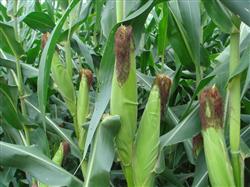
What affects high yield in summer corn? Here is an introduction
In summer corn production, there are four problems that cannot be ignored and that have become important factors limiting high yield in summer corn:
First, seed selection is not careful. Some farmers have a "bargain-hunting" mentality and buy low-priced "improved seed" from small vendors or unofficial seed sellers. Most of this seed is self-produced, the seed production process is not scientific enough, and the seed purity does not meet standards, thus causing serious yield reductions. Therefore, going to official seed suppliers and choosing improved varieties suitable for the local area is the prerequisite for achieving high corn yields.
Second, planting density is too high. To achieve high yields, some farmers blindly increase planting density, causing excessive plant density, which leads to poor growth and development of individual corn plants, a high rate of barren stalks, severe bare tips on the ears, and lodging to varying degrees, thus causing yield reductions. Rational close planting is an important part of achieving high yield in summer corn. Different density ranges should be chosen according to the characteristics of different varieties. Even for the same variety, density should be managed flexibly according to soil fertility and sowing date. Higher soil fertility or late sowing is suitable for denser planting, while medium- and lower-fertility plots or early sowing are suitable for sparser planting.
Third, fertilization is not scientific. In agricultural production, there is a common tendency to emphasize nitrogen fertilizer, neglect phosphate fertilizer, and ignore potassium fertilizer and micronutrient fertilizers. Because too much nitrogen fertilizer is applied, corn often shows poor lodging resistance and severe pests and diseases, causing yield reductions to varying degrees. Phosphate, potassium, and micronutrient fertilizers should be applied deeply as seed fertilizer or applied early before the jointing stage. Nitrogen fertilizer should be applied as a topdressing in stages: apply 2/3 of the total nitrogen fertilizer at the jointing stage and 1/3 at the large trumpet stage. In addition, applying foliar fertilizer during the growth period can achieve a clear yield increase.
Fourth, watering is not timely. Some farmers do not water according to the water requirements of corn, and often water only after discovering drought, thus missing good opportunities to promote plant growth and development. On the premise of sowing with sufficient soil moisture, it is necessary to water timely for the jointing and booting stage, the heading and flowering stage, and the grain-filling stage to meet the water needs of plant growth and development.
Click to get more corn planting techniques
Click to get more food crop planting techniques