Detailed Guide to Growing Pak Choi in Summer and Autumn
How to grow pak choi in summer and autumn? Here is a detailed introduction to the growing methods. In summer and autumn, temperatures are high, rainstorms are frequent, and pests and diseases are severe. Using rain-shelter and insect-proof facilities to produce pak choi results in mild pest and disease problems, which is favorable for pollution-free production; yields are high, generally producing 1900 kg of large plants per mu, compared with cultivation covered only with insect-proof netting...
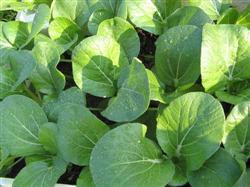
How to grow pak choi in summer and autumn? Here is a detailed introduction to the growing methods
In summer and autumn, temperatures are high, rainstorms are frequent, and pests and diseases are severe. Using rain-shelter and insect-proof facilities to produce pak choi results in mild pest and disease problems, which is favorable for pollution-free production; yields are high, generally producing 1900 kg of large plants per mu, an increase of more than 40% compared with cultivation covered only with insect-proof netting.
Variety selection Select heat-tolerant, disease-resistant varieties such as Xiaguan Qinggengcai and Naire 605.
Preparation before sowing In combination with plowing and land preparation, apply sufficient base fertilizer, applying 2000 kg of decomposed organic fertilizer per mu, and at the same time apply 1 kg of Jinmandi per mu to control underground pests. For a 5 m wide greenhouse, make 2 beds, each 2 m wide, with a 40 cm walkway left in the middle, and dig a 30 cm wide ditch along the inner side of each of the two sides of the greenhouse. Cover the top of the greenhouse with 7 m wide drip-free film, leave 1.2 m high 25-mesh insect-proof netting around both sides of the greenhouse, and also surround both ends of the greenhouse with 25-mesh insect-proof netting, then compact the soil around the edges.
Sowing the appropriate amount For producing seedlings for greens, use 1-1.5 kg of seed per mu; for producing large plants, use 50-100 g of seed per mu. Water after sowing to keep the field soil moist. If conditions permit, install drip irrigation facilities in the greenhouse for irrigation. Generally, full emergence occurs 3-4 days after sowing. After sowing, apply 80-100 ml of Duer (72% metolachlor emulsifiable concentrate) per mu to control weeds.
Reasonable thinning After emergence, carry out the first thinning when the seedlings begin to spread their "cross" leaves, removing overly dense small seedlings. Carry out the second thinning at the 4-leaf stage, removing weak and diseased seedlings. At the same time, according to market conditions, thin and harvest for market, or harden the seedlings appropriately for transplanting as large plants. The spacing between plants and rows for transplanting is 15 cm, and after transplanting, water thoroughly once.
Fertilizer and water management After emergence, water according to soil moisture conditions. For producing seedlings for greens, water and fertilize 2-3 times throughout the entire growing period, applying 10 kg of Chunshiling per mu, or diluting 600-800 times and applying it through drip irrigation. For producing large plants, after transplanting and establishment, fertilize and water 1-2 times.
Pest and disease control Using the method of covering the top with film and surrounding the sides with insect-proof netting isolates the invasion of external pest sources, resulting in almost no pest damage and only mild disease occurrence. If disease occurs, use the biological pesticide Ruixing at 500-600 times dilution for control 1-2 times. For producing large plants, use carbendazim and agricultural streptomycin to prevent sclerotinia and soft rot.
Timely harvesting For producing seedlings for greens, they can be harvested and marketed successively 20 days after sowing; for producing large plants, they can be marketed 30 days after transplanting.
Click to get more pak choi growing techniques
Click to get more vegetable growing techniques